
Semax Side Effects: Safety, Risks & Common Reactions


What Are Semax Side Effects?
Semax is a nootropic peptide primarily studied for its potential cognitive and neuroprotective effects. While many users report good tolerability, understanding Semax side effects is essential before considering its use.
Quick answer: Most reported semax side effects are mild and short-lived, think nasal irritation, a brief headache, or slight fatigue after intranasal use. Rare but more serious reactions, like allergic responses or persistent dizziness, have also been reported and warrant medical attention. Because independent, large-scale human data are still limited, talking to a healthcare provider before use is the safest approach.<
Semax was originally developed in Russia as a heptapeptide derived from a fragment of adrenocorticotropic hormone (ACTH), and it's been studied there for decades in the context of stroke recovery, attention, and stress resilience. It's thought to work by influencing brain-derived neurotrophic factor (BDNF) activity and modulating dopamine and serotonin signaling, which is the basis for its reputation as a cognitive enhancement peptide.
Here's why the safety conversation matters: Semax is not FDA-approved for any use in the United States, and it's typically accessed as a research chemical rather than a prescribed medication. That gap in regulatory oversight makes it more important, not less, to understand its safety profile before you consider it.
It helps to separate common side effects, mild, transient, and expected in a percentage of users, from serious adverse effects, which are rare but require you to stop use and seek care. Individual response also varies quite a bit. Your dose, sensitivity, nasal anatomy, and overall health all shape how your body reacts.
Most of what's known about side effects of semax comes from Russian clinical research, some dating back decades, and from more recent case reports and pharmacovigilance discussions. The National Institutes of Health (NIH) and PubMed-indexed pharmacology literature describe Semax's mechanism and early trial data, but independent Western safety studies remain limited.

What Is Semax Nasal Spray and How Does It Work?
Semax nasal spray delivers the peptide through the nasal mucosa, allowing it to reach the bloodstream and central nervous system without needing an injection. This route of delivery is part of why formulation-specific reactions show up in semax nasal spray side effects reports.
Intranasal administration works by absorbing the peptide across the nasal lining, with a portion reaching the brain via the olfactory and trigeminal nerve pathways. This is a common route for intranasal peptide compounds, since it bypasses first-pass liver metabolism that would otherwise break down the peptide before it could act.
Nasal delivery is popular for a few practical reasons:
- It's non-invasive compared with subcutaneous injection
- It allows for quick, at-home administration
- It may support more direct access to the central nervous system
Injectable Semax formulations exist and are used in some research and clinical settings, particularly in Russia, but nasal spray remains the most common form outside clinical environments. Absorption from the nasal spray can be affected by nasal congestion, spray technique, mucosal health, and even the concentration of the specific formulation, all of which influence how much side-effect risk you're exposed to.
Common Semax Side Effects
The most frequently reported common side effects of Semax are mild, short-lived, and tied to how the body first responds to the peptide. Most resolve within minutes to a few hours.
Based on available research and user-reported experience, the most commonly cited reactions include:
- Headache
- Nasal irritation
- Runny nose
- Sneezing
- Mild dizziness
- Fatigue
- Nausea
- General temporary discomfort
- A metallic taste, reported occasionally
Published Russian trial data and peptide pharmacology reviews describe Semax as generally well tolerated, with most adverse events characterized as mild and transient. Reported rates of nasal irritation in intranasal studies have been cited in the range of roughly 8 to 12% of subjects, with headache affecting fewer than 5%.
Severity tends to track with dose. Higher intranasal amounts are more often associated with headache and irritability, while standard research-cited doses are more often linked to nothing more than a passing headache or nasal discomfort.
Semax Nasal Spray Side Effects
Semax nasal spray side effects are largely tied to the nasal mucosa itself, since the spray makes direct, repeated contact with delicate nasal tissue. Most are local and manageable with proper technique.
Formulation-specific reactions reported include:
- Nasal dryness
- A burning sensation on administration
- Nasal congestion
- General irritation of the nasal passages
- Nosebleeds, though these are considered rare
- Temporary changes in sense of smell
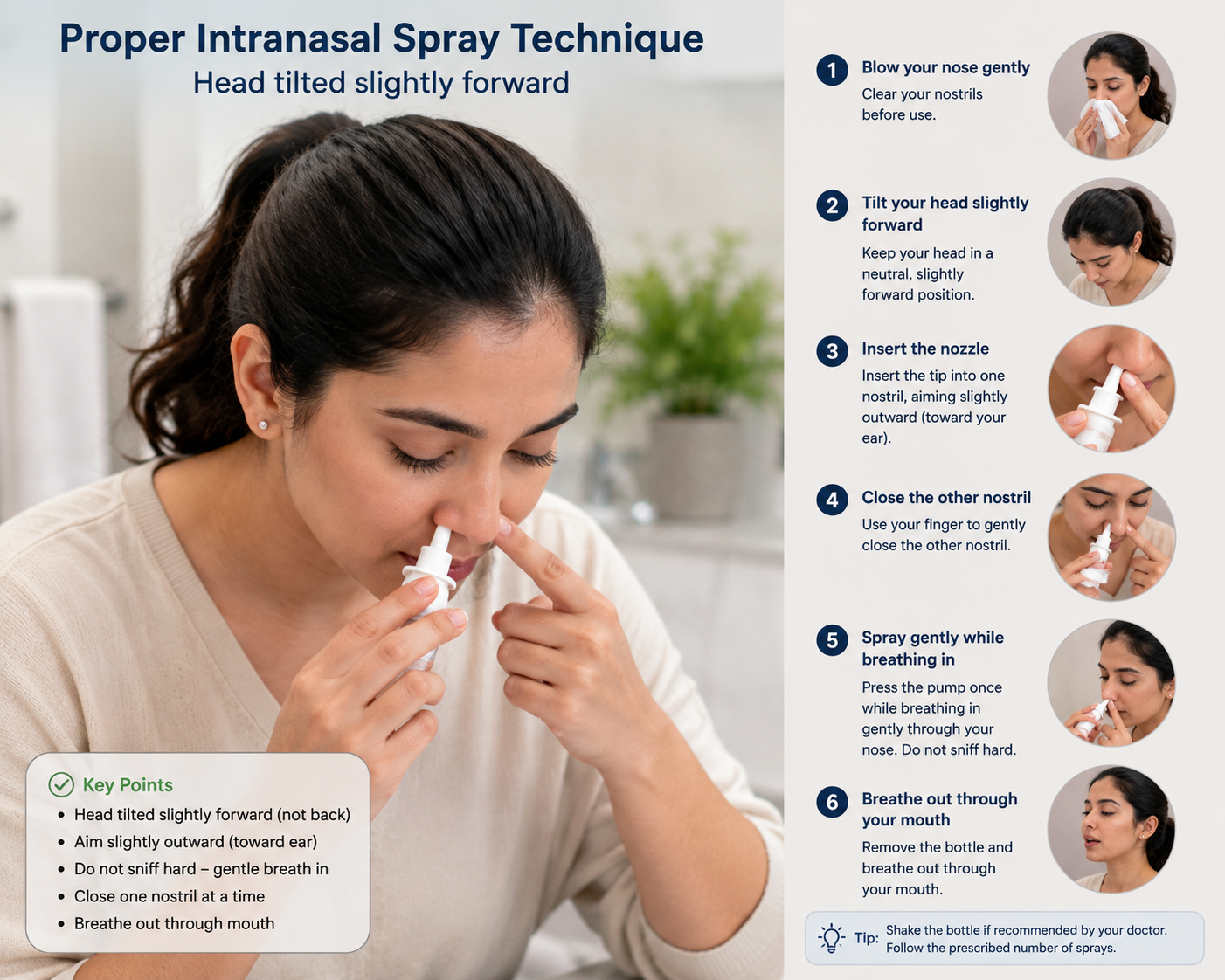
Insight: Many nasal-specific reactions to intranasal peptides, including Semax, improve simply with better spray technique, not a change in dose. Tilting your head slightly forward and avoiding a hard, fast spray reduces mucosal trauma.
To reduce nasal irritation, aim the spray slightly away from the nasal septum, avoid excessive force, and don't repeat a dose immediately if you sneeze it out. If you have any active nasal infection or significant mucosal damage, absorption and irritation risk both increase, so it's worth resolving that first.
Seek medical attention if nasal symptoms include heavy or recurrent bleeding, severe pain, swelling, or symptoms that don't improve within a day or two of stopping use.
Rare but Serious Semax Side Effects
Serious reactions to Semax are uncommon in the available literature, but they do occur and should never be brushed off. These are the reactions that call for stopping use and getting medical evaluation.
Rare but reported concerns include:
- Allergic reactions, including rash, swelling, or hives
- Severe or unusually persistent headaches
- Ongoing or worsening dizziness
- Elevated blood pressure in some individuals
- Noticeable mood changes, including increased agitation or anxiety
- Difficulty breathing
Difficulty breathing, facial or throat swelling, or signs of a severe allergic reaction are medical emergencies and require immediate care, not a wait-and-see approach. The Cleveland Clinic and Mayo Clinic both note that any peptide or supplement causing breathing difficulty or throat tightness should prompt emergency evaluation.
If you notice a severe headache that doesn't resolve, a racing heartbeat, or a mood shift that feels out of character, stop using Semax and speak with a healthcare provider before resuming.
Who Is More Likely to Experience Side Effects?
Certain factors make some people more likely to notice adverse effects from Semax than others, and dose is usually the biggest one. Higher or more frequent dosing raises the odds of side effects across the board.
Factors that appear to increase risk include:
- Taking a higher-than-typical dose
- Individual sensitivity to peptide compounds generally
- Existing nasal, cardiovascular, or neurological conditions
- Known allergies to peptide-based products
- Age, since older adults may metabolize compounds differently
- Pregnancy and breastfeeding, where safety data are lacking
- Taking other medications that affect mood or the central nervous system
- A pre-existing neurological or psychiatric disorder
Because there isn't sufficient clinical data on Semax use during pregnancy or breastfeeding, it's generally considered unsuitable for these groups, per the limited safety literature available. The same caution applies to anyone with a history of severe anxiety, mania, or seizure disorders, since nootropic peptide compounds that influence neurotransmitter activity can potentially affect these conditions.
If any of these factors apply to you, that's exactly the conversation to have with a healthcare provider before starting, not after you've already noticed a reaction.
Does Semax Affect Mood, Sleep, or Anxiety?
Semax's effect on mood, sleep, and anxiety varies quite a bit from person to person, and the evidence here is mixed rather than settled. Some users report calmer focus, while others notice restlessness, especially at higher doses.
Here's what tends to come up:
- Anxiety: Some users report a subtle calming effect, while others, particularly at higher doses, report increased agitation or jitteriness
- Sleep: Reports are inconsistent, some note easier sleep onset, others note lighter or more disrupted sleep if dosed too late in the day
- Mood: Occasional reports of low-level mood shifts, generally mild
- Energy and mental clarity: Frequently cited as a subjectively positive effect, tied to Semax's proposed influence on dopamine signaling
- Emotional effects: Individual variability is the rule here, not the exception
Research into Semax's stress-modulating properties points to effects on the hypothalamic-pituitary-adrenal (HPA) axis, which is one proposed mechanism for both the calming reports and the occasional agitation reports. Larger, independent, placebo-controlled human trials on mood and anxiety outcomes are still limited.
If you have a diagnosed mood or anxiety disorder, this is a case where working with a clinician, rather than self-managing dose and timing, matters most. Our guide on how to reduce anxiety fast covers non-peptide options worth considering alongside any peptide discussion.
Long-Term Safety of Semax
The honest answer on long-term safety is that the evidence is still incomplete. Most available data covers shorter research periods, and rigorous long-term human safety trials are limited.
What the current research base looks like:
- Russian human trials, some spanning up to six months, report a generally benign side-effect profile
- Animal studies have explored neuroprotective and cognitive effects at various dose ranges
- Independent Western pharmacovigilance and structured adverse-event reporting are largely unavailable
- No robust data exists on continuous use beyond several months in humans
Because Semax is not FDA-approved and isn't subject to the same post-market surveillance as approved medications, gaps in long-term data are expected to persist until more independent research is conducted. The NIH and PubMed-indexed literature reviews on Semax consistently flag this as a limitation rather than a settled question.
Given these limitations, most clinicians who work with peptides recommend cycling protocols (periods of use followed by breaks) rather than continuous, indefinite use, and periodic check-ins to monitor for any emerging symptoms.
Semax Dosage and How It Influences Side Effects
Dosage is one of the strongest predictors of whether you'll notice side effects of semax, with higher amounts and more frequent use generally associated with more reactions. This isn't a case where more is better.
Some general principles worth knowing:
- Research-cited intranasal doses have ranged widely, from the low hundreds of micrograms to several milligrams per day, depending on the study
- Following medical or manufacturer guidance for a given formulation matters more than matching an online forum's protocol
- Frequency of administration, not just single-dose size, affects total exposure and side-effect risk
- Individual response can vary significantly even at matched doses
- Exceeding recommended amounts increases the likelihood and severity of nasal, neurological, and mood-related reactions
- Tracking your own response, symptoms, timing, severity, helps you and a provider adjust course early
We go deeper on specific dosing ranges and protocols in our Semax Dosing Guide, but the safety principle holds regardless of protocol: start conservatively, monitor closely, and don't chase a bigger effect by increasing dose on your own.
Semax Drug Interactions and Precautions
Semax's interactions with other substances aren't fully mapped in the available research, which is itself a reason for caution rather than reassurance. Combining it with other centrally active compounds deserves particular care.
Substances and situations that call for extra caution:
- Prescription psychiatric medications, including SSRIs, MAO inhibitors, and stimulants
- Other nootropic peptide stacks, since combined central nervous system effects aren't well studied
- General supplements, especially other compounds marketed for cognition or mood
- Alcohol, which can compound dizziness or fatigue
- Existing cardiovascular, neurological, or psychiatric conditions
Contraindications generally cited in the literature include known hypersensitivity to the peptide, active nasal infection, and pregnancy or breastfeeding, given the lack of safety data. Before starting Semax, it's worth having an honest conversation with a healthcare provider about every medication and supplement you're currently taking, not just the ones that seem obviously related.
How to Reduce the Risk of Semax Side Effects
You can lower your risk of most semax side effects with a handful of practical, low-effort habits, most of which come down to technique and moderation rather than anything complicated.
Practical steps that help:
- Use proper nasal spray technique: aim away from the septum, avoid forceful sprays, and keep your head slightly tilted forward
- Stick to the recommended dosage rather than experimenting upward
- Monitor for symptoms in the hours after each dose, not just the first time you use it
- Stay hydrated, since dehydration can worsen headache and dizziness
- Avoid stacking Semax with other stimulating compounds or alcohol until you know how you respond alone
- Keep a simple symptom log: what you took, when, and what you noticed
- Stop use and reassess if you notice anything beyond mild, brief discomfort
- Loop in a healthcare provider before starting, and again if anything changes
Insight: The single most common reason people report worse side effects isn't the peptide itself, it's skipping the "start low, go slow" step and increasing dose before knowing their own baseline response.
If you're exploring peptides more broadly for cognitive or recovery goals, our guide on whether peptides are safe walks through the same start-low, monitor-closely framework that applies here.
Semax Side Effects vs Selank Side Effects
Semax and Selank are frequently compared because they're both Russian-derived peptides with overlapping nootropic reputations, but their side-effect profiles differ in some meaningful ways. Neither is risk-free, and neither is FDA-approved.
Both peptides share a safety profile built mostly on Russian clinical data and more limited Western research, so the same caution about self-administration and monitoring applies to both. Our comparison guide, Selank vs Semax, and our overview of what Semax peptide actually is go into more depth on mechanism differences if you're weighing the two.
Which is "better tolerated" really depends on what you're looking for. If nasal irritation is a concern for you specifically, Selank's side-effect reports skew milder in that category, but that's not the same as saying it's risk-free.
Final Verdict: Is Semax Safe?
Current research suggests that Semax is generally well tolerated in the populations studied, but like any peptide, it may cause side effects ranging from mild nasal irritation to less common adverse reactions. Understanding the available evidence and consulting a healthcare professional before use is the safest approach.
Most people who experience side effects describe them as mild and short-lived: nasal discomfort, a passing headache, or brief fatigue. Serious reactions, allergic responses, persistent dizziness, or breathing difficulty, are far less common but are the clearest signal to stop and get evaluated.
The bigger honest limitation is that independent, long-term human safety data for Semax remain thin, and it isn't an FDA-approved medication in the United States. That doesn't mean it's unsafe, but it does mean the risk-versus-benefit picture is still being filled in, which is exactly why proper dosage, technique, and medical supervision matter more here than with a well-studied prescription drug.
If you're considering Semax, or peptide-based support more broadly, for cognitive or recovery goals, it's worth discussing your specific health history with a clinician first. Programs like Klearmind's Precision Peptide Programs are built around exactly that kind of individualized oversight, rather than self-directed trial and error.
Medical disclaimer: This article is for informational purposes only and is not medical advice. Talk to a qualified healthcare provider before starting, stopping, or changing any treatment or supplement.
Frequently Asked Questions
What are the most common Semax side effects?
The most frequently reported common side effects are headache, nasal irritation, runny nose, sneezing, mild dizziness, fatigue, and occasional nausea. Most are mild and resolve within a few hours of use. A metallic taste has also been reported by some users. Severity generally increases with higher doses.
What are Semax nasal spray side effects?
Semax nasal spray side effects tend to be localized to the nose, including dryness, burning on administration, congestion, and occasional nosebleeds. These are usually linked to spray technique or nasal sensitivity rather than the peptide's systemic effects. Improving technique often reduces these reactions. Persistent or severe nasal symptoms warrant medical evaluation.
Is Semax considered safe?
Available research describes Semax as having a generally favorable safety profile, with most reactions being mild and transient. However, it is not FDA-approved, and long-term, independent human safety data remain limited. "Generally well tolerated" is not the same as "risk-free," so medical guidance before use is recommended.
Can Semax cause headaches?
Yes, headache is one of the more commonly reported semax side effects, cited in fewer than 5% of subjects in some intranasal studies. Most headaches are mild and temporary, but some users report more persistent discomfort, particularly at higher doses. A severe or unusual headache should prompt you to stop use and seek advice.
Does Semax increase anxiety?
It can, in some individuals, particularly at higher doses, though others report a subtle calming effect instead. The research on Semax and anxiety is mixed and largely drawn from smaller studies. If you have a diagnosed anxiety disorder, talk to a healthcare provider before use.
Can Semax affect sleep?
User reports on sleep are inconsistent, some note no change or easier sleep onset, while others report lighter or disrupted sleep, especially if Semax is used later in the day. There isn't robust clinical data specifically isolating Semax's effect on sleep architecture. Adjusting timing and monitoring your own response is the practical approach.
Are there any long-term side effects of Semax?
This is one of the biggest open questions. Long-term, independent human safety data beyond several months are limited, and most available research covers shorter periods. Until more research exists, cycling protocols and regular monitoring are commonly recommended rather than continuous indefinite use.
Who should avoid using Semax?
Pregnant or breastfeeding individuals, people with known hypersensitivity to the peptide, and those with active nasal infections are generally advised to avoid Semax due to insufficient safety data. People with severe psychiatric conditions, uncontrolled cardiovascular issues, or a seizure disorder should only consider it under close medical supervision, if at all.
Can Semax interact with other medications?
Potentially, yes. Semax's interactions with SSRIs, MAO inhibitors, and stimulant medications aren't fully mapped in current research, and its influence on dopamine and serotonin signaling raises theoretical concerns. Anyone on psychiatric medication should discuss this specifically with their prescriber before adding Semax.
When should I stop using Semax and see a doctor?
Stop immediately and seek medical care if you experience difficulty breathing, facial or throat swelling, signs of an allergic reaction, a severe or unrelenting headache, or persistent dizziness. Milder symptoms that don't improve within a day or two after stopping are also worth discussing with a provider. When in doubt, pause use and ask, rather than waiting it out.
Get Semax Prescribed by a Doctor
.avif)
%2520(1).png)
Get Semax Prescribed by a Doctor
.avif)
