
Selank Withdrawal Symptoms: What to Expect After Stopping Selank


Selank Withdrawal Symptoms: What to Expect After Stopping Selank
Thinking about stopping Selank and wondering about the consequences? If you're researching Selank withdrawal, you're likely worried that your anxiety, sleep, or mood could take a hit once you stop. That's a fair question, and it deserves a careful, evidence-based answer.
You're not alone in asking this. Selank has built a reputation as a gentler alternative to prescription anxiety medications, but "gentler" doesn't automatically mean no withdrawal symptoms once you discontinue use.
Let's walk through what research actually shows, what's still unknown, and how to approach discontinuation safely.

What Is Selank Withdrawal?
Selank withdrawal refers to the symptoms someone might notice after stopping Selank, a synthetic peptide used off-label for anxiety and cognitive support. Current research does not describe a recognised, well-defined withdrawal syndrome for Selank.
Selank is a heptapeptide analog of tuftsin, originally developed in Russia and approved there by the Ministry of Health for generalized anxiety since 2009, according to peer-reviewed pharmacology literature.
In the United States, it is not FDA-approved and is typically used off-label, often through compounding pharmacies or peptide programs supervised by a clinician.
Selank withdrawal is not a clinically established syndrome. Short-term human studies (up to about 28 days) have not reported a distinct withdrawal reaction after stopping Selank, though some people describe temporary anxiety and irritability, sleep disturbances, or mood changes as their baseline symptoms return. This is different from the kind of physical dependence seen with benzodiazepines.
It's worth separating three related ideas early on:
- Withdrawal – new symptoms caused directly by the body adjusting to the absence of a substance
- Rebound effects—a temporary, often stronger, return of the original symptoms being managed by the drug
- **Discontinuation symptoms—**any change noticed after stopping, whether it's around withdrawal, rebound, or simply life stressors resurfacing
Selank has not been shown to cause physical dependence in the way opioids, alcohol, or benzodiazepines do, largely because it does not act as a GABA-A receptor agonist.
Because human research on Selank remains limited in duration and sample size, individual experiences after stopping can vary quite a bit. Some people notice nothing at all; others notice their original anxiety symptoms creeping back within days.
Can Selank Cause Withdrawal Symptoms?
Current evidence suggests Selank is unlikely to cause a classic withdrawal syndrome, though the research base is too limited to rule it out entirely. Most controlled trials have not detected the rebound anxiety or physical symptoms typical of dependence-forming drugs.
A study published in the Bulletin of Experimental Biology and Medicine examined Selank's effects during withdrawal modeling in animals with alcohol dependence, finding it reduced anxiety-related behavior during that process. This tells us something about Selank's calming mechanism, but it is not direct evidence about what happens when a person stops taking Selank itself, and the two shouldn't be conflated.
Here's what the evidence says:
A few factors seem to influence one’s withdrawal symptoms post Selank:
- The duration of Selank use
- The exact Selank dose
- Whether an underlying anxiety condition was being managed with the help of Selank
- Whether other medications or supplements were being used for the treatment
Because no long-term human trials exist, firm conclusions about Selank discontinuation simply aren't possible yet.
Common Selank Withdrawal Symptoms
People who report symptoms after stopping Selank most often describe a return of the anxiety it was managing, along with mild mood or sleep changes. None of these are confirmed as a proven withdrawal syndrome, but they show up often enough in user reports.
Commonly discussed Selank withdrawal symptoms include:
- Anxiety or a noticeable increase in stress, sometimes described as rebound anxiety
- Irritability or general mood changes
- Sleep disturbances, including trouble falling or staying asleep
- Fatigue or low energy
- Brain fog and fatigue, or difficulty concentrating
- A general dip in emotional steadiness
- A return of the symptoms Selank was originally being used to manage
Many of the symptoms linked to stopping Selank overlap heavily with the return of an underlying anxiety or stress condition. This makes it hard to know whether you're experiencing true withdrawal or simply the original issue resurfacing due to lack of support.
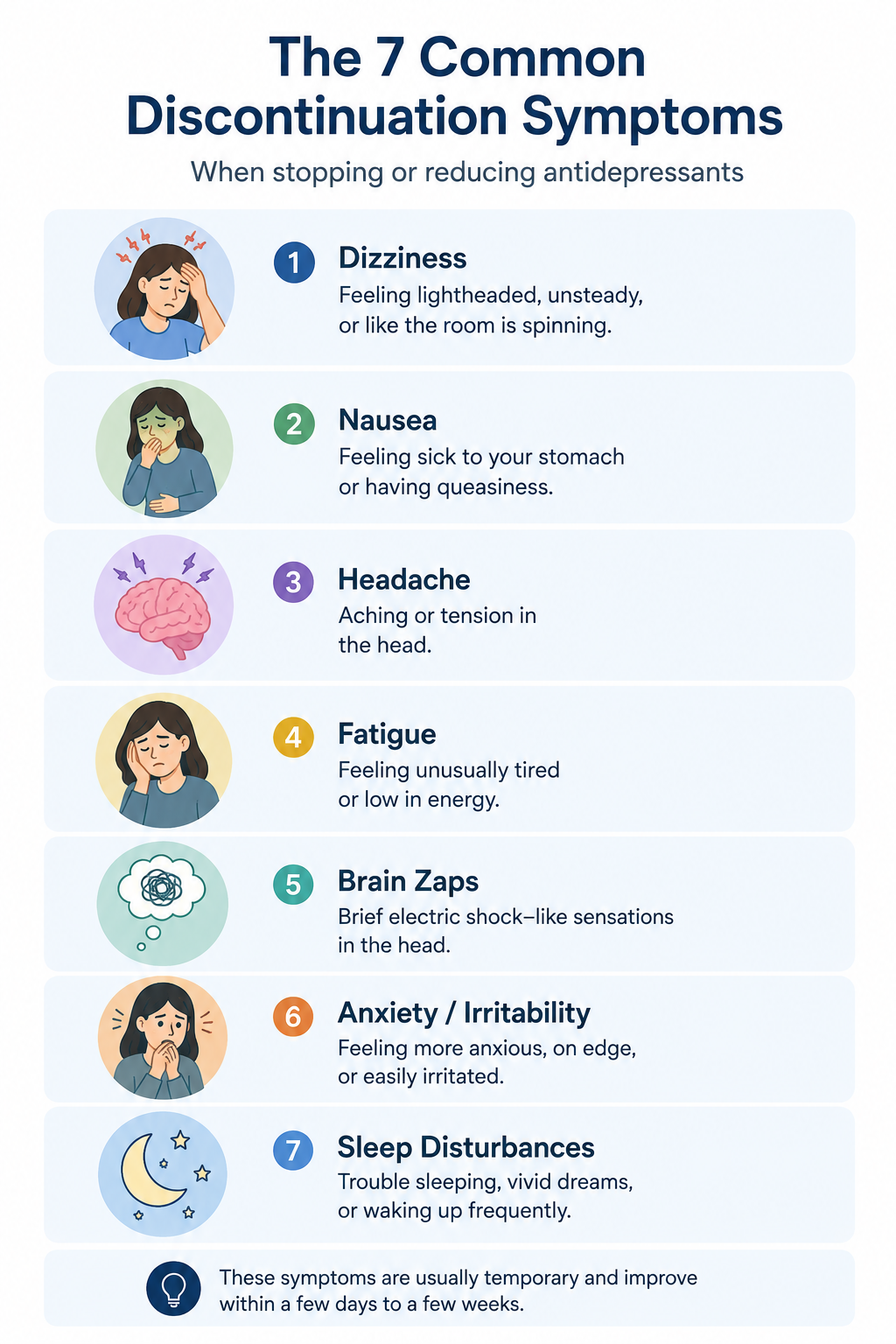
Most of these effects, if they occur, are mild and temporary based on available reports. That said, you should seek medical attention if:
- the symptoms are severe
- do not improve after a couple of weeks, or
- come with anything unusual like chest pain, fainting, or thoughts of self-harm.
How Long Does Selank Withdrawal Last?
There is no established Selank withdrawal timeline, since no long-term controlled studies have observed people after discontinuation. What limited data exists suggests any effects tend to be short-lived rather than prolonged.
One comparison study noted that Selank's anxiolytic effect persisted for roughly a week after the final dose before fading. This means that the adjustment period may taper gradually instead of stopping abruptly.
It helps to distinguish short-term discontinuation effects, which tend to resolve on their own, from a genuine return of underlying symptoms, which may need ongoing treatment. If anxiety, sleep problems, or mood changes continue past a few weeks or get worse, that's your cue to speak with a healthcare provider rather than wait it out.
What Happens When You Stop Taking Selank?
Stopping Selank doesn't guarantee any specific reaction. For many people, the most likely change is simply a gradual return of the symptoms Selank was helping manage.
After the final dose, some people notice nothing unusual at all. Others report a slow re-emergence of anxiety, sleep disturbances, or difficulty concentrating over the following days to weeks, according to user reports gathered across peptide safety resources.
Because Selank is often used alongside other supplements, nootropics, or medications, it can be hard to isolate what's actually causing a symptom after stopping use. A clinician can help sort out whether it's Selank discontinuation, another substance, or an unrelated health change.
If you're also taking other medications, supplements, or managing another health condition, those factors should be part of the conversation with your healthcare provider before and after stopping Selank. Our guide on What is Selank covers the basics of how it works, which is helpful to understand whether it’s the right choice for you.
Selank Tolerance, Dependence & Withdrawal
These three terms get confused constantly, and clarity here matters. Tolerance means needing a higher dose over time for the same effect; dependence means the body has adapted physically and reacts when the substance is removed; withdrawal is the reaction itself.
Here's how they compare for Selank specifically:
Selank's mechanism, working through enzymatic and neuropeptide pathways rather than direct GABA receptor binding, is one reason researchers describe it as having a different risk profile than benzodiazepines, per pharmacology literature referenced by peptide safety reviewers. That's encouraging, but it isn't the same as proof of zero risk over months or years of continuous use, which simply hasn't been studied.
Anecdotal reports of tolerance or Selank dependence should be read with some caution. They aren't controlled data, they can reflect placebo effects or unrelated life stress, and they often come from unsupervised, self-directed use rather than clinically monitored programs. Our Selank dosing guide goes into more detail on typical protocols and cycling patterns used to help manage this uncertainty.
How to Stop Selank Safely
The safest way to stop Selank is to talk with a qualified healthcare provider first, especially if you've been using it for an extended period or alongside other treatments. This isn't because tapering Selank has been proven medically necessary but because professional oversight catches problems self-monitoring can miss.
There is currently no evidence-based, standardized tapering schedule for Selank. Some peptide programs recommend gradually tapering Selank or cycling off over one to two weeks as a precaution, but this is a cautious practice, not a medically confirmed requirement.
A few practical guidelines worth following:
- Avoid making self-directed dose changes without guidance, especially if you're also managing a diagnosed anxiety or mood condition
- Track your mood, sleep, anxiety levels, and energy for a couple of weeks after stopping
- Review any other medications or supplements you're taking with a healthcare professional, since interactions can muddy the picture
- Don't restart or adjust doses on your own based on how you feel day to day
- Seek prompt medical care if symptoms are severe, worsening, or include anything alarming
If anxiety symptoms are severe or persistent after stopping a peptide like Selank, options such as physician-supervised precision peptide programs are worth discussing with a clinician, who can evaluate whether a structured protocol or a different approach fits your situation better.
For a broader look at how peptides like this are typically evaluated for safety, our article on whether peptides are safe is a helpful read before making any changes to your routine.

Medical disclaimer: This article is for informational purposes only and is not medical advice. Talk to a qualified healthcare provider before starting, stopping, or changing any treatment or supplement.
Final Verdict: What to Know About Selank Withdrawal
Selank withdrawal is not well defined in clinical research, so there is no established withdrawal syndrome or reliable timeline that applies to everyone. Understanding the available evidence can help you distinguish possible discontinuation effects from the return of symptoms.
If you're considering stopping Selank, the most reliable approach is simple: pay attention to how you feel, don't make abrupt changes if you're also managing another condition, and talk to a healthcare provider to be well prepared for managing symptoms.
Frequently Asked Questions
Does Selank cause withdrawal?
Current research hasn't identified a confirmed withdrawal syndrome linked to Selank. Short-term human trials show no consistent physical reaction after stopping, though some people report mild, temporary symptoms like anxiety or fatigue. More long-term research is needed before firm conclusions can be drawn.
What are the symptoms of Selank withdrawal?
Commonly reported Selank withdrawal symptoms include anxiety, irritability, sleep disturbances, fatigue, and brain fog. These overlap heavily with the return of whatever condition Selank was being used to manage. None are confirmed as a distinct withdrawal syndrome in clinical studies.
How long does Selank withdrawal last?
There's no established timeline, since long-term discontinuation hasn't been studied in controlled trials. Available data suggests any effects tend to fade within days to a couple of weeks rather than persisting indefinitely. If symptoms continue longer than that, a healthcare provider should be consulted.
Can you become dependent on Selank?
Peer-reviewed research hasn't demonstrated physical Selank dependence, largely because it doesn't bind GABA-A receptors the way benzodiazepines do. That said, human studies remain short in duration, so long-term dependence risk hasn't been fully ruled out. Anecdotal reports of dependence exist but aren't clinically confirmed.
Does Selank cause tolerance?
Selank tolerance hasn't been established in peer-reviewed human research. Some anecdotal reports describe needing higher doses over time, but this hasn't been confirmed in controlled studies. Cycling protocols are sometimes used as a precaution rather than a proven necessity.
Should you taper off Selank?
There's no standardized, evidence-based tapering schedule for Selank. Some peptide programs recommend gradually tapering Selank as a cautious approach, especially after extended use, but abrupt discontinuation hasn't been shown to cause serious harm in short-term studies. A healthcare provider can help you decide what's appropriate for your situation.
What happens when you stop taking Selank?
Most people notice either no change or a gradual return of the anxiety, sleep issues, or mood changes Selank was helping manage. This is different from a new withdrawal illness. Individual experiences vary based on dose, duration of use, and underlying health conditions.
Can Selank withdrawal cause anxiety?
Some people report a temporary increase in anxiety after stopping Selank, sometimes described as rebound anxiety. This is more likely to reflect the return of baseline anxiety than a distinct withdrawal reaction. If anxiety becomes severe or persistent, medical evaluation is recommended.
Can Selank withdrawal affect sleep?
Sleep disturbances are among the more commonly reported changes after stopping Selank. These appear to be mild and temporary in most anecdotal accounts, though controlled data on this specific effect is limited. Persistent sleep problems warrant a conversation with a healthcare provider.
When should you seek medical help after stopping Selank?
Seek medical attention if symptoms are severe, worsen over time, or last longer than a couple of weeks. You should also reach out promptly if you notice anything alarming, such as significant mood changes, thoughts of self-harm, or symptoms that interfere with daily functioning. A qualified provider can help distinguish discontinuation effects from an underlying condition that needs treatment.
Get Selank Prescribed by a Doctor
.avif)
%2520(1).png)
Get Selank Prescribed by a Doctor
.avif)
