
Best Anti-Anxiety Medications: Types, Uses


Best Anti-Anxiety Medications: Types, Uses & Side Effects
Do you often experience racing thoughts, a tight chest, or a mind that won't switch off? Have these symptoms driven you to search for the best anti-anxiety medication? You're not alone— anxiety disorders affect millions of adults, and prescription options range from daily antidepressants to fast-acting drugs for unmanageable symptoms.
This guide breaks down anti-anxiety medications ~~list~~ your doctor might consider: SSRIs, SNRIs, benzodiazepines, and buspirone. Knowing what you’re getting into beforehand helps to have a more guided conversation.

What Are Anti-Anxiety Medications?
Anti-anxiety medications are prescription medicines used to help manage symptoms of anxiety disorders. The most appropriate medication depends on the type of anxiety, symptoms, medical history, and individual response to treatment.
There is no single best anti-anxiety medication for everyone.
- SSRIs and SNRIs are generally the first choice for longer-term anxiety management
- Buspirone offers a non-habit-forming daily option
- Benzodiazepines may be used short-term for acute symptom relief, but always under a doctor's guidance.
Most anxiety medication works by adjusting brain chemicals, or neurotransmitters, tied to mood and stress regulation; notably, serotonin, norepinephrine, and GABA.
These medications are commonly used for generalized anxiety disorder (GAD), panic disorder, social anxiety disorder, and some OCD-related symptoms. According to the National Institute of Mental Health (NIMH), many medications originally developed for depression, including SSRIs and SNRIs, are also standard treatments for anxiety.
Some options work gradually over weeks to build long-term resilience. Others act quickly but are meant for short, occasional use rather than daily management.
Why there's no single "best" option:
- Anxiety shows up differently from person to person
- Medical history and other medications can affect the safety profile of a medication
- Response to a given drug varies; what helps one person may not help another
- Severity and duration of symptoms shape the right starting point
A doctor typically weighs your diagnosis, symptom severity, past treatment response, and risk of dependence before prescribing. Prescription anxiety medication should always be taken under medical supervision, never adjusted or combined on your own.
What Are the Best Anti-Anxiety Medications?
The best anti-anxiety medications generally fall into four main categories, each with a different role in treatment. Your doctor matches the class to your specific diagnosis and needs.
- SSRIs (selective serotonin reuptake inhibitors): typically first-line for long-term anxiety management
- SNRIs (serotonin-norepinephrine reuptake inhibitors): another first-line option, especially when physical tension is prominent
- Buspirone: a non-habit-forming daily option specifically for generalized anxiety disorder
- Benzodiazepines: fast-acting, generally reserved for short-term or as quick relief
- Other medications, such as hydroxyzine, may be used off-label for specific anxiety symptoms
SSRIs and SNRIs are considered first-line treatments because, per NIMH, they tend to carry fewer serious side effects than older anxiety medications. Benzodiazepines remain useful for short-term flare-ups but aren't intended for years of continuous use.
Anti-Anxiety Medications List: Common Types and Examples
Here's a clear anti-anxiety medications list covering the medications most commonly prescribed, organized by drug class. This is just an overview only, your prescriber determines what's appropriate for you.
This list of anti-anxiety medications differs mainly by how fast they work and how long they're meant to be used. SSRIs, SNRIs, and buspirone are generally suitable for longer-term, day-to-day management. Benzodiazepines are typically reserved for short-term or situational relief given their dependence risk.
Our guide to Zoloft alternatives and Lexapro alternatives goes deeper into switching between SSRIs if side effects or effectiveness become a concern.
SSRIs for Anxiety: Uses, Benefits & Side Effects
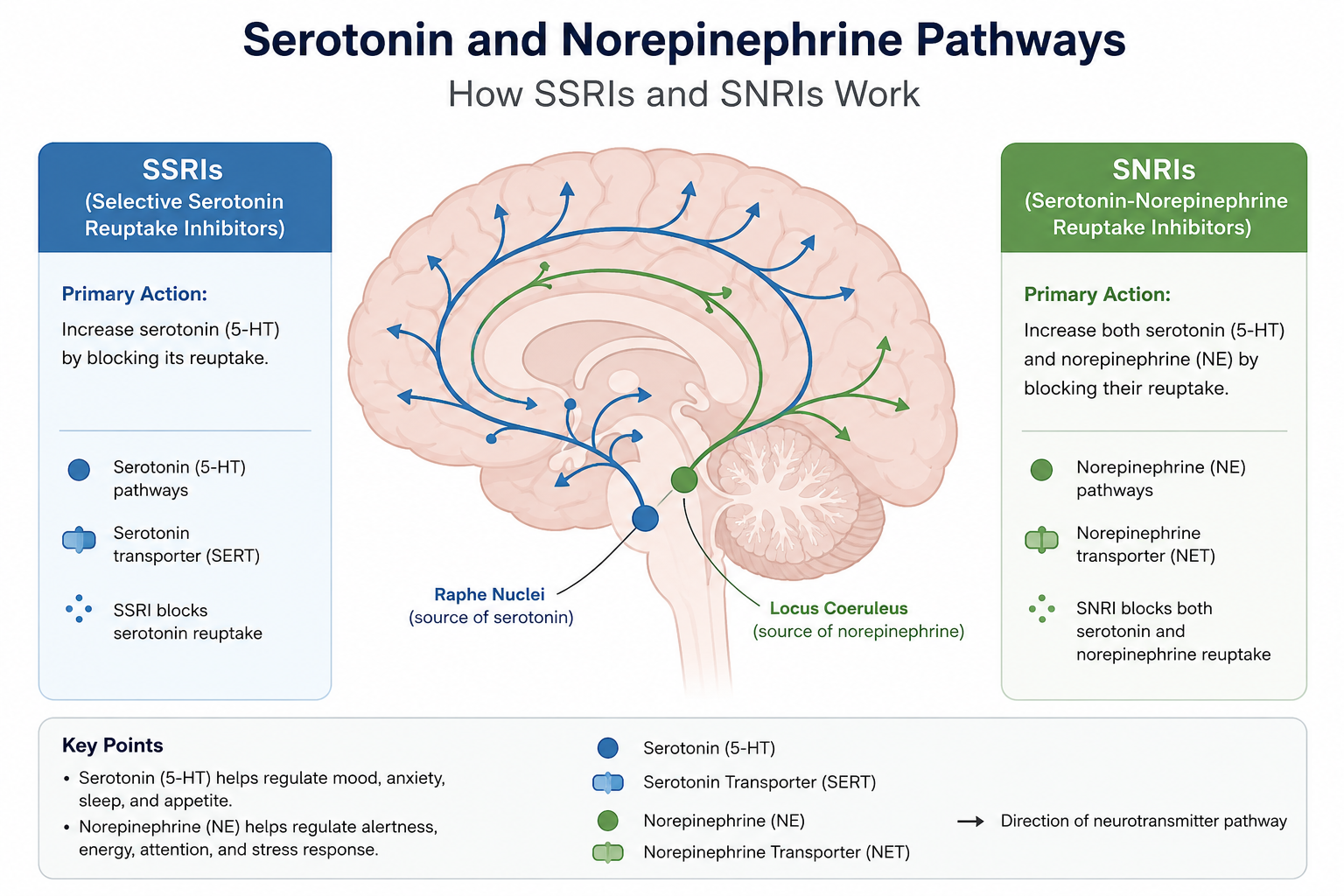
SSRIs work by increasing available serotonin in the brain, and they're commonly prescribed as a first step for several anxiety disorders. They're valued for a milder side effect profile compared to older medication classes.
SSRIs may help reduce excessive worry, physical tension, and intrusive anxious thoughts over time. Commonly prescribed SSRIs for anxiety include sertraline, escitalopram, fluoxetine, and paroxetine.
They're used to treat generalized anxiety disorder, panic disorder, social anxiety disorder, and sometimes PTSD or OCD. Unlike fast-acting drugs, SSRIs are a daily commitment rather than a needed fix.
What to expect:
- Full anxiety-reducing effects may take 4-6 weeks to appear, per Harvard Health
- Common side effects include nausea, headache, sleep changes, and sexual side effects
- Early side effects often ease within the first couple of weeks
- Consistent daily dosing matters; skipping doses can affect how well they work
SSRIs should not usually be stopped suddenly. Stopping abruptly can trigger discontinuation symptoms like dizziness or irritability, so any change should be tapered under a doctor's guidance.
SNRIs for Anxiety: Uses, Benefits & Side Effects
SNRIs affect two neurotransmitters, serotonin and norepinephrine, which may offer extra benefit for anxiety with strong physical symptoms like muscle tension or fatigue. They're often considered alongside SSRIs as a first-line option.
Common SNRIs used for anxiety include venlafaxine (Effexor XR) and duloxetine (Cymbalta), both FDA-approved for generalized anxiety disorder. They may also help with panic disorder and social anxiety.
Potential benefits:
- May ease both emotional and physical anxiety symptoms
- Duloxetine may also help with co-occurring chronic pain conditions
- Generally suited for longer-term management, not as-needed use
Common side effects of SNRIs include nausea, dry mouth, increased blood pressure at higher doses, and sleep disturbances. They work similarly to SSRIs but carry a slightly different side effect profile because of the added norepinephrine effect.
Because SNRIs can raise blood pressure, ongoing medical monitoring matters, especially early in treatment or after dose changes.
Benzodiazepines for Anxiety: When Are They Used?
Benzodiazepines are fast-acting medications that calm the nervous system by enhancing GABA, a natural inhibitory brain chemical. They can ease acute anxiety symptoms within 30 minutes to an hour, far faster than SSRIs or SNRIs.
Common examples include alprazolam (Xanax), lorazepam (Ativan), and clonazepam (Klonopin). Because of how quickly they work, they're often used for panic attacks or short-term, situational anxiety rather than everyday management.
In 2020, the FDA required updated boxed warnings on all benzodiazepines highlighting risks of abuse, misuse, addiction, physical dependence, and withdrawal reactions, even when taken exactly as prescribed.
Key safety considerations:
- Tolerance can build, meaning higher doses may be required over time
- Physical dependence is possible even at prescribed doses
- Drowsiness and impaired coordination are common, affecting driving and focus
- Combining benzodiazepines with alcohol or other sedating substances raises the risk of dangerous respiratory depression
Because of these risks, benzodiazepines should only be used exactly as prescribed, typically at the lowest effective dose for the shortest reasonable time.
Buspirone and Other Medications for Anxiety
Buspirone is a non-benzodiazepine medication FDA-approved specifically for generalized anxiety disorder. It works differently than either SSRIs or benzodiazepines, targeting a specific serotonin receptor subtype.
Unlike benzodiazepines, buspirone isn't associated with dependence, tolerance, or significant sedation. It's also not habit-forming, which makes it a reasonable long-term option for some patients.
Buspirone may be prescribed when a patient wants to avoid benzodiazepine-related risks or as an add-on when an SSRI isn't fully controlling symptoms. It generally takes two to four weeks of consistent dosing to reach full effect, similar in timeline to SSRIs.
Common side effects include dizziness, nausea, and headache, generally milder than benzodiazepine side effects. Buspirone mainly helps with GAD specifically and doesn't appear to be as effective for panic disorder or social anxiety.
Other medications, like hydroxyzine (an antihistamine) or, in select cases, certain beta-blockers for physical symptoms, may also be used depending on the specific anxiety presentation. Medication selection ultimately depends on the underlying diagnosis, not a one-size-fits-all approach.
How to Choose the Best Anti-Anxiety Medication
The best anti-anxiety medication is not the same for everyone. Doctors typically consider the type of anxiety disorder, symptom severity, medical history, other medications, potential side effects, and previous treatment response before recommending an option.
Factors that shape the decision:
- Type of anxiety disorder (GAD, panic disorder, social anxiety, etc.)
- Severity and how long symptoms have persisted
- How you've responded to treatments in the past
- Other medications you're currently taking
- Existing medical conditions, including heart, liver, or kidney issues
- Potential side effects you're most concerned about
- Risk tolerance around dependence, especially relevant for benzodiazepines
- Age and overall health circumstances
- Pregnancy or breastfeeding status, since some medications carry more risk than others
- Cost, insurance coverage, and medication availability
For anxiety that hasn't responded to standard SSRIs, SNRIs, or therapy, some clinicians may discuss additional options like ketamine-assisted therapy. This isn't a replacement for first-line treatment, just one option among several for treatment-resistant cases.
A qualified healthcare professional, not self-research alone, should guide your final medication decision.
Side Effects and Safety of Anti-Anxiety Medications
Every class of anti-anxiety medications carries its own side effect profile, and understanding these upfront helps set realistic expectations. None of these medications are risk-free, which is exactly why medical supervision matters.
Gastrointestinal symptoms like nausea are common across nearly every class, especially in the first couple weeks. Sexual side effects are more specifically tied to SSRIs and SNRIs and worth raising with your prescriber if they persist.
When to contact a healthcare professional:
- Side effects feel severe or don't improve after a few weeks
- You notice thoughts of self-harm (seek help immediately)
- You want to stop or change your dose
- You're mixing medications, alcohol, or supplements
Withdrawal or discontinuation symptoms can occur with SSRIs, SNRIs, and benzodiazepines alike if stopped suddenly. Always follow prescribed dosage instructions, and never adjust a dose without medical guidance.
How Long Do Anti-Anxiety Medications Take to Work?
Timelines vary widely by drug class, which is part of why doctors sometimes combine a fast-acting and a longer-term medication early in treatment. Knowing this upfront helps you avoid giving up too soon.
- Benzodiazepines: effects within 30-60 minutes, fast but short-term
- SSRIs and SNRIs: noticeable improvement often starts around 2-4 weeks, with full effects by 4-6 weeks
- Buspirone: gradual onset over 2-4 weeks of consistent daily use
SSRIs and SNRIs take longer because they work through slower neurochemical and neuroplastic changes, not an immediate chemical shift. Dosage adjustments are sometimes necessary in the first couple of months to find the right level.
If symptoms haven't improved after 6-8 weeks on a full dose, that's worth flagging to your doctor rather than waiting indefinitely. Never change your own dose in the meantime, even if you feel a treatment isn't working yet.
Medication vs Therapy for Anxiety: Which Is Better?
Medication and therapy aren't competing options; they often work best together. Many treatment plans for anxiety medication pair a prescription with structured psychotherapy for stronger, longer-lasting results.
CBT teaches practical tools for reframing anxious thoughts and reducing avoidance behaviors, with effects that tend to hold up well after treatment ends. Lifestyle approaches, sleep, exercise, and reduced caffeine also support both paths.
A professional evaluation helps determine which combination fits your situation. Treatment should always be individualized rather than following a generic template. If you're looking for non-medication strategies to try alongside treatment, our article on how to reduce anxiety fast covers practical techniques.
Final Verdict: What Is the Best Anti-Anxiety Medication?
There is no single best anti-anxiety medication for everyone. The right treatment depends on the type of anxiety, individual symptoms, medical history, potential side effects, and how a person responds to treatment.
Whatever path you and your doctor choose, medication adherence, honest reporting of side effects, and regular follow-up make the biggest difference in outcomes. Pairing medication with therapy and giving any new treatment enough time to work is the best path to follow.
Medical disclaimer: This article is for informational purposes only and is not medical advice. Talk to a qualified healthcare provider before starting, stopping, or changing any treatment or supplement.
Frequently Asked Questions
What is the best anti-anxiety medication?
There's no universal answer. SSRIs and SNRIs are usually first-line for ongoing anxiety; buspirone is a non-habit-forming daily alternative; and benzodiazepines may help short-term. Your doctor matches the medication to your specific diagnosis and history.
What are the most common anti-anxiety medications?
Commonly prescribed options include sertraline, escitalopram, fluoxetine, and venlafaxine, alongside buspirone and short-term benzodiazepines like alprazolam or lorazepam. SSRIs tend to be the most frequently prescribed starting point.
What is the strongest medication for anxiety?
"Strongest" often gets confused with "fastest." Benzodiazepines act quickly and can feel more immediately noticeable, but that doesn't make them more effective for long-term anxiety control than SSRIs, SNRIs, or buspirone used consistently.
What is the fastest-acting anti-anxiety medication?
Benzodiazepines, such as alprazolam and lorazepam, typically act within 30 to 60 minutes. This fast onset is exactly why they're reserved for short-term or as-needed use rather than daily long-term treatment.
Are SSRIs good for anxiety?
Yes, SSRIs are considered a first-line treatment for several anxiety disorders, including generalized anxiety disorder, panic disorder, and social anxiety. Per NIMH, they generally carry a milder side effect profile than older anxiety medications.
What is the difference between SSRIs and benzodiazepines?
SSRIs work gradually over weeks by adjusting serotonin levels and are meant for daily long-term use. Benzodiazepines work within minutes to hours by calming the nervous system directly but carry a higher risk of tolerance and dependence.
What are the common side effects of anti-anxiety medications?
SSRIs and SNRIs commonly cause nausea, headache, and sexual side effects. Benzodiazepines cause drowsiness and impaired coordination, while buspirone's side effects tend to be milder, mainly dizziness and nausea.
Can anti-anxiety medication be taken long-term?
SSRIs, SNRIs, and buspirone are generally considered appropriate for longer-term use under medical supervision. Benzodiazepines are typically not recommended for extended long-term use due to tolerance and dependence risks.
We're here to listen,
not just to treat
.avif)

We're here to listen,
not just to treat
.avif)
