
Are Nootropics Safe? Benefits, Risks & Effectiveness


Wondering if that focus supplement you saw online is worth trying? Are Nootropics Safe is one of the most searched questions in the wellness space right now, and for good reason. Nootropics are substances marketed to sharpen memory, focus, or mental energy, but "natural" and "brain-boosting" on a label do not automatically mean risk-free.
So how do you know if a specific product, ingredient, or dose is actually safe for you? What happens if you're pregnant, on medication, or simply sensitive to stimulants? This guide walks through the real safety picture, what the evidence actually supports, and how to use cognitive enhancers more cautiously if you decide to try them.
According to the National Center for Complementary and Integrative Health (NCCIH), many supplements marketed for brain health have limited high-quality research behind their safety and effectiveness claims. That gap between marketing and evidence is exactly why this question deserves a careful answer.
Are Nootropics Safe? Understanding Their Safety
Nootropics are substances that may support cognitive functions such as memory, focus, attention, or mental performance, but their safety depends on the specific ingredient, dosage, product quality, and individual health factors.
Quick answer: Some nootropics, like caffeine or L-theanine, are generally well tolerated by healthy adults in typical doses. Others, especially unregulated blends or high-dose stimulants, carry real safety risks. There is no single yes-or-no answer, it depends on the ingredient, the dose, and your own health history.
Nootropics range from everyday compounds like caffeine to prescription medications used off-label, to herbal extracts sold as cognitive enhancers. They are designed to support alertness, memory, or mental clarity, not to treat a diagnosed condition.
There's an important difference between prescription and non-prescription nootropics. Prescription options, like certain ADHD medications, go through formal safety review by regulators. Over-the-counter supplements generally do not, which changes the safety conversation significantly.
For most healthy adults, moderate use of well-studied nootropics is reasonably well tolerated. But "reasonably well tolerated" is not the same as "risk-free for everyone."
Several factors shape whether a nootropic is safe for you specifically:
- The exact ingredient and its known interaction profile
- The dose used, and whether it matches researched amounts
- Product quality and manufacturing standards
- Your own health conditions, medications, and sensitivity
Here's something worth sitting with: natural nootropics are not automatically safer than synthetic ones. Herbal extracts can still cause side effects, interact with medications, or be inconsistently dosed from batch to batch.
If you have any underlying health condition, take prescription medication, or are simply unsure, talk to a healthcare professional before starting anything new. That conversation costs you little and can prevent a genuinely avoidable problem.
How Do Nootropics Work?
Nootropics may work by influencing brain chemistry, blood flow, or the body's stress response, though the exact mechanism varies widely by ingredient.
Many nootropics act on neurotransmitters, the brain's chemical messengers involved in attention, mood, and memory formation. Caffeine, for example, blocks adenosine receptors to reduce feelings of fatigue, according to Harvard Health.
Some nootropics are thought to support blood flow to the brain, which may help deliver oxygen and nutrients more efficiently. Others appear to influence how the body responds to stress, which can indirectly affect focus and alertness.
There's a meaningful difference between stimulant and non-stimulant nootropics. Stimulant-based options, like caffeine, tend to produce faster, more noticeable effects, along with a higher chance of jitteriness or sleep disruption. Non-stimulant options, like some amino acid compounds, tend to work more gradually.
Individual response also varies quite a bit. Genetics, body weight, existing caffeine tolerance, sleep habits, and stress levels all shape how a given nootropic affects you.
Are Nootropic Supplements Safe?
Are nootropic supplements safe for regular use? For many healthy adults using single, well-studied ingredients at recommended doses, the answer leans toward reasonably safe, but supplement quality varies enormously between brands.
Common ingredients in nootropic supplements include caffeine, L-theanine, Bacopa monnieri, ginkgo biloba, creatine, and various B vitamins. Some of these have a reasonable body of research behind them; others are included mostly on tradition or marketing appeal rather than strong clinical evidence.
Choosing a reputable manufacturer matters more than most people realize. The FDA does not review dietary supplements for safety or efficacy before they reach shelves, which is a core piece of FDA regulation you should understand before buying anything.
Third-party testing (through organizations like USP or NSF) can help verify that a product actually contains what the label claims, and nothing it doesn't. Look for that verification when it's available.
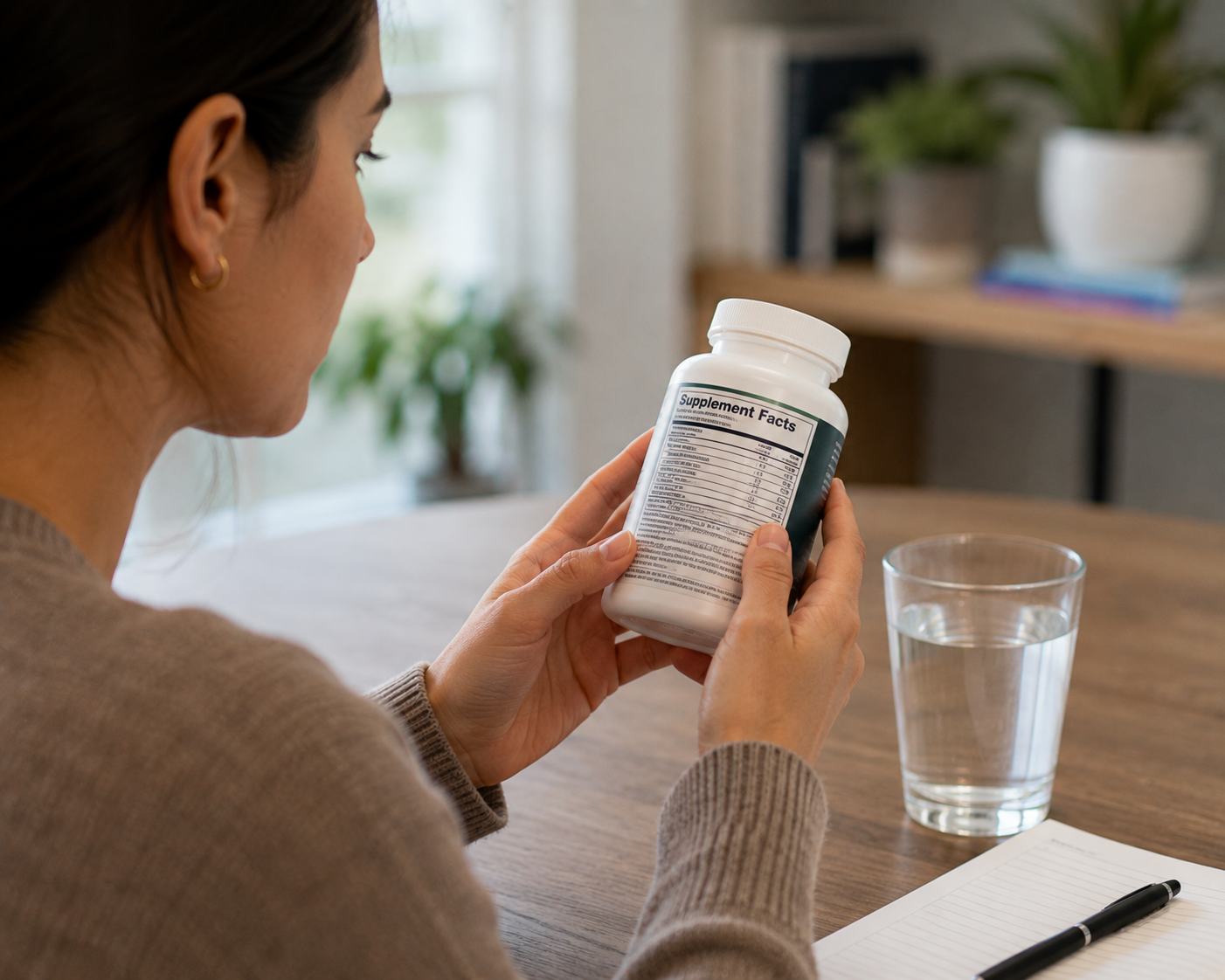
Proprietary blends are worth extra scrutiny. When a label lists a "proprietary blend" without individual ingredient amounts, you can't verify the dosage of anything inside it, which makes it harder to assess real safety risks.
Contamination and mislabeling are documented concerns too. The FDA has issued warning letters to supplement makers for products containing undisclosed or unapproved ingredients.
A few practical habits reduce risk substantially:
- Stick to single, well-researched ingredients when possible
- Avoid combining multiple supplements with overlapping effects
- Never exceed the recommended dose on the label
- Recheck labels periodically, formulations change over time
Are Nootropics Effective? Benefits and What the Research Says
Are nootropics effective? Some are, for specific outcomes, in specific people, but the evidence varies significantly depending on the exact ingredient.
Caffeine has solid research behind short-term improvements in alertness and reaction time. L-theanine, often paired with caffeine, has some evidence supporting a calmer, more focused kind of attention, according to research summarized by the NIH.
For memory and learning, Bacopa monnieri has modest supporting research in some studies, though results are mixed and effects tend to build slowly over weeks. Creatine, more commonly known for muscle support, has emerging clinical evidence for potential cognitive benefits, particularly under sleep-deprived conditions.
There's a meaningful difference between short-term and long-term effects. A cup of coffee's alertness boost is well documented; the long-term cognitive impact of daily stacking multiple nootropics for years is far less studied.
Individual response varies widely too. Genetics, baseline nutrition, sleep quality, and even expectation (the placebo effect is real and well documented in supplement research) all shape how someone experiences a given nootropic.
Before trusting a bold claim, it's worth asking: is this based on a peer-reviewed study in humans, or a small preliminary trial, or just marketing copy? That distinction matters enormously in a lightly regulated category.
It's also worth saying plainly: nootropics should not replace sleep, balanced nutrition, exercise, or stress management. No supplement compensates for chronic sleep deprivation, and treating one as a shortcut around basic health habits tends to disappoint.
Common Risks and Side Effects of Nootropics
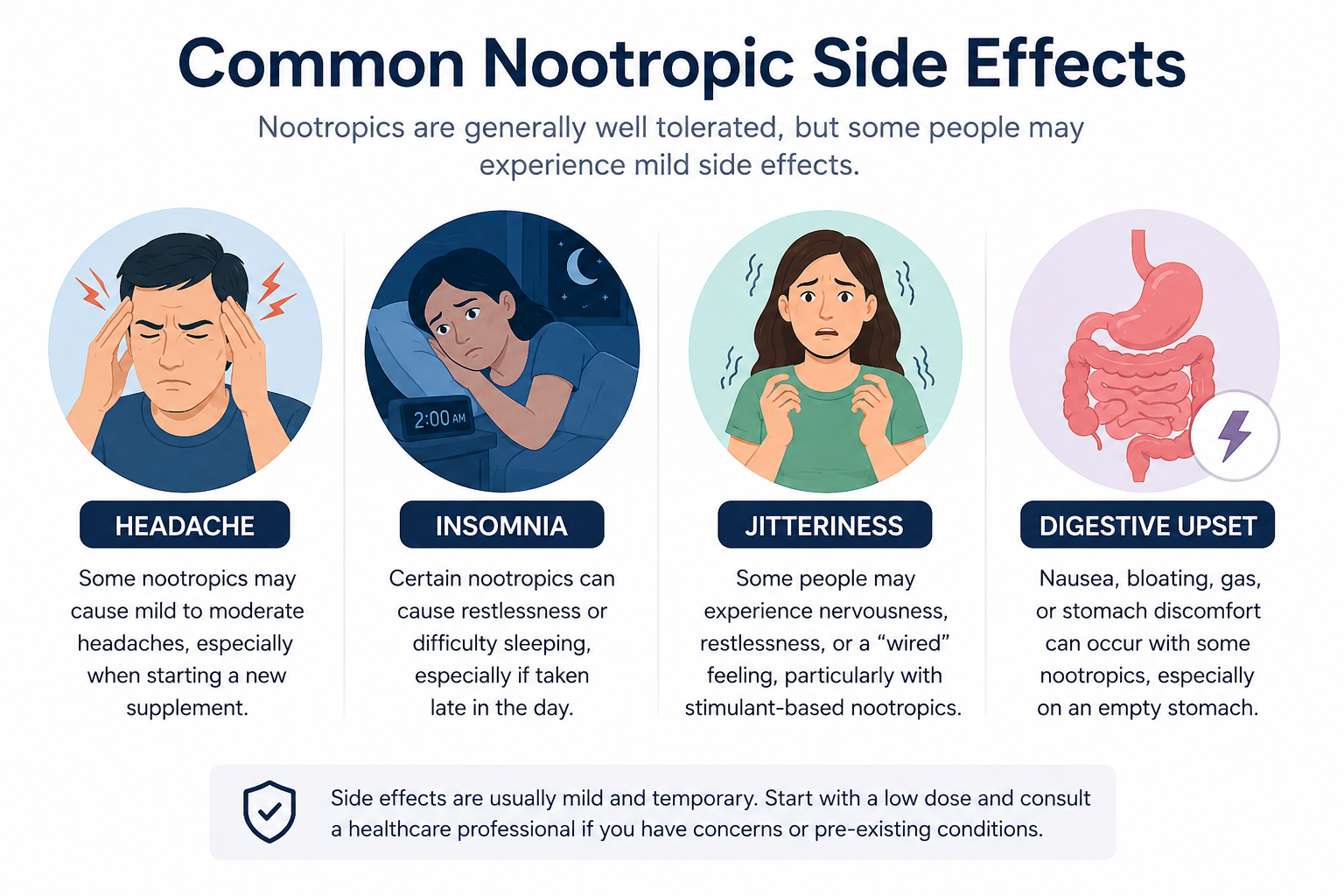
Nootropic side effects exist, and which ones you might experience depends heavily on the specific ingredient, dose, and your own sensitivity.
Commonly reported issues include:
- Headaches
- Nausea or digestive discomfort
- Insomnia and disrupted sleep, especially with stimulants taken later in the day
- Anxiety, nervousness, or restlessness
- Increased heart rate or blood pressure
- Dizziness
Beyond these, drug interactions are a real concern. Certain nootropics can interact with antidepressants, blood thinners, blood pressure medication, or stimulant prescriptions, sometimes in ways that amplify side effects or reduce the medication's effectiveness.
Excessive dosages raise the risk of nearly every side effect on this list. More is not better with nootropics; going beyond a researched dose usually adds risk without adding benefit.
Combining multiple stimulant-based nootropics is a particularly common mistake. Stacking caffeine with other stimulant compounds can push heart rate and blood pressure higher than either ingredient would alone, which is a straightforward but underappreciated safety risk.
Are Nootropics Safe During Pregnancy?
Are nootropics safe during pregnancy? In most cases, no assumption of safety should be made, evidence for many nootropic ingredients during pregnancy is limited or nonexistent.
Pregnancy changes the safety calculus for nearly every supplement. The body's hormone balance, blood volume, and metabolism shift substantially, and what's tolerated outside pregnancy may behave differently during it.
Research on many nootropic ingredients during pregnancy is genuinely thin. Most supplement safety studies exclude pregnant participants entirely, which means an absence of reported problems is not the same as proof of safety.
Stimulant-based nootropics deserve particular caution. The American College of Obstetricians and Gynecologists (ACOG) recommends limiting caffeine intake during pregnancy, and stacking additional stimulant compounds on top of that guidance adds an unclear, unstudied risk.
Natural nootropics are not automatically exempt from this caution either. Herbal compounds can cross into fetal circulation, and "plant-based" says nothing about whether an ingredient is appropriate during pregnancy.
Potential risks to a developing fetus from unstudied compounds are not something to guess about. When solid research doesn't exist, the responsible default is caution, not optimism.
If you are pregnant, breastfeeding, or trying to conceive, discuss any supplement, including nootropics, with your obstetrician or another qualified healthcare professional first. Self-starting a nootropic regimen during pregnancy without that conversation is not a risk worth taking.
Who Should Avoid Nootropics or Use Extra Caution?
Certain groups face a higher chance of adverse effects or drug interactions from nootropics and should approach them with real caution, or avoid them altogether.
This includes:
- Pregnant or breastfeeding individuals
- People taking prescription medications, especially antidepressants, stimulants, or blood pressure drugs
- People with underlying medical conditions such as heart disease, anxiety disorders, or liver or kidney issues
- Individuals who are sensitive to stimulants or caffeine
- People already taking multiple supplements, where interaction risk compounds
- Children and teenagers, whose developing brains and bodies are not represented in most nootropic research
- Older adults managing multiple medications, where interaction risk is often highest
If you fall into any of these categories, or you're simply unsure, a conversation with a healthcare professional before starting a nootropic is the safest move. It's a small step that meaningfully lowers your risk.
How to Use Nootropics More Safely
Using nootropics more safely starts with research, moderation, and honest attention to how your body actually responds.
A few practical habits go a long way:
- Research the specific ingredient, not just the product's marketing claims
- Choose products from reputable manufacturers with transparent labeling
- Check ingredient amounts and dosage information before buying
- Avoid unnecessary ingredient combinations or "stacks" you don't fully understand
- Follow the recommended serving size on the label
- Monitor yourself for side effects, especially in the first few weeks
- Avoid mixing multiple stimulants unnecessarily
- Check for potential drug interactions with any medication you take
- Stop use and seek medical advice if you notice concerning symptoms
- Prioritize sleep, exercise, nutrition, and stress management as your real foundation
If brain fog, low focus, or mental fatigue persists even after addressing the basics, it's worth exploring the topic further. Our guides on the best nootropics for focus, memory, and energy and the difference between adaptogens and nootropics both go deeper into specific ingredient choices.
For more persistent cognitive symptoms, some people explore physician-guided options as well. Klearmind's Precision Peptide Programs, for instance, are worth discussing with a clinician if lifestyle changes and over-the-counter options haven't moved the needle, though this is information to evaluate with a professional, not a self-directed step.
Final Verdict: Are Nootropics Safe and Effective?
So, are nootropics safe? Some may be reasonably well tolerated when used appropriately, but safety and effectiveness depend on the specific ingredient, dosage, product quality, and individual health factors.
Nootropics are not a uniform category, and treating them like one is where most safety mistakes start. A cup of green tea and an unregulated stimulant blend do not carry the same safety risks, even though both get called nootropics.
Are nootropic supplements safe when used appropriately, with a reputable, third-party tested product and a sensible dose? For most healthy adults, generally yes. That changes quickly with poor-quality products, stacked ingredients, or a mismatch with your own health profile.
Effectiveness follows a similar pattern. Clinical evidence supports some ingredients for specific outcomes, like alertness or short-term memory support, while other popular nootropics rest on thinner research than their marketing suggests.
Are nootropics safe during pregnancy deserves its own firm answer: treat them as unsafe by default until a healthcare professional says otherwise, because the research simply isn't there yet for most ingredients.
Ultimately, product quality, correct dosing, and your personal health context decide the outcome more than any single ingredient does. When any of that is unclear, a conversation with a healthcare professional is the appropriate next step, not a guess.
FAQs
Are nootropics safe?
Many are reasonably well tolerated by healthy adults when used at researched doses from quality products, but safety varies by ingredient. Some carry real safety risks, especially at high doses or when combined with other stimulants or medications. There's no single answer that applies to every nootropic. When in doubt, ask a healthcare professional before starting one.
Are nootropic supplements safe?
Are nootropic supplements safe depends heavily on the manufacturer, ingredient transparency, and third-party testing. Because the FDA does not review supplements for safety before they reach the market, quality varies widely between brands. Choosing reputable, tested products and following labeled doses substantially reduces risk. Combining multiple supplements without guidance increases it.
Are nootropics effective?
Are nootropics effective depends on the specific ingredient and the outcome you're hoping for. Some, like caffeine and L-theanine, have decent short-term research support for alertness and focus. Others rest on limited or preliminary evidence. Individual results vary, and no nootropic replaces sleep, nutrition, or exercise as the foundation of cognitive health.
Are nootropics safe during pregnancy?
Are nootropics safe during pregnancy is a question best answered by an obstetrician, not by a supplement label. Research on most nootropic ingredients during pregnancy is limited, and some stimulant-based options carry added, unclear risk. Herbal or "natural" nootropics are not automatically exempt from this caution. The responsible default during pregnancy is to avoid self-starting any nootropic.
What are the side effects of nootropics?
Common nootropic side effects include headaches, nausea, insomnia, anxiety or restlessness, increased heart rate or blood pressure, and dizziness. Which side effects show up, and how severe they are, depends on the specific ingredient and dose. Stimulant-based nootropics tend to carry a higher side-effect burden than non-stimulant options. Monitoring your own response in the first few weeks is a smart habit.
Can nootropics interact with medications?
Yes, drug interactions are a genuine concern with several nootropic ingredients. Certain compounds can interact with antidepressants, blood thinners, stimulant prescriptions, or blood pressure medication. These interactions can amplify side effects or reduce a medication's effectiveness. Anyone on prescription medication should check with a pharmacist or physician before adding a nootropic.
Are natural nootropics safer than synthetic nootropics?
Not automatically. Natural nootropics can still cause side effects, vary in potency between batches, and interact with medications just as synthetic nootropics can. Safety depends on the specific compound, dose, and quality control, not on whether it originated from a plant or a lab. Treat "natural" as a description, not a safety guarantee.
Can you take nootropics every day?
Some well-studied nootropics, like moderate caffeine intake, are commonly used daily by healthy adults. Others are better cycled or used only as needed, particularly stimulant-heavy formulas, to avoid tolerance or rebound effects. Long-term safety data is limited for many newer nootropic ingredients, so daily long-term use deserves periodic reassessment. A healthcare professional can help you decide what's appropriate for your situation.
Who should avoid nootropics?
Pregnant or breastfeeding individuals, people on certain prescription medications, those with underlying health conditions, stimulant-sensitive individuals, children and teenagers, and older adults managing multiple medications should approach nootropics with extra caution or avoid them. Each of these groups faces a higher chance of side effects or interactions. If you fall into any of these categories, talk to a healthcare professional before starting a nootropic.
What should you look for in a safe nootropic supplement?
Look for transparent labeling with exact ingredient amounts, not proprietary blends that hide dosage information. Third-party testing (through organizations like USP or NSF) adds a meaningful layer of quality assurance. Choose reputable manufacturers, avoid unnecessary ingredient stacking, and stick to recommended serving sizes. When any of this is unclear on the label, that's a reasonable signal to look elsewhere.
Medical disclaimer: This article is for informational purposes only and is not medical advice. Talk to a qualified healthcare provider before starting, stopping, or changing any treatment or supplement.
We're here to listen,
not just to treat
.avif)

We're here to listen,
not just to treat
.avif)
