
Ketamine for PTSD
If trauma-focused therapy has not been enough, ketamine is one option worth understanding, including where the evidence is weak. Two randomised trials found rapid reductions in PTSD symptoms. The largest trial, run in veterans and service members, did not. We would rather show you both than pick the flattering half.
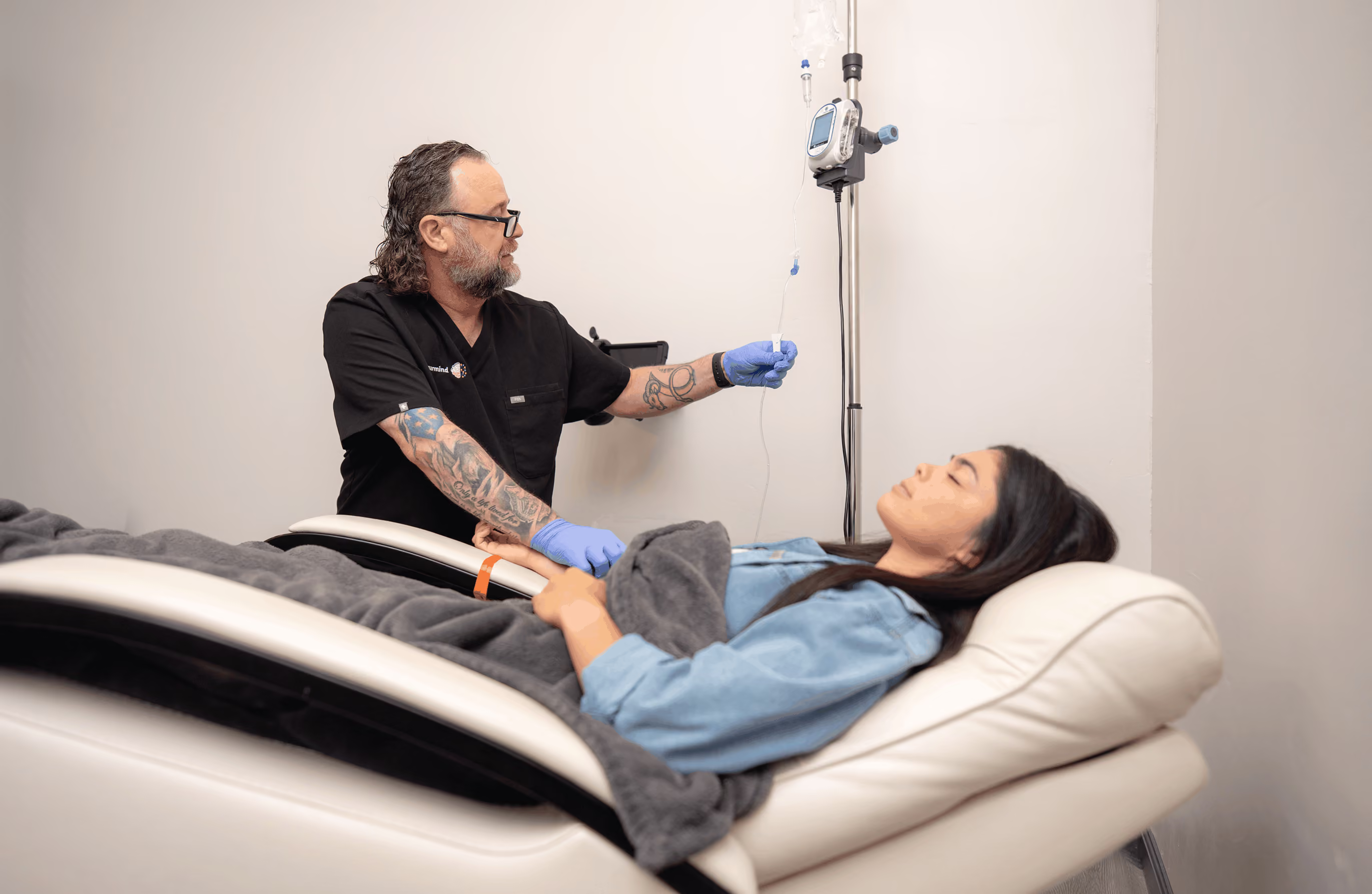

Talk to a board-certified doctor about whether ketamine may be an appropriate option for your PTSD. The first consultation is free.
The acute series | 6 infusions over 2 to 3 weeks |
Each session | Around two hours, start to finish (Need attention) |
Dose used in PTSD trials | 0.5 mg/kg, individually set |
Cost | $2,800 for the six-treatment series |
Consultation | Free |
When people notice | Some report a shift within 24 hours of the first infusion |
Insurance | Not billed directly. We provide a superbill you can submit. |
Afterwards | A responsible adult drives you home. No driving for the rest of the day. |
Ketamine is FDA-approved as an anesthetic. It is not FDA-approved for PTSD, so using it this way is off-label. Esketamine (Spravato) is approved for treatment-resistant depression, not for PTSD. Treatment here is always individualized following a physician evaluation.
What Does the Research Actually Say About PTSD?
The PTSD research is genuinely mixed. Some trials found a clear benefit and the largest one did not. Here is the whole picture rather than the flattering half.
Feder 2014, single infusion | 41 adults with chronic PTSD, 0.5 mg/kg IV. Symptom scores fell significantly against an active control, measured at 24 hours. |
Feder 2021, six infusions | 30 adults, six infusions over two weeks. 67 percent responded, against 20 percent on the control. Among those who responded, the median time before symptoms returned was about four weeks. |
Abdallah 2022, veterans | 158 veterans and service members, the largest trial so far. Ketamine did not beat placebo on PTSD symptom scales, though the standard dose did improve depression scores. |
Two trials from one research group found a clear benefit. The largest trial, run across several sites in veterans and service members, did not. A 2024 pooled analysis of six trials found only a small overall advantage that did not hold beyond two weeks. Ketamine is not a proven treatment for PTSD and we will not describe it as one. (Need attention)
The trials that found a benefit enrolled people with chronic PTSD who had not responded to established treatment. If you have not yet tried a trauma-focused therapy such as CPT, prolonged exposure or EMDR, those are far better evidenced, and we will tell you so at the consultation.
- You have tried a trauma-focused therapy such as CPT, prolonged exposure or EMDR without the improvement you hoped for
- Your symptoms are affecting work, relationships, sleep, or the things you used to enjoy
- You are medically stable and cleared on cardiovascular screening
- You are staying in ongoing care with a therapist, a prescriber, or both
- You have a history of a psychotic disorder, or you are experiencing current manic symptoms
- You have uncontrolled blood pressure or unstable heart disease
- You are managing an active substance use concern
- You already experience frequent dissociation, depersonalisation or derealisation. This needs a specific conversation first, rather than a straight no.
- You are pregnant or breastfeeding
- You are in immediate danger. That needs urgent care today, not an outpatient series.
If ketamine does not appear appropriate following your evaluation, your doctor will discuss the reasons with you and talk through other options.





Will Trauma Memories Surface During the Infusion?
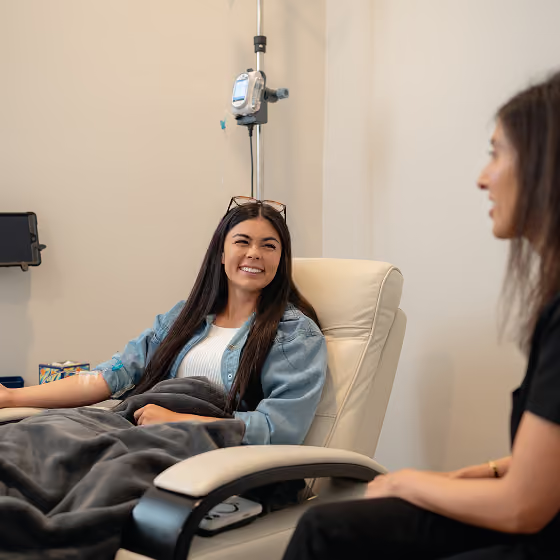
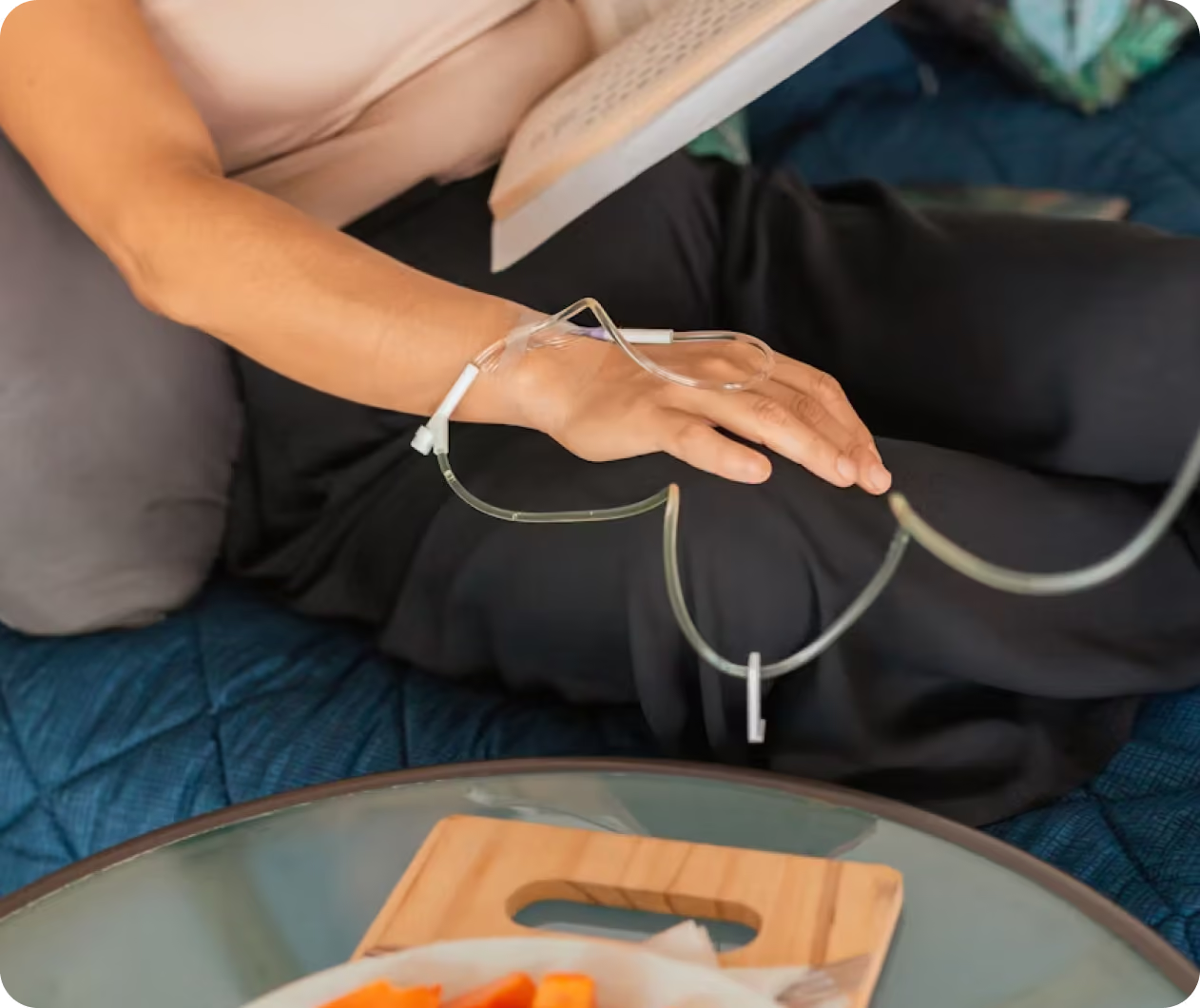
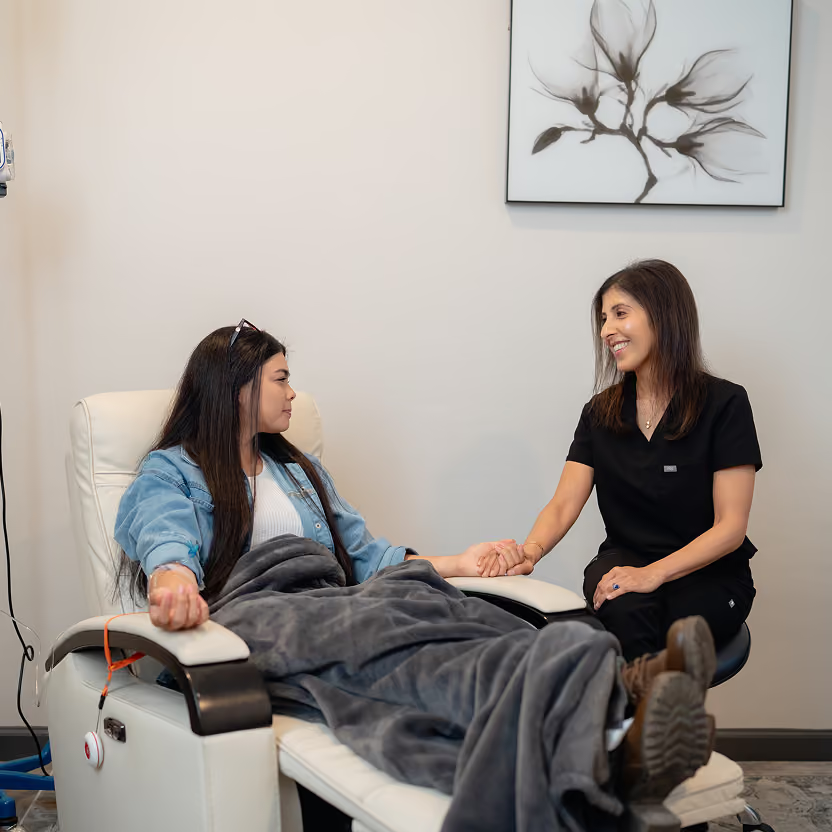
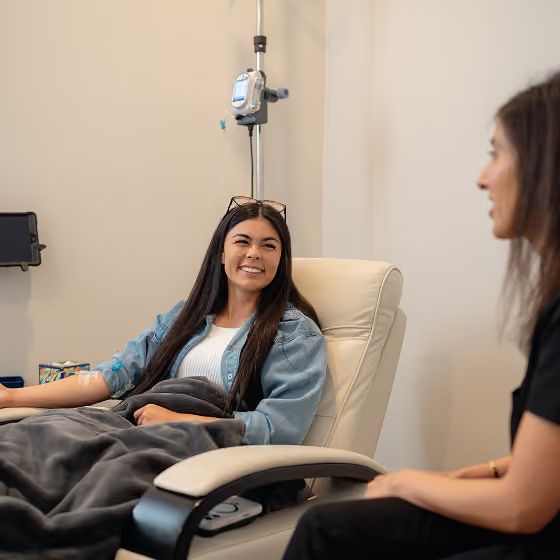
This is the question we are asked most, and it deserves a straight answer. Trauma content can surface during a session. We plan for that rather than hoping it does not happen. You stay awake. You are in a recliner, a clinician is with you, and you can talk the whole time.
Most people describe feeling deeply relaxed within the first few minutes, then a floaty or detached sensation, like watching their own thoughts from a little further away. Time gets strange. Some people feel mild nausea or a headache, which we can treat on site.
Three things are worth knowing. The dissociation is temporary, and in research it typically resolves within about two hours of the infusion. Intensity does not appear to predict benefit, so you do not need a vivid session for it to be worth doing. And if depersonalisation or derealisation is already part of your PTSD, tell us before we start, because it changes how we approach the first session. (Need attention) Practically, the drip is titratable. A clinician is in the room, medication is available if you become distressed, and you control the small things: eye mask, music, lights.
When Might You Notice Changes?

Ketamine Infusion Pricing
Initial consultation Free | Single infusion [CONFIRM PRICE] (Need attention) | Six-treatment acute series $2,800 | |
|---|---|---|---|
What's Included | Personalized evaluation | One ketamine infusion + recovery | Six infusions + personalized protocol |
Treatment Support | Treatment planning | Clinical monitoring | Treatment guide + workbook |
Additional Support | --- | Recovery time | Supplemental medications, such as anti-nausea medication if needed |
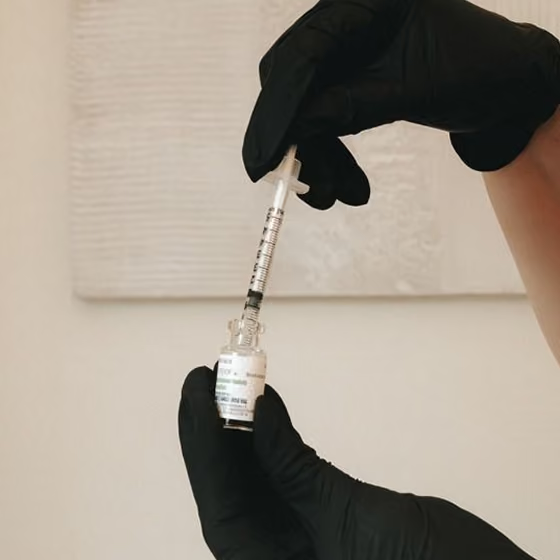
The series includes your personalized protocol, the ketamine treatment guide and workbook, the infusion itself, recovery time, and supplemental medications such as anti-nausea if you need them.
We do not bill insurance directly. We provide a superbill that you can submit to your insurance plan for possible out-of-network reimbursement. Coverage varies, so check with your insurer about out-of-network outpatient behavioral health benefits. If you are a veteran, coverage generally follows the FDA approvals, which cover treatment-resistant depression rather than PTSD. Ask the VA directly rather than relying on any clinic's summary. (Need attention)
If Trauma-Focused Therapy Has Not Been Enough
Most people who reach us have already tried at least one trauma-focused therapy. If you are still weighing your options, these may be more useful to you right now:





What our customers want to know
Is ketamine FDA-approved for PTSD?

No. Ketamine is FDA-approved as an anesthetic, so treating PTSD with it is off-label. Esketamine (Spravato) carries FDA approval for treatment-resistant depression, not for PTSD.
Does ketamine actually work for PTSD, or is the evidence still limited?
The evidence is limited and it is mixed. Two randomised trials found a clear benefit, including a 67 percent response rate after six infusions. The largest trial, in veterans and service members, found no benefit over placebo on PTSD symptoms, although it did show a benefit on depression. We will talk you through both at the consultation rather than quoting you only the good half.
Will I relive my trauma during the infusion?
Trauma content can surface during a session. We plan for that before we start rather than hoping it does not happen. A clinician stays with you, the infusion can be slowed or stopped at any point, and we agree beforehand what you would like us to do if it happens.
Can I have ketamine if I already dissociate or have flashbacks?
It needs a specific conversation first. Ketamine causes temporary dissociation by design, and if depersonalisation or derealisation is already part of your PTSD, the experience may be harder for you. That is a screening question rather than an automatic no, and it changes how we run the first session.
Will the VA cover ketamine for PTSD?
Coverage generally follows the FDA approvals, which cover treatment-resistant depression rather than PTSD. Many people with PTSD also meet criteria for treatment-resistant depression, and that is usually the route worth asking your VA provider about. Check with the VA directly rather than relying on any clinic's summary of the rules. (Need attention)
What if my symptoms come back?
That is common and it does not mean treatment failed. In the trial that found a benefit, the median time before symptoms returned was about four weeks after the series. Returning symptoms usually mean it is time to reassess, either with a maintenance infusion or by adjusting the wider plan with your prescriber.

.avif)
