
Ketamine for OCD
If exposure and response prevention therapy and an SRI have not been enough, ketamine sometimes comes up as an option. The honest position is that the OCD evidence is early and thin, and that ketamine is best understood as something that may open a window for therapy rather than a treatment for OCD on its own.
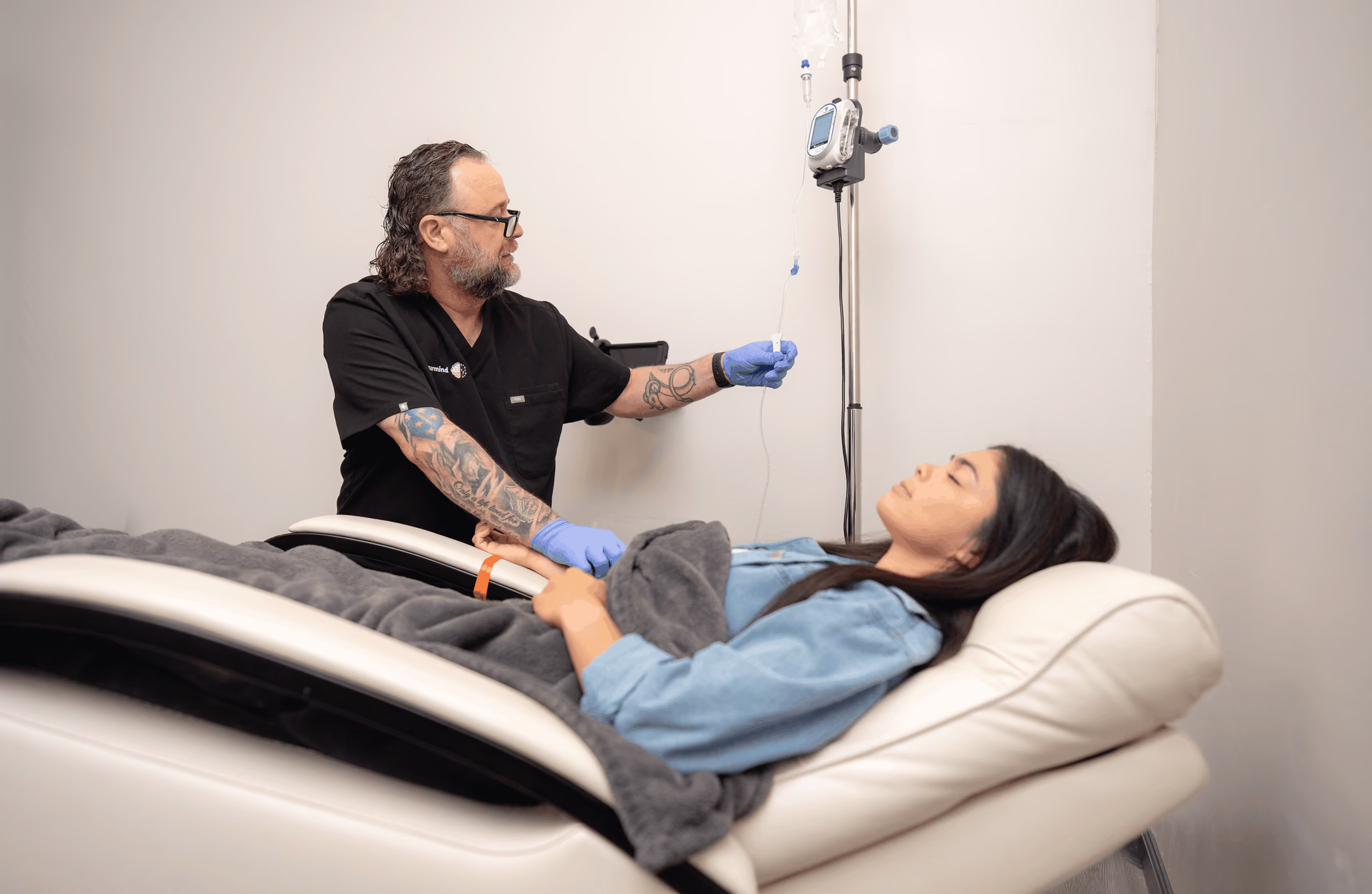

Talk to a board-certified doctor about whether ketamine may be an appropriate option for you. The first consultation is free.
The acute series | 6 infusions over 2 to 3 weeks |
Each session | Around two hours, start to finish (Need attention) |
Dose used in OCD research | 0.5 mg/kg, individually set |
Cost | $2,800 for the six-treatment series |
Consultation | Free |
When people notice | Some report a shift during the infusion itself |
Insurance | Not billed directly. We provide a superbill you can submit. |
Afterwards | A responsible adult drives you home. No driving for the rest of the day. |
Ketamine is FDA-approved as an anesthetic. It is not FDA-approved for OCD, so using it this way is off-label. Exposure and response prevention therapy and SRI medication remain the first-line treatments for OCD. Treatment here is always individualized following a physician evaluation.
What Does the Research Actually Say About OCD?
This is the smallest evidence base of anything we treat, and we would rather say so plainly than dress it up. Across every controlled trial ever run, roughly sixty people have received ketamine for OCD.
Rodriguez 2013 | 15 adults with near-constant obsessions, 0.5 mg/kg IV. Half met response criteria at one week, against none on placebo. Effects began during the infusion itself. |
Bloch 2012 | 10 adults with treatment-refractory OCD. Nobody responded. Symptom scores improved around 12 percent and nothing held beyond one to three days. |
Rodriguez, infusion plus therapy | Open-label. Ketamine followed by ten sessions of exposure and response prevention over two weeks. More than 60 percent met response at two weeks, which is longer than infusions alone have ever achieved. |
Two of these found a benefit and one found none at all. Sample sizes are in the low teens, and the effect of a single infusion has never been shown to last beyond about a week. The International OCD Foundation's position is that ketamine is not currently considered a treatment for OCD. We think you should hear that from us rather than find it elsewhere. (Need attention)
The trial that worked best enrolled people who were not on medication and did not have significant depression, which is not the typical person who reaches a ketamine clinic. If you have not yet had a proper course of exposure and response prevention therapy, that is the treatment with real evidence behind it, and it is where we will point you.
- You have completed an adequate course of exposure and response prevention therapy without the improvement you hoped for
- You have tried an SRI at an adequate dose for at least eight to twelve weeks
- You are medically stable and cleared on cardiovascular screening
- You are willing to pair treatment with exposure and response prevention therapy, which is where the durable gains come from
- You have a history of a psychotic disorder, or you are experiencing current manic symptoms
- You have uncontrolled blood pressure or unstable heart disease
- You are managing an active substance use concern
- Your obsessions centre on losing control of your mind, going mad, or whether things are real. Ketamine causes temporary dissociation, and for that pattern the infusion itself can become the feared thing.
- You are pregnant or breastfeeding
- You are in immediate danger. That needs urgent care today, not an outpatient series.
If ketamine does not appear appropriate following your evaluation, your doctor will discuss the reasons with you and talk through other options.





Will the Dissociation Make My Intrusive Thoughts Worse?
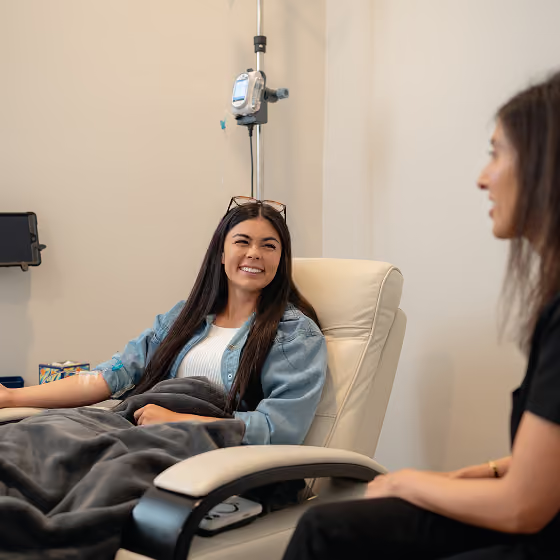
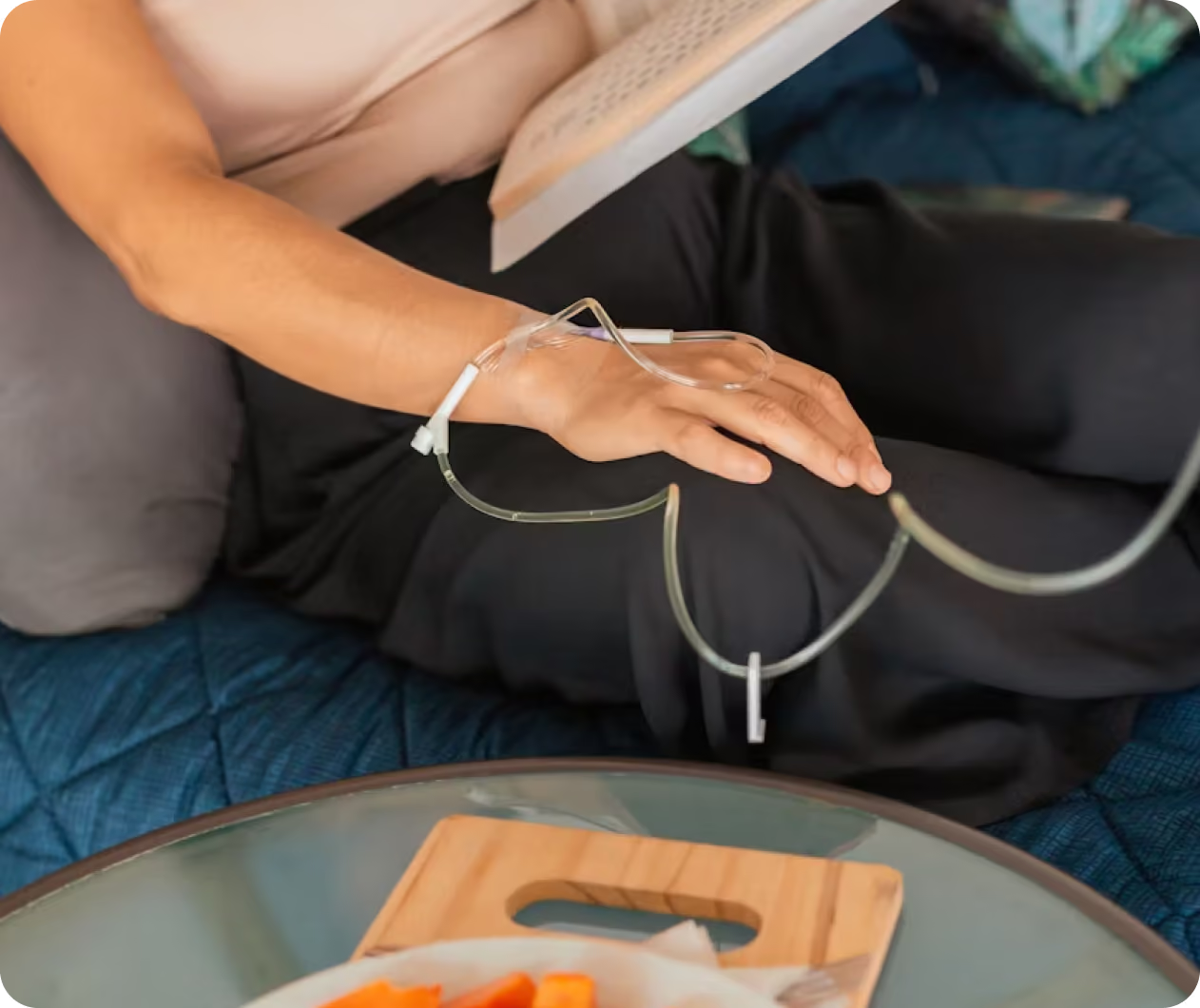
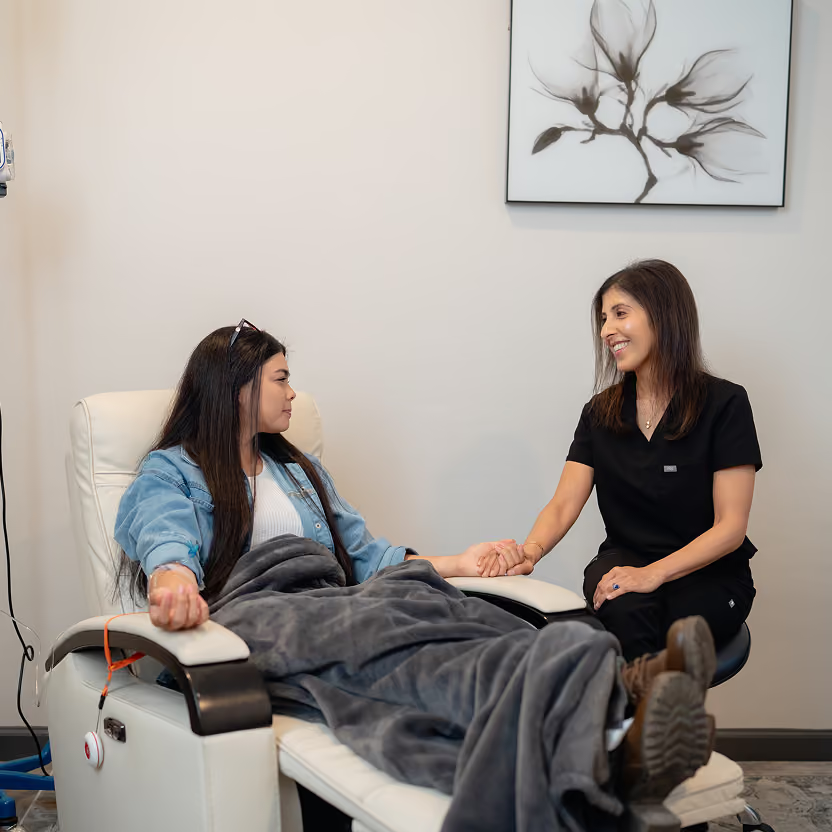
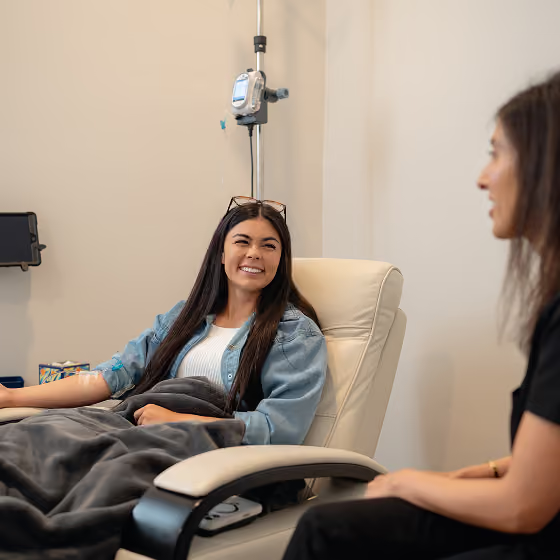
If your obsessions are about losing control of your mind, this is exactly the right question to ask, and it deserves a straight answer. You stay awake. You are in a recliner, a clinician is with you, and you can talk the whole time.
Most people describe feeling deeply relaxed within the first few minutes, then a floaty or detached sensation, like watching their own thoughts from a little further away. Time gets strange. Some people feel mild nausea or a headache, which we can treat on site.
Three things are worth knowing. The dissociation is temporary and typically resolves within about two hours of the infusion. Intensity does not appear to predict benefit, so you do not need a vivid session for it to be worth doing. And if your obsessions centre on reality, control, or going mad, tell us before we start, because for that pattern the experience itself can become something to check and ruminate on afterwards. (Need attention) Practically, the drip is titratable. A clinician is in the room, medication is available if you become distressed, and you control the small things: eye mask, music, lights.
When Might You Notice Changes?

Ketamine Infusion Pricing
Initial consultation Free | Single infusion [CONFIRM PRICE] (Need attention) | Six-treatment acute series $2,800 | |
|---|---|---|---|
What's Included | Personalized evaluation | One ketamine infusion + recovery | Six infusions + personalized protocol |
Treatment Support | Treatment planning | Clinical monitoring | Treatment guide + workbook |
Additional Support | --- | Recovery time | Supplemental medications, such as anti-nausea medication if needed |
The series includes your personalized protocol, the ketamine treatment guide and workbook, the infusion itself, recovery time, and supplemental medications such as anti-nausea if you need them.
We do not bill insurance directly. We provide a superbill that you can submit to your insurance plan for possible out-of-network reimbursement. Coverage varies, so check with your insurer about out-of-network outpatient behavioral health benefits. Spravato is often easier to get covered, but it is approved for treatment-resistant depression, not for OCD.
If Therapy and Medication Have Not Been Enough
Exposure and response prevention remains the treatment with the strongest evidence for OCD. If you are weighing your options, these may be more useful to you right now:





What our customers want to know
Is ketamine FDA-approved for OCD?

No. Ketamine is FDA-approved as an anesthetic, so treating OCD with it is off-label. Exposure and response prevention therapy and SRI medication remain the first-line treatments, and no guideline currently recommends ketamine for OCD.
Does ketamine work on OCD itself, or only on the depression that comes with it?
Both, unevenly. The trial that found the clearest effect deliberately enrolled people who were not significantly depressed, so the effect on obsessions does appear to be real. But in people who have both, depression tends to improve more, and faster, than the OCD does.
How long does the relief last?
From a single infusion, up to about a week in the research, and in one trial only one to three days. That is the honest ceiling. If you see a clinic quoting months of relief for OCD, that figure is not coming from the OCD studies.
Do I have to do ERP therapy alongside the infusions?
We strongly recommend it. The only approach that held longer than a week in research paired infusions with exposure and response prevention. Without therapy alongside, the realistic expectation is days rather than months, and we would rather you know that before you spend anything.
Will ketamine make my intrusive thoughts worse?
For most people, no. But if your obsessions centre on losing control of your mind or on whether things are real, the dissociation can become the feared thing itself, or something you check and ruminate on afterwards. Raise it at the consultation so we can screen for it properly.
Should I try ketamine if ERP and SSRIs have not worked?
It is a reasonable conversation to have, with realistic expectations. It is worth knowing that the trial with the best results enrolled people who were unmedicated and not significantly depressed, which is not most people who reach us. That gap is a real limit on what anyone can promise you.

.avif)
