
How Ketamine Works
Ketamine does not work like an antidepressant. It acts on a different system, on a different timescale, and the effect outlasts the drug itself. Here is the chain of events as we currently understand it, including the parts that are still being argued over.
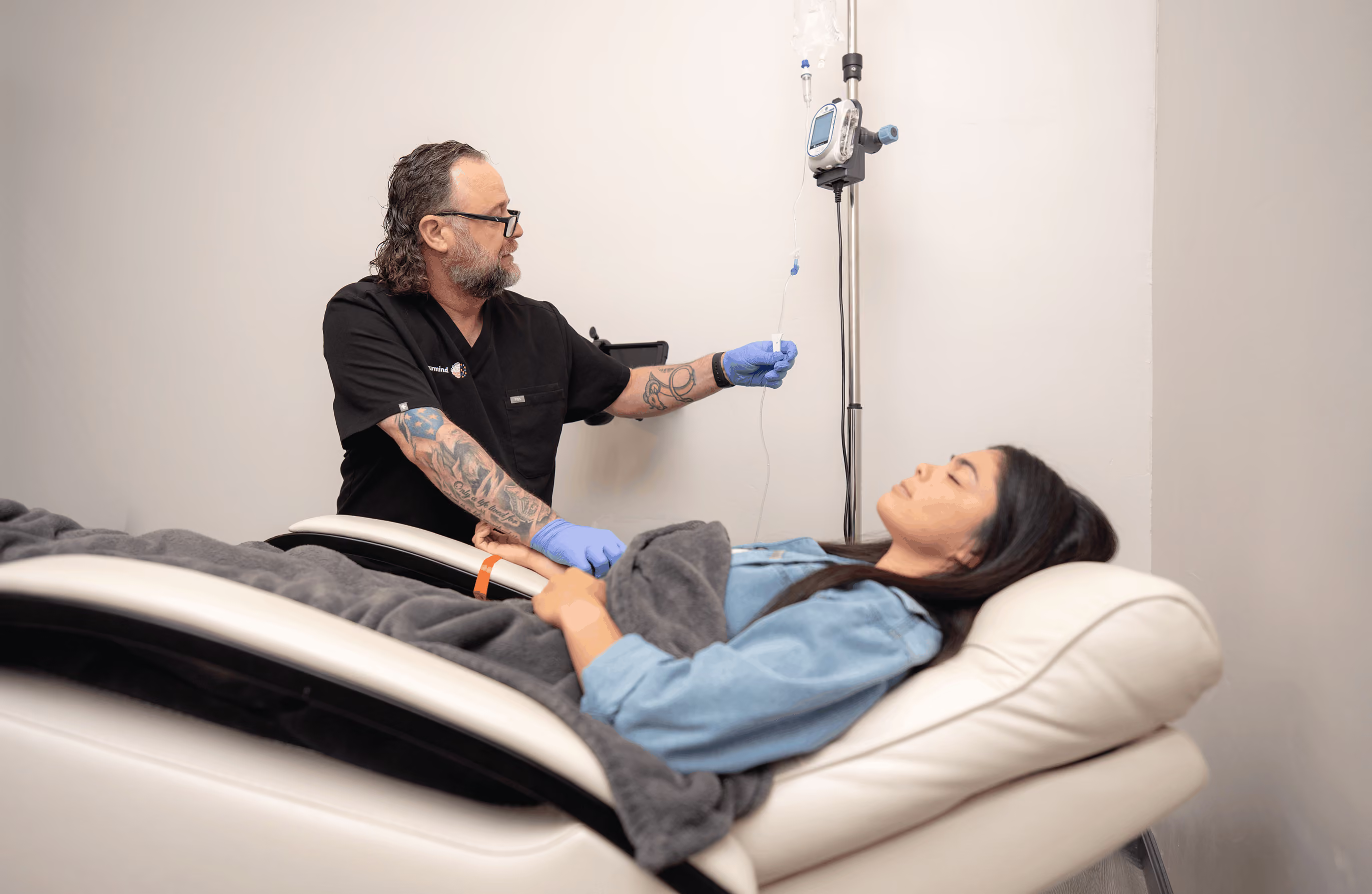

Talk to a board-certified doctor about whether ketamine may be an appropriate option for you. The first consultation is free.
Typical course | 6 infusions over 2 to 3 weeks |
Infusion length | 40 minutes |
Standard dose | 0.5 mg/kg, well below anaesthetic level |
Half-life | About 2 to 3 hours. The drug is largely gone by the next morning. |
Peak effect | Around 24 hours in research, after the drug itself has largely cleared |
Earliest measured effect | From around two hours after the infusion |
How long one dose lasts | Three to seven days in research, which is why treatment is a course |
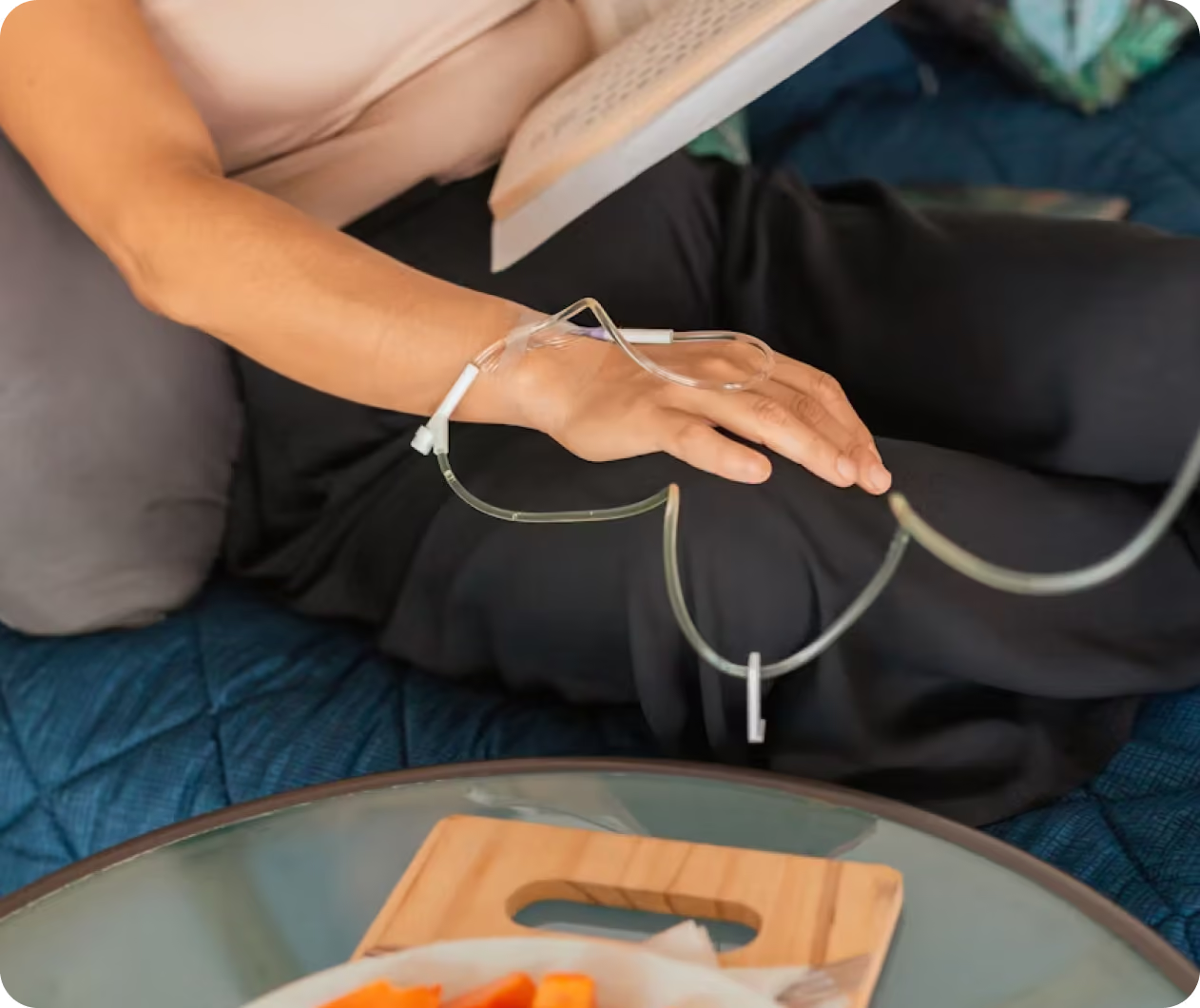
Route we use | Intravenous, which delivers the whole dose and can be stopped mid-infusion |
Ketamine is FDA-approved as an anesthetic. Using it for mental health conditions is off-label. At the dose used here, peak blood levels reach roughly 70 to 200 nanograms per millilitre. Surgical anaesthesia requires 2,000 to 3,000. Treatment here is always individualized following a physician evaluation.
What Is Settled and What Is Still Being Argued About
Most pages about ketamine present the mechanism as though it were fully worked out. It is not. Here is the honest split.
Established | That ketamine blocks the NMDA receptor. And that activation of a second receptor, AMPA, is required for the antidepressant effect, because blocking AMPA abolishes it. |
Likely | The glutamate surge, the release of a growth protein called BDNF, and the growth of new connections between neurons. Strong evidence in animals, inferred rather than directly observed in people. |
Still debated | Which cells ketamine acts on first, whether one of its breakdown products does the real work, and whether the dissociative experience is part of the treatment or just a side effect of it. |
One claim you will see repeated on clinic websites deserves a correction. The idea of a neuroplastic window lasting days or weeks comes from imaging studies in rodents. No study has directly measured such a window in a human brain. It is a reasonable working theory, not a measured fact, and we would rather say so. (Need attention)
None of this uncertainty means ketamine does not work. The clinical results are measured directly in patients and do not depend on the mechanism being fully explained. It does mean that anyone describing the biology as settled science is overstating it.
- Acts on serotonin, one of the brain's chemical messengers
- Taken every day, continuously, often for years
- Benefit usually appears after two to four weeks
- The effect tracks the drug. Stop taking it and the effect fades.
- Acts on glutamate, the signal your brain uses for most of its ordinary communication
- Given as a short course of infusions rather than as a daily tablet
- In research, changes have been measured within hours rather than weeks
- The drug leaves your body within hours, but the effect can outlast it by days
- It appears to work by prompting the brain to rebuild connections, rather than by topping up a chemical
- It is not a stronger antidepressant. It is a different lever.
Faster is not the same as better, and it is not the same as permanent. Antidepressants are far better studied over years of use, and for many people they work well.




If the Drug Is Gone in Hours, Why Does the Effect Last Days?
This is the question that confuses people most, and it has a genuinely interesting answer. Ketamine has a half-life of roughly two to three hours. By the next morning it is essentially out of your system. Yet the effect can still be measurable a week later.
The reason is that ketamine does not act like a chemical that has to stay in your bloodstream to keep working. It starts a process. The infusion is the trigger, and what follows, the growth signals and the new connections, is what carries the effect after the drug itself has cleared.
One elegant piece of evidence sits behind this. In a 2019 study, researchers were able to selectively destroy the new connections that had formed after ketamine. The initial relief was untouched, but it no longer lasted. In other words, the infusion opens a window and the new wiring is what holds it open. That study was in mice, and no equivalent has been done in people. (Need attention)

When Might You Notice Changes?

What This Means For a Specific Condition
The mechanism is the same whatever we are treating. What differs is how much evidence exists for each condition, which is covered on its own page:




What our customers want to know
Does ketamine regrow parts of my brain?

Not neurons, no. What the research shows is regrowth of connections between existing neurons, the contact points called synapses. That has been imaged directly in animals and is inferred rather than directly observed in people.
Why does it work in hours when my antidepressant took a month?
Because it works on a different system. An antidepressant adjusts serotonin levels, and the benefit waits on slow adaptations that take weeks. Ketamine acts on glutamate and starts a plasticity process that begins within hours. Faster is not automatically better, and antidepressants are much better studied over the long run.
Is ketamine a psychedelic? Is the experience the treatment?
Ketamine is a dissociative rather than a classical psychedelic. Whether the experience itself contributes to the benefit is genuinely unresolved, and it is one of the harder questions in the field to test, because the experience makes proper blinding almost impossible. Some analyses find no relationship between how intense a session felt and how much someone improved.
Why IV rather than a nasal spray or a lozenge at home?
Mostly because of how much of the dose actually reaches you, and how much control there is over it. IV delivers the full dose and can be stopped mid-infusion. Sublingual absorption averages around a quarter of the dose and varies widely between people. The FDA has also issued specific warnings about compounded ketamine used at home without monitoring.
Will ketamine work if antidepressants did not?
The research base for ketamine is specifically in people whose depression had not responded to standard antidepressants, so a previous failure does not predict a failure here. It does not guarantee a response either. Individual results vary.
Is the dose the same as anaesthesia?
No, and the gap is large. Blood levels during a treatment infusion reach roughly 70 to 200 nanograms per millilitre. Surgical anaesthesia requires somewhere around 2,000 to 3,000. You stay awake and able to talk throughout.

.avif)
