
Ketamine for Anxiety
If therapy and an SSRI have not moved your anxiety, there is another option worth understanding, including its limits. Ketamine works through a different mechanism than traditional anti-anxiety medication, and in studies of treatment-refractory anxiety, some patients reported changes within hours rather than weeks.
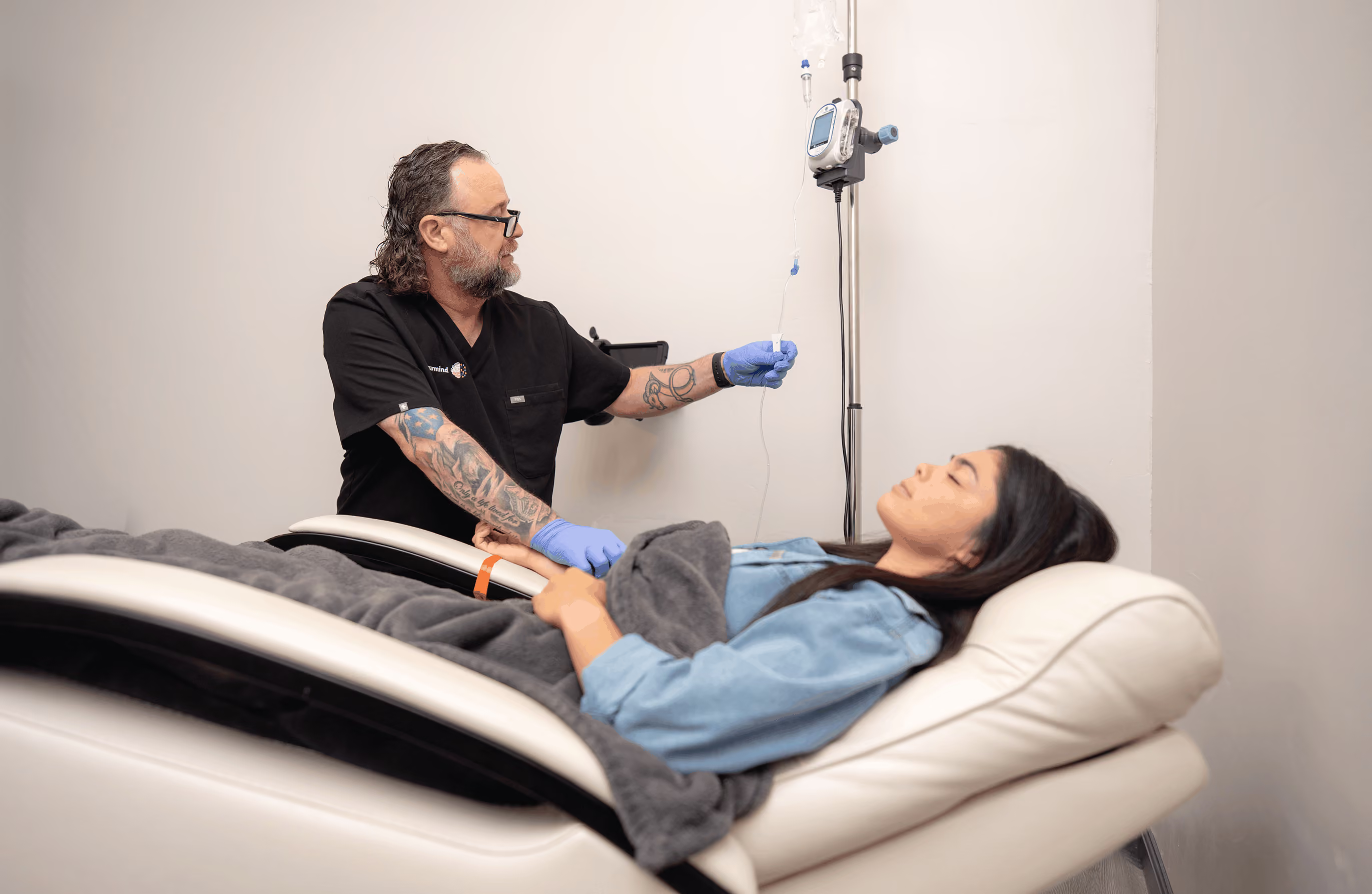

Talk to a board-certified doctor about whether ketamine may be an appropriate option for your anxiety. The first consultation is free.
The acute series | 6 infusions over 2 to 3 weeks |
Each session | Around two hours, start to finish (Need attention) |
Typical dose in anxiety research | 0.5 to 1 mg/kg, individually set |
Cost | $2,800 for the six-treatment series |
Consultation | Free |
When people notice | Some report a shift within the first 1 to 4 hours |
Insurance | Not billed directly. We provide a superbill you can submit. |
Afterwards | A responsible adult drives you home. No driving for the rest of the day. |
Ketamine is FDA-approved as an anesthetic. It is not FDA-approved for any anxiety disorder, so using it this way is off-label. Esketamine (Spravato) is approved for treatment-resistant depression, not for anxiety. Treatment here is always individualized following a physician evaluation.
What Does the Research Actually Say About Anxiety?
Most of what you will read online about ketamine is depression research. The anxiety research is a smaller and younger literature, and we think you should see it as it is.
Taylor 2018, social anxiety | 18 adults, 0.5 mg/kg IV. One in three met response criteria, compared with none on placebo. |
Glue 2017, refractory anxiety | 12 adults, 0.25 to 1 mg/kg. Ten of twelve responded at the higher doses, within one hour, lasting up to seven days. |
Glue 2018, maintenance | 20 adults, weekly dosing over three months. Around half the symptom score reduced at one hour. Eighteen of twenty reported better work or social functioning. |
These are small studies, twelve to twenty people, mostly from one research group, and mostly in people whose anxiety had not responded to standard treatment. A 2021 pooled analysis found the effect on social anxiety and generalised anxiety statistically significant, and the effect on PTSD not significant. The evidence is genuinely promising and genuinely limited, and individual responses vary. (Need attention)
Every trial above enrolled people whose anxiety had already resisted standard treatment. If you have not yet tried therapy or a first-line medication, those work well for most people with anxiety, and they are the reasonable place to start.
- You have tried therapy and one or more anti-anxiety or antidepressant medications without the improvement you hoped for
- Your anxiety is affecting work, relationships, sleep, or the things you used to enjoy
- You are medically stable and cleared on cardiovascular screening
- You are staying in ongoing care with a therapist, a prescriber, or both
- You have a history of a psychotic disorder, or you are experiencing current manic symptoms
- You have uncontrolled blood pressure or unstable heart disease
- You are managing an active substance use concern
- You are taking a benzodiazepine daily. This needs a specific conversation first, rather than a straight no.
- You are pregnant or breastfeeding
- You are in immediate danger. That needs urgent care today, not an outpatient series.
If ketamine does not appear appropriate following your evaluation, your doctor will discuss the reasons with you and talk through other options.





Will I Lose Control? What an Infusion Feels Like
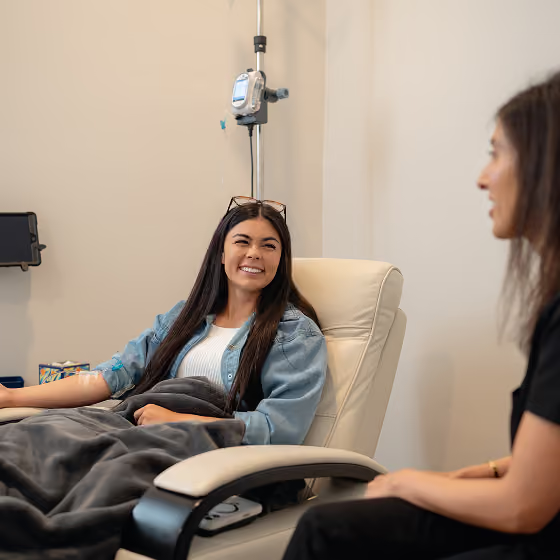
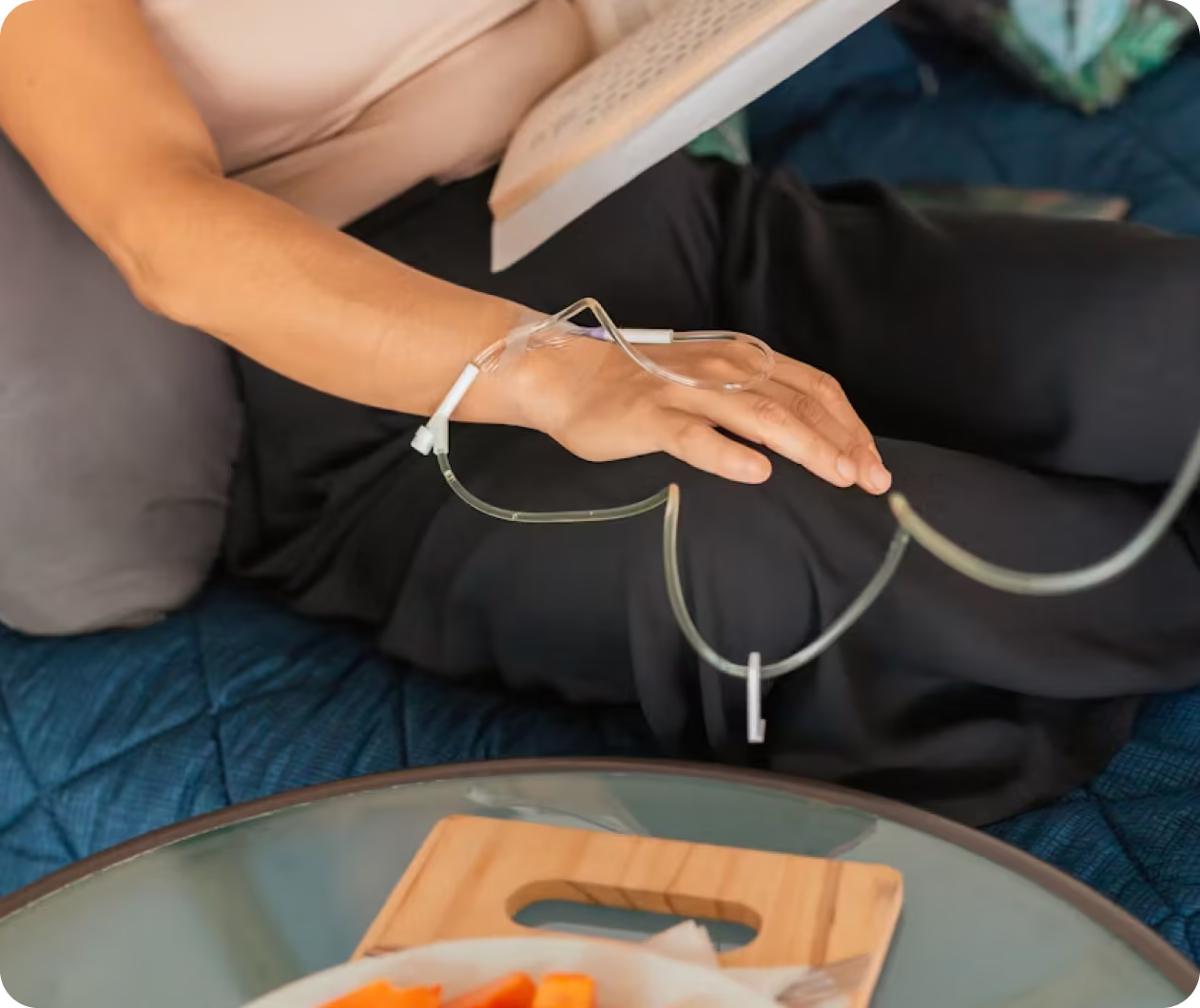
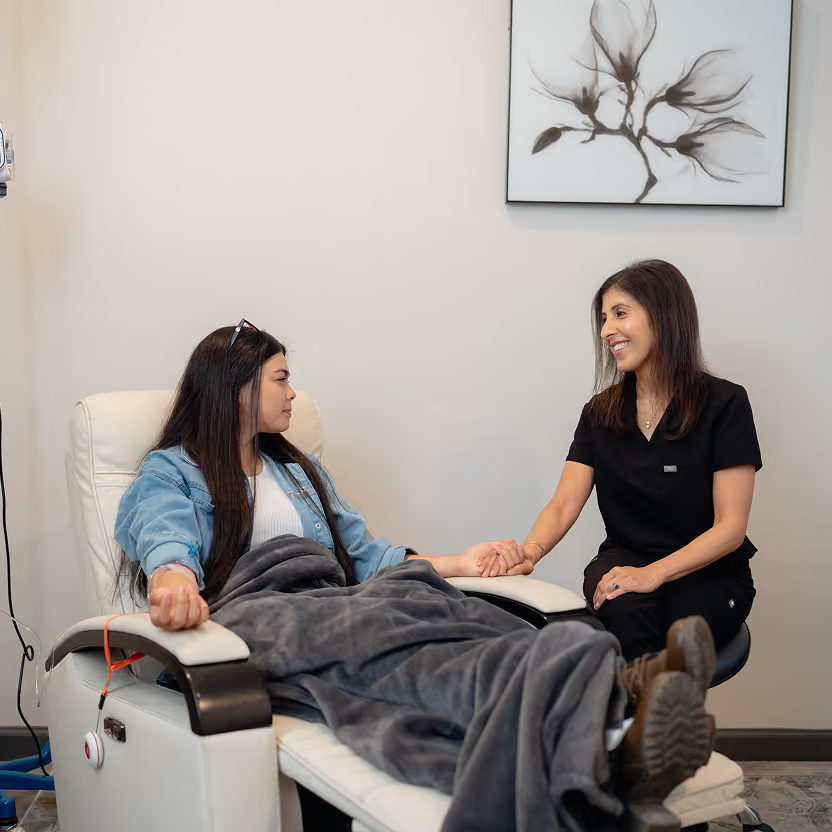
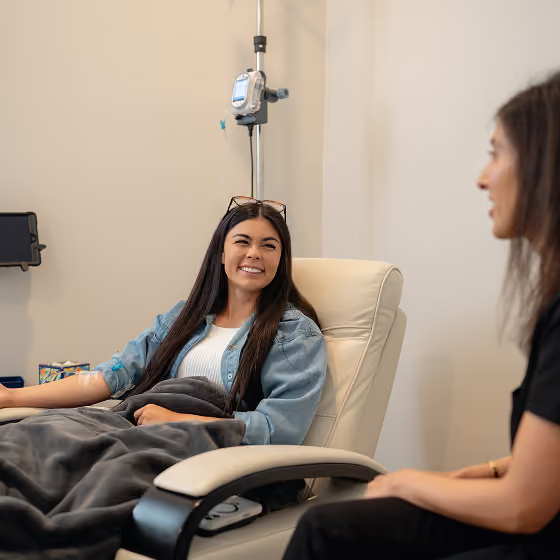
If the idea of a dissociative experience is the thing making you hesitate, that is the most common reaction we hear, and it deserves a straight answer. You stay awake. You are in a recliner, a clinician is with you, and you can talk the whole time.
Most people describe feeling deeply relaxed within the first few minutes, then a floaty or detached sensation, like watching their own thoughts from a little further away. Time gets strange. Some people feel mild nausea or a headache, which we can treat on site.
Three things are worth knowing if you are an anxious person reading that description. It is temporary, and in research dissociative effects typically resolve within about two hours of the infusion. It tends to lessen, and in the maintenance study dissociation scores dropped substantially between the first weeks and the later ones. And intensity does not appear to predict benefit, because a 2023 analysis found no meaningful correlation between how strong the dissociation was and how much anxiety improved. You do not have to have an intense experience for it to be worth doing. (Need attention) Practically, the drip is titratable. A clinician is in the room, medication is available if you become distressed, and you control the small things: eye mask, music, lights. That control is exactly why we use an infusion rather than something you take at home.
When Might You Notice Changes?

Ketamine Infusion Pricing
Initial consultation Free | Single infusion [CONFIRM PRICE] (Need attention) | Six-treatment acute series $2,800 | |
|---|---|---|---|
What's Included | Personalized evaluation | One ketamine infusion + recovery | Six infusions + personalized protocol |
Treatment Support | Treatment planning | Clinical monitoring | Treatment guide + workbook |
Additional Support | --- | Recovery time | Supplemental medications, such as anti-nausea medication if needed |
The series includes your personalized protocol, the ketamine treatment guide and workbook, the infusion itself, recovery time, and supplemental medications such as anti-nausea if you need them.
We do not bill insurance directly. We provide a superbill that you can submit to your insurance plan for possible out-of-network reimbursement. Coverage varies, so check with your insurer about out-of-network outpatient behavioral health benefits. One thing worth knowing: Spravato is often easier to get covered, but it is approved for treatment-resistant depression, not for anxiety.
If Therapy and Medication Have Not Been Enough
Most people who reach us have already tried therapy and at least one medication. If you are still weighing your options, these may be more useful to you right now:





What our customers want to know
Is ketamine FDA-approved for anxiety?

No. Ketamine is FDA-approved as an anesthetic, so treating anxiety with it is off-label. Esketamine (Spravato) carries FDA approval for treatment-resistant depression, not for anxiety disorders.
Is the research on ketamine for anxiety, or is it really depression research?
This is a fair question, and mostly the latter. The large body of ketamine research is in depression. There is a smaller set of studies in anxiety disorders specifically, summarised above, and they are small trials in people whose anxiety had not responded to standard treatment.
Can ketamine make anxiety worse?
Ketamine can cause anxiety as a short-term side effect during or shortly after an infusion, which is part of why treatment is given with a clinician present who can slow or stop it. If you have found the experience distressing, tell us, because it changes how we approach the next session.
Can I stay on my SSRI or my benzodiazepine?
Some patients continue other medications during ketamine treatment, but this depends on your individual medications and medical history. Daily benzodiazepine use in particular needs review before treatment. Bring your complete medication list to your consultation so your doctor can review it with you. Never stop or change a prescription on your own.
How is IV ketamine different from at-home ketamine programs?
The main differences are the route, the dose control, and the supervision. Nearly all anxiety research used an injected or infused route. An infusion can be adjusted or stopped during the session, and your vitals are monitored throughout.
What if my anxiety comes back?
That is common and it does not mean treatment failed. The effect of a single dose was measured in days rather than months, so returning symptoms usually mean it is time to reassess, either with a maintenance infusion or by adjusting the wider plan with your prescriber.

.avif)
