
What Is Selank? Benefits, Uses & Anxiety Support
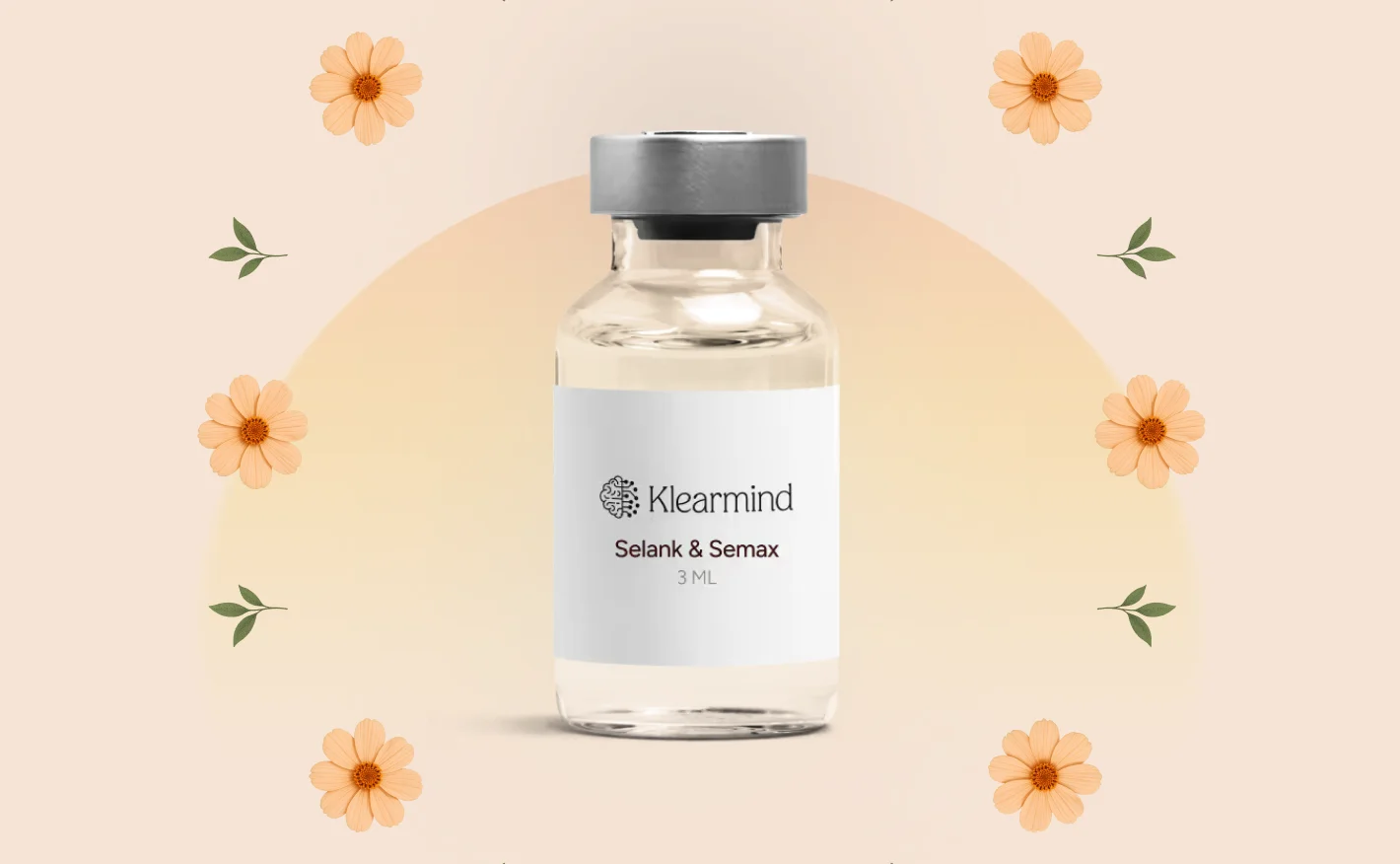

What is Selank, and what is it used for? Uncover the stimulating world of Selank: a nootropic anxiolytic peptide known for its potential to reduce anxiety, improve mental clarity, and support cognitive performance without the side effects often experienced with traditional anti-anxiety medications.
In this comprehensive guide, we break down what Selank is, how it works, who it may be suited for, and why it is gaining popularity in the field of mental wellness for its non-sedating anti-anxiety properties.
What Is Selank and What Does It Actually Do?
Selank is a synthetic, nootropic, and anxiolytic peptide. You might have seen the search rate for Selank shoot up with promising reviews on its role in reducing anxiety and improving focus and cognitive performance. But what exactly is Selank, and how does it work?
What Is Selank? What is Selank Used for?
Selank is a nootropic, anxiolytic peptide developed by the Institute of Molecular Genetics of the Russian Academy of Sciences. Originally researched in Russia, it was designed to modulate brain function and support immune response.
Structurally, Selank is a synthetic peptide simulation of the tuftsin analog, a naturally occurring immunomodulatory peptide in humans and some mammals. The Selank peptide is made up of four amino acids seen in tuftsin, along with three additional amino acids to increase its stability and efficacy.
💡 “Selank” is the common name you’ll hear in everyday conversation; technically, it is classified as a Selank peptide.
How Does Selank Work?
Selank aids in the modulation of several key neurotransmitters involved in mood and cognition, including
- Serotonin (linked to mood stability and well-being)
- Dopamine (associated with motivation and focus)
- GABA (gamma-aminobutyric acid, which helps regulate anxiety and stress responses)
By modulating these systems, Selank may promote a more balanced emotional state while also supporting mental clarity, learning capacity, and overall cognitive performance, minus the drowsiness and aftereffects experienced with traditional medication.
Here’s a peer-reviewed study on the non-sedating anti-anxiety properties of Selank.
Who Is Typically Interested in Selank?
Interest in Selank comes from a varied populace:
- Individuals managing anxiety or stress
- Biohackers exploring cognitive enhancement
- Students seeking improved focus and memory support
- Professionals looking for mental clarity without the side effects of sedation
💡 Selank has been studied and used clinically since the late 2000s, most notably in Russia, where it was first developed and approved for generalized anxiety disorder.
What Is Selank Peptide Used For?
Selank, a synthetic, 7-amino-acid neuropeptide analog of the natural immune-modulating peptide tuftsin, designed to enhance cognitive performance and emotional balance, is used for:
1. Anxiety and Stress Support
Several clinical studies have been done on Selank’s anxiolytic effects. These show Selank’s role in modulating key neurotransmitter systems, most notably GABA, serotonin, and dopamine. This modulation helps reduce stress and anxiety without causing the sedation, cognitive dulling, or dependence associated with traditional anti-anxiety drugs like benzodiazepines.
Key studies include a 2008 trial with 30 patients, a study on 62 patients with generalized anxiety disorder and neurasthenia, and a 2015 study focused on combined, safer use with benzodiazepines.
Read this peer-reviewed study on the role played by Selank in modulating neurotransmitters, notably GABA, in heightening immunomodulatory activity.
2. Cognitive Enhancement and Focus
Research also indicates that Selank can support mental clarity, focus, attention, memory retention, and learning capacity. It does so by influencing neurotransmitter balance and upregulating BDNF (brain-derived neurotrophic factor).
3. Mood Stabilization and Emotional Balance
Through its effects on serotonin and dopamine, Selank helps promote emotional stability and resilience under stress. Users often report better mood regulation and a more balanced psychological state.
4. Immune Modulation
As it is modeled on tuftsin, Selank also exhibits immunomodulatory properties. It’s shown to influence cytokine production and immune cell function. This may support healthier immune responses and reduce inflammation, though research in humans is ongoing.
Selank for Anxiety: How It Works in the Brain
One of the main benefits of Selank has been to reduce anxiety levels. How does it do that?
Selank’s structure, a heptapeptide composed of seven amino acids (Thr-Lys-Pro-Arg-Pro-Gly-Pro; TKPRPGP) supports its ability to reach the central nervous system. How?
This configuration enables it to access the blood-brain barrier, where it can modulate the activity and balance of key neurotransmitters involved in mood and stress regulation.
Once in, it does not act as a blocker or sedative, unlike many prescription anxiolytics. Instead, it influences key neurotransmitter systems in the following ways:
- GABAergic System: Selank changes the expression of genes related to the GABA system and may modulate GABA-A receptor activity, much like how benzodiazepines influence GABA signaling, without strong sedation.
- Serotonin & Dopamine Pathways: Research shows that Selank impacts the metabolism and turnover of serotonin and dopamine, major neurotransmitters involved in emotional regulation and stress responses.
Benzodiazepines (e.g., alprazolam, diazepam) directly heighten GABA-A receptors and typically provide rapid anxiety relief but often cause sedation, cognitive impairment and dependence. Selank, on the other hand, has not demonstrated sedation and cognitive dulling while still reducing anxiety, and studies have not demonstrated the development of dependence or tolerance in the same way as benzodiazepines.
This means Selank may be especially useful for individuals who need anxiety relief without being sedated or cognitively slowed.
Safety and Research Status
Both preclinical and clinical research report that Selank has an excellent short-term safety profile, with:
- minimal sedation
- no cognitive impairment, and
- no clear evidence of dependence or withdrawal symptoms.
As for its regulatory status, Selank is approved for anxiety treatment in Russia and some of its neighboring Commonwealth of Independent States nations since the late 2000s, but it is not FDA-approved in the United States or widely regulated elsewhere.
✔ Selank is not FDA-approved for anxiety or cognitive use in the U.S.; however, it is used in clinical settings as an effective option for individuals with anxiety conditions.
✔ Most clinical research on Selank comes from Russia and similar regions.
How is Selank administered? What Is Selank Nasal Spray and How Is It Used?
Selank nasal spray and injectable Selank are the two most commonly discussed administration methods.
Selank is most commonly administered as an intranasal spray, which allows it to reach the brain efficiently through the olfactory pathways. However, Selank is also available in injectable form (subcutaneous injection) in some clinical and research settings.
Intranasal administration offers a direct and efficient pathway to the central nervous system. This route of administration allows Selank to partially bypass the traditional blood–brain barrier by traveling through the olfactory nerve pathways, enabling it to reach the brain more efficiently than with oral administration.
How It Compares to Other Administration Forms
While the intranasal approach is preferred, Selank can be administered through other ways too:
Why Many Prefer the Nasal Spray Format
The nasal spray format is popular because it is
- Easy to administer
- Non-sedating in reported use
- Designed for efficient brain access
General Usage Considerations
Dosing protocols used in clinical research settings have varied, and medical supervision is recommended. According to general standards:
- As an injectable, Selank has a standard dose of 0.5 mg, though a user’s exact dose may depend on their age and weight.
- The doses for intranasal Selank usually start at 300 mcg.
Injectable Selank normally has a dosing protocol of five days per week, whereas the intranasal variant may require once- or twice-daily administration.
💡 Your daily dose should always be approached with professional medical guidance.
How Is It Different From Traditional Anti-Anxiety Medications?
Selank is often compared to traditional anxiolytics such as benzodiazepines, including alprazolam (Xanax), diazepam (Valium), and lorazepam (Ativan).
While benzodiazepines and barbiturates can be effective, they are commonly associated with:
- Drowsiness
- Fatigue
- Cognitive slowing
- Risk of tolerance and dependence
- Potential withdrawal symptoms
Selank is gaining attention because it is reported to provide anxiolytic benefits without the pronounced sedation or dependency risks typically associated with those medications.
Selank Peptide Benefits: Is it for you?
Selank Peptide benefits have attracted interest across diverse groups, including clinical researchers, performance-driven individuals, and those struggling with anxiety.
Interest among integrative and research-focused clinicians has grown in recent years. However, as with any peptide or cognitive enhancer, informed decision-making and professional guidance are essential.
Book a meeting with us, and we will help you make an informed decision based on your requirements.
FAQs
1. What is Selank, and how does it work?
Selank is a synthetic peptide developed in Russia for anxiety and cognitive support. It is a synthetic simulation of tuftsin, a naturally occurring immune peptide. Selank works by modulating key neurotransmitters in the brain, primarily GABA, serotonin, and dopamine, which regulate anxiety, mood, and stress response.
2. What is Selank peptide used for?
Selank peptide is primarily used for:
- Anxiety reduction
- Stress management
- Emotional regulation
- Cognitive support (focus, memory, mental clarity)
- Immune modulation (in research settings)
3. Is Selank effective for anxiety?
Clinical studies, primarily conducted in Russia, suggest that Selank is effective in generalized anxiety disorder (GAD) cases. Research indicates it may produce anxiolytic effects comparable to certain traditional medications, but without sedation or dependency risks commonly associated with benzodiazepines.
4. What does Selank do in the brain?
In the brain, Selank:
- Modulates GABAergic signaling, which helps calm overactive neural circuits
- Influences serotonin and dopamine metabolism, supporting mood balance
- Affects gene expression linked to stress adaptation
- May increase BDNF (brain-derived neurotrophic factor), which supports neuroplasticity and hence focus
5. What is Selank nasal spray used for?
Selank is most commonly administered as an intranasal spray. This method is used because it allows peptides to access the central nervous system more efficiently than oral forms. Also, it is non-invasive and offers better access to the brain to modulate neurotransmitters like serotonin, dopamine, and GABA.
6. How long does Selank take to work?
Research suggests that one might see Selank’s effects within 30–60 minutes after intranasal administration. However, its cumulative benefits are often observed after 1–2 weeks of consistent use.
7. Is Selank safe for daily use?
Short-term clinical research reports a favorable safety profile, with:
- No significant sedation
- No cognitive impairment
- No clear evidence of tolerance or dependence
However, long-term data outside of Russian clinical use remain limited, and Selank is not FDA-approved in many countries. Medical supervision is recommended.
8. Are there any side effects of Selank?
Available studies suggest Selank is generally well tolerated. Reported side effects are uncommon and may include:
- Mild nasal irritation
- Occasional headache
Unlike benzodiazepines, research has not shown withdrawal symptoms or dependency. That said, long-term safety data are still developing.
Get Selank Prescribed by a Doctor
.avif)
%2520(1).png)
Get Selank Prescribed by a Doctor
.avif)
