
What Is Neuroplasticity? How It Works & What Affects It


What Is Neuroplasticity? How It Works & What Affects It
Have you ever wondered why a habit you’ve had for years can be so difficult to break, while a skill you practiced every day eventually became something you could do without thinking?
The answer sits in one of the most fascinating areas of modern neuroscience. If you have ever typed "What is neuroplasticity?” into a search bar, you are not alone. It is one of the most common brain-health questions people ask, and understanding it can change how you think about learning, aging, and recovery.
This guide walks you through what the term means, how the process actually works, and what affects neuroplasticity day to day, so you can support your brain more intentionally.
What Is Neuroplasticity?
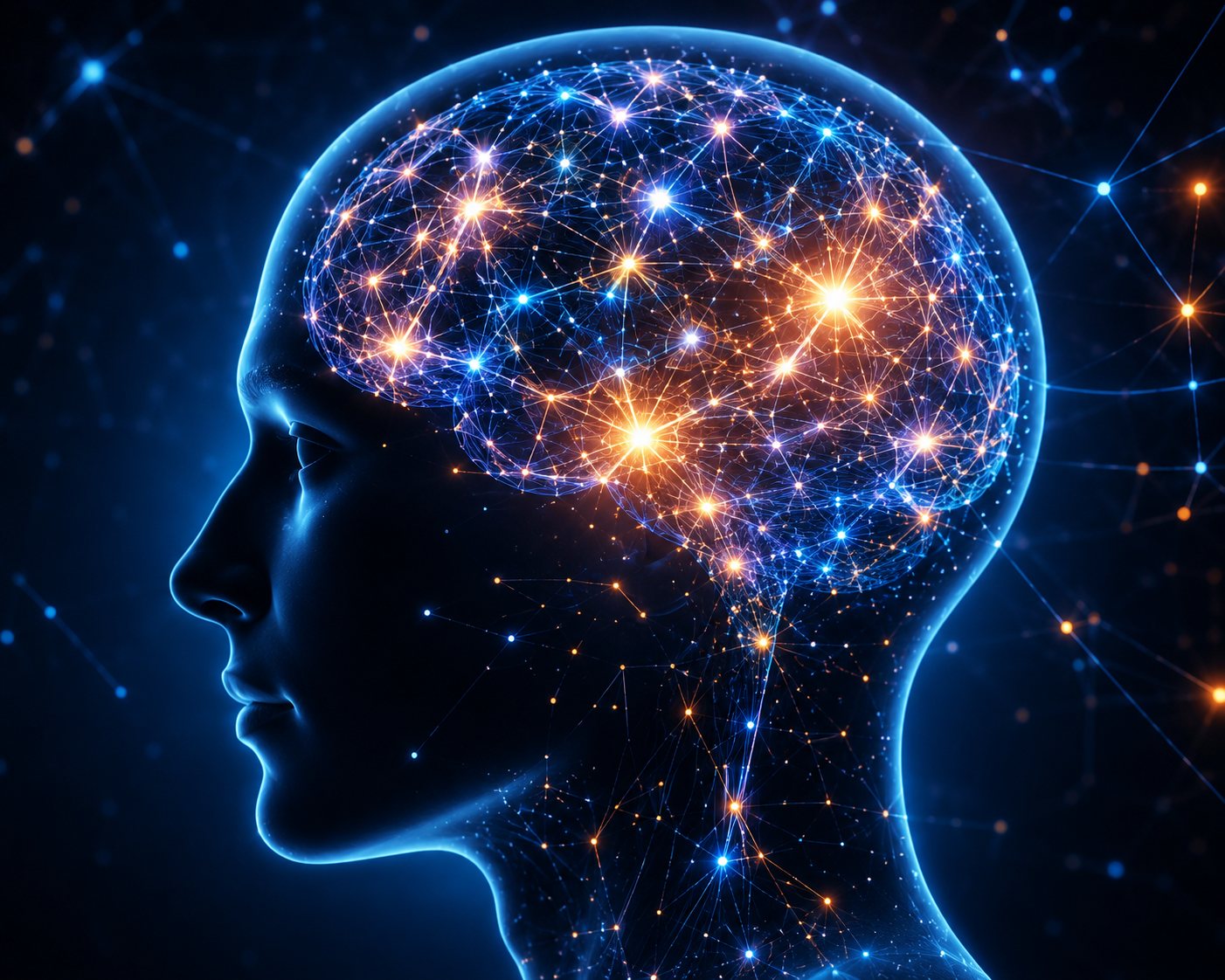
Neuroplasticity is the brain's ability to change and adapt by forming, strengthening, weakening, or reorganizing neural connections in response to learning, experiences, and changes in the environment.
In short, if you are asking what is neuroplasticity and how does it work, the brain rewires itself by building new connections between neurons, strengthening ones you use often, and cutting back ones you rarely use. All of this is largely driven by repeated experience, practice, and learning.
So what does neuroplasticity mean in everyday terms? It means your brain is not a fixed, unchangeable organ. It is closer to a living map that keeps redrawing itself based on what you do, think, and experience.
This redrawing happens through neurons and the connections between them. Every time you learn something or repeat an action, groups of neurons fire together and strengthen the pathway that links them, according to the National Institutes of Health.
Neuroplasticity is related to, but different from, normal brain development. Development is the genetically guided maturation that happens especially in childhood, while neuroplasticity is the ongoing, experience-driven adaptability that continues well past childhood, including into adulthood.
Yes, neuroplasticity occurs in adults. Research summarized by Harvard Health confirms the adult brain retains meaningful capacity to change, just at a comparatively slower pace than a child's brain. That is why this concept matters at every age, whether you are picking up a new skill, recovering from an injury, or simply trying to build a better habit.
How Does Neuroplasticity Work?
At its core, neuroplasticity works through communication between neurons at junctions called synapses. This process, called synaptic plasticity, is what allows learning and memory to physically take shape in the brain.
Each neuron sends signals to others across these tiny gaps. When two neurons repeatedly activate together, the connection between them strengthens, a principle neuroscientists sometimes summarize as "neurons that fire together, wire together."
One key mechanism behind this is long-term potentiation, a lasting increase in signal strength between neurons after repeated activity. Studies published in the Journal of Neuroscience describe long-term potentiation as a foundational process behind how memories form and stick.
- Repeated practice reinforces neural pathways, making a thought or action easier to repeat over time.
- Pathways you rarely use tend to weaken, a process researchers call synaptic pruning.
- Novel or challenging experiences may prompt the brain to build entirely new connections.
If you want a short visual primer, the "2-Minute Neuroscience: Neuroplasticity" video by Neuroscientifically Challenged is a clear, quick explainer worth a watch.
What Does Neuroplasticity Do to the Brain?
What does neuroplasticity do in practical terms? It is the mechanism behind nearly everything you learn, remember, and adapt to throughout life.
It supports learning and memory by allowing repeated information or experiences to become encoded as stronger neural connections. This is why studying a topic over several sessions tends to stick better than one long cram session.
It also helps the brain adapt to new experiences and environments. When your routine, job, or surroundings change, neuroplasticity is part of how you adjust to the environment around you.
Beyond learning, this brain adaptation shows up in everyday behavior:
- Strengthening frequently used pathways so skills feel more automatic
- Supporting the development of new physical and mental skills
- Contributing to gradual changes in habits and behavior
- Playing a role in cognitive adaptation as circumstances shift
- Contributing to functional recovery from injury in some cases, alongside rehabilitation

What Are the Benefits of Neuroplasticity?
A healthy, adaptable brain supports nearly every area of daily function, from picking up new information to bouncing back after a setback.
Reported benefits linked to strong neuroplasticity include:
- Learning new information and skills more effectively
- Improving memory and recall
- Supporting problem-solving and cognitive flexibility
- Adapting more easily to new environments or routines
- Developing and changing habits over time
- Supporting rehabilitation after certain neurological injuries
- Maintaining brain adaptability throughout adulthood, not just in youth
- Potentially supporting emotional and behavioral changes over time
If you are looking to build daily habits that support this kind of adaptability, our guide on how to improve mental clarity and focus covers practical steps that pair well with the strategies below.
What Affects Neuroplasticity?
What affects neuroplasticity comes down to a mix of lifestyle, biological, and environmental factors, some of which encourage adaptability and some of which limit it.
Factors that tend to support neuroplasticity include:
- Ongoing learning and mental stimulation
- Regular physical exercise
- Consistent, quality sleep
- Manageable stress levels
- A nutrient-rich diet
- Active social interaction
- Repetition and deliberate practice
- Environmental enrichment (novelty, variety, engagement)
Factors that can limit or slow it down include:
- Chronic, unmanaged stress
- Advancing age, though adaptability never fully disappears
- Poor sleep quality
- Certain brain injuries or neurological conditions
- Substance use and other lifestyle factors
Research reviewed by the National Institutes of Health notes that exercise, diet, and sleep together have a measurable combined influence on brain plasticity, more than any single factor alone.
Neuroplasticity and Learning: How the Brain Forms New Connections
Learning is neuroplasticity in action. Every time you practice something new, you are physically nudging your brain to build or reinforce neural pathways.
Repetition and reinforcement matter more than intensity. A short daily practice session tends to build stronger, more durable pathways than one long, infrequent session.
This shows up clearly in specific skills:
- Learning a new language relies on repeated exposure to strengthen the pathways tied to vocabulary and grammar patterns.
- Learning music or a new instrument builds coordination between motor and auditory regions of the brain.
- Developing a physical skill, like a sport or a fine motor task, reinforces the specific pathways tied to that movement.
- Studying for memory formation benefits from spaced repetition rather than one-time review.
Consistent practice matters because the brain reinforces what it repeats. Challenging, slightly difficult activities tend to stimulate more adaptation than easy, repetitive ones, since novelty and effort both encourage the brain to build fresh connections. For a deeper look at supporting cognitive performance while you learn, our post on the best nootropics for focus, memory, and energy is a useful companion read.
Can You Increase Neuroplasticity Naturally?
Yes, several everyday habits are associated with supporting healthy brain adaptation, though results vary by person, and none of them work like a switch.
Approaches supported by current research include:
- Regular physical activity, which Harvard Health notes is linked to improved memory and thinking skills
- Learning new skills, especially ones that feel a little challenging
- Getting adequate, consistent sleep
- Managing chronic stress through practices like mindfulness or therapy
- Maintaining a balanced, nutrient-dense diet
- Staying socially connected
- Deliberately challenging your brain with novel activities
- Sticking with consistent practice and repetition rather than sporadic effort
Novelty appears to matter as much as repetition. Research on environmental enrichment shows that varied, stimulating environments are linked to greater structural brain changes than repetitive, unchanging ones.
Some people also explore targeted cognitive support, such as peptide-based programs designed to support brain function and recovery. If you are curious about that option, Klearmind's Precision Peptide Programs are worth discussing with a qualified clinician. Alongside the foundational habits above, peptides are not a replacement for them. Our article on cognitive performance supplements also breaks down non-prescription options people commonly consider.
Neuroplasticity in Adults vs. Children
Neuroplasticity is present at every life stage, but its pace and pattern shift considerably from childhood to adulthood.
Children's brains are highly adaptable partly because so many connections are still being formed and refined for the first time. Adolescence adds a second wave of change, particularly in areas tied to decision-making.
Can adults create new neural pathways? Yes. Adult neuroplasticity is well documented, and consistent learning, exercise, and lifestyle habits can support it at any age, according to research summarized by the National Institutes of Health.
Neuroplasticity and Brain Injury
Neuroplasticity plays a meaningful role in how the brain adapts after injury, though it is not a guarantee of full recovery.
After a stroke or traumatic brain injury, the brain can sometimes reorganize functions, shifting certain tasks to undamaged areas through a process researchers call brain reorganization. This is a key mechanism behind stroke rehabilitation programs.
Repetitive, task-specific rehabilitation exercises appear to encourage this reorganization more effectively than passive rest. Recovery often involves relearning skills step by step, guided by physical, occupational, or speech therapists.
Several factors influence how much recovery is possible, including:
- the injury's severity and location
- how soon rehabilitation begins
- overall health, and
- consistency with therapy.
It is important to be clear that neuroplasticity does not guarantee complete recovery. It supports adaptation, but professional rehabilitation guidance remains essential for anyone recovering from a brain injury.
Depression and anxiety are also common during a difficult recovery, and if mood symptoms persist alongside physical recovery, options such as ketamine-assisted therapy are worth discussing with a treating clinician as part of a broader care plan.
How Long Does Neuroplasticity Take?
There is no single timeline for neuroplasticity, because it depends heavily on what you are trying to change and how consistently you practice it.
Short-term neural changes, like a temporary shift in activity after a single learning session, can happen within minutes to hours. Longer-term, structural changes, the kind that make a skill or habit feel automatic, typically take weeks to months of consistent repetition.
Individual differences matter too. Age, health, sleep quality, and how challenging the task is all affect the pace of change.
Learning a discrete skill, like a new word or chord, tends to happen faster than changing an ingrained habit, which usually requires sustained repetition over an extended period. Sleep also plays a direct role, since research from the National Institutes of Health links quality sleep to how well the brain consolidates what was learned during the day. Gradual, steady progress is a far more realistic expectation than an overnight transformation, and that is genuinely good news: it means small, consistent habits compound over time.
Final Verdict: What Is Neuroplasticity and Why Does It Matter?
Neuroplasticity is the brain's natural ability to adapt and reorganize throughout life. Learning, practice, physical activity, sleep, stress, age, and other factors can influence how effectively these changes occur.
Understanding what is neuroplasticity and how does it work gives you a practical lens for everyday life: your brain is not fixed, and consistent, intentional habits do make a difference.
If you are navigating a more complex situation, like recovery after a brain injury or persistent low mood affecting your daily function, a qualified clinician can help you build a realistic, personalized plan. Our article on how to reset your brain offers a gentler starting point if you are feeling stuck.
Medical disclaimer: This article is for informational purposes only and is not medical advice. Talk to a qualified healthcare provider before starting, stopping, or changing any treatment or supplement.
FAQs
What is neuroplasticity in simple terms?
Neuroplasticity is the brain's ability to change itself by forming, strengthening, or weakening connections between neurons. It happens in response to learning, repeated experience, and changes in your environment. Think of it as your brain's way of physically adapting to what you do and encounter regularly.
What does neuroplasticity mean?
It refers to the brain's built-in flexibility, its capacity to reorganize its own wiring rather than staying fixed. This includes strengthening pathways you use often and weakening ones you rarely use. It is considered one of the most important concepts in modern neuroscience.
What is neuroplasticity and how does it work?
Neuroplasticity works primarily through synaptic plasticity, the strengthening or weakening of connections between neurons based on activity. Repeated firing between two neurons reinforces the pathway linking them, a process supported by mechanisms like long-term potentiation. Over time, this reshapes how efficiently your brain performs a given task.
What does neuroplasticity do?
It underlies learning, memory, skill development, habit formation, and the brain's ability to adapt to new situations. It also plays a supporting role in functional recovery after certain types of brain injury. In short, it is the mechanism behind most meaningful brain change.
What affects neuroplasticity?
Sleep, exercise, stress, diet, age, social connection, and mental stimulation all influence how effectively the brain adapts. Positive factors like learning and physical activity tend to support it, while chronic stress and poor sleep tend to limit it. Brain injury and certain neurological conditions can affect it as well.
Can neuroplasticity occur in adults?
Yes. While it is typically most pronounced in childhood, research confirms adult brains retain a meaningful capacity for plasticity throughout life. Adults can still build new neural connections through consistent learning, practice, and healthy lifestyle habits, just generally at a slower pace than children.
How can you increase neuroplasticity naturally?
Regular exercise, quality sleep, a balanced diet, stress management, social connection, and consistently learning new or challenging skills are all associated with supporting healthy brain plasticity. Novelty appears to matter as much as repetition, since varied experiences tend to stimulate more adaptation than routine ones. Results vary from person to person.
How does neuroplasticity help with learning?
Learning relies on neuroplasticity to encode new information as physical changes in neural connections. Repetition and practice strengthen the specific pathways tied to a skill, making it easier and more automatic over time. This is why spaced, consistent practice tends to outperform cramming.
Can neuroplasticity help the brain recover after injury?
It can play a supporting role by allowing the brain to reorganize certain functions to undamaged areas, particularly with consistent, task-specific rehabilitation. It does not guarantee complete recovery, and outcomes depend on the injury's severity, timing of treatment, and overall health. Professional rehabilitation guidance remains essential.
How long does neuroplasticity take?
There is no single timeline. Short-term neural changes can occur within minutes to hours, while lasting structural changes typically require weeks to months of consistent practice. Individual factors like age, sleep, and consistency all influence the pace.
We're here to listen,
not just to treat
.avif)

We're here to listen,
not just to treat
.avif)
