
What Is GABA? Benefits, Uses

What Is GABA? Benefits, Uses & How It Works
Ever feel like your brain won't switch off, even when you're exhausted? Have you also asked how some people seem to handle stress more easily than others? The reason is scientific and is often due to a neurotransmitter called GABA. No wonder research queries around ‘What is GABA?' have shot up as this one neurotransmitter has such a big influence on how calm, rested, and balanced you feel.
If you've been researching sleep aids, stress relief, or brain health supplements, you've probably run into this term more than once. Good news: understanding it doesn't require a neuroscience degree. In this guide, you'll learn what does GABA do, what is GABA good for, and the must-knows before trying a GABA supplement.
What Is GABA?
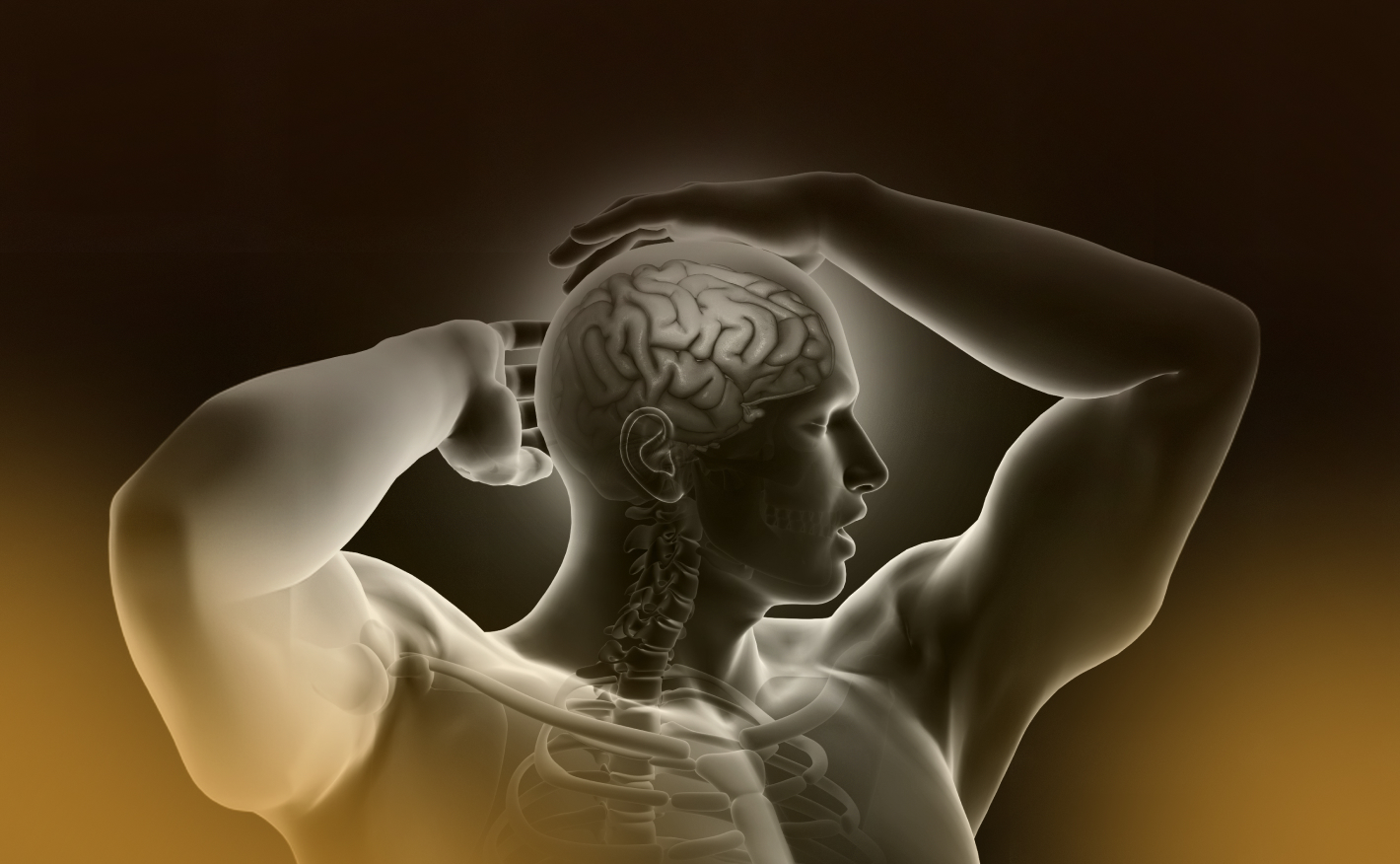
GABA, or gamma-aminobutyric acid, is a neurotransmitter that helps slow down activity in the brain and central nervous system. It's one of the most abundant chemical messengers in the human body, and it plays a quiet but critical role in keeping your nervous system from running on overdrive.
GABA stands for gamma-aminobutyric acid (GABA), and it's classified as the brain's main inhibitory neurotransmitter. That means it works to calm or "quiet" nerve cell activity, rather than speed it up, according to Cleveland Clinic.
You'll find GABA produced and used throughout the brain and spinal cord, wherever nerve cells communicate with each other. Smaller amounts also exist outside the nervous system, including in the pancreas and gut, per the NIH's National Center for Biotechnology Information (NCBI).
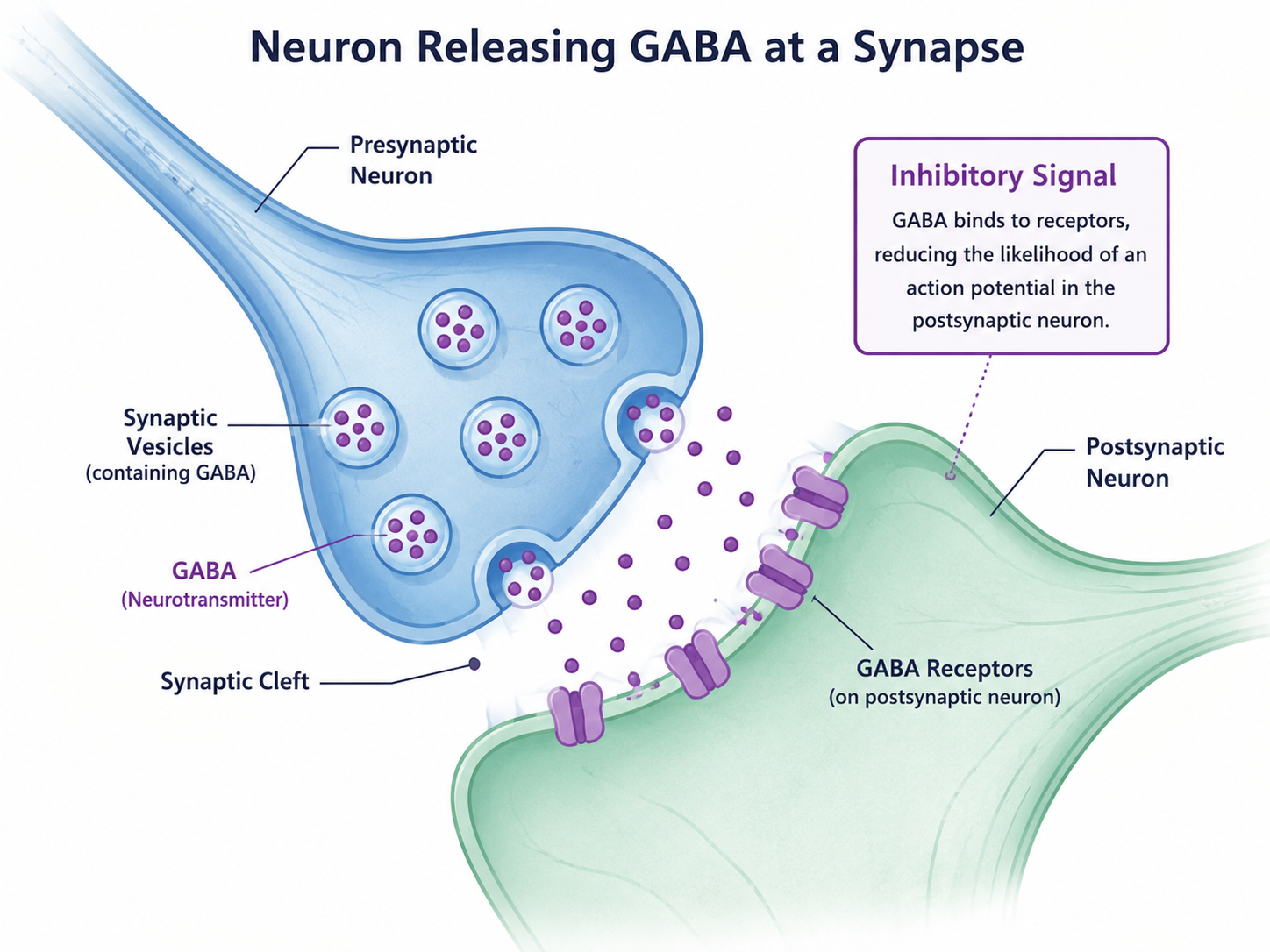
By binding to specific GABA receptors, GABA slows the firing of nerve cells and reduces overall brain activity. This is largely what allows your mind and body to settle into a calmer state after a stressful day.
Most other neurotransmitters, like glutamate, dopamine, or serotonin, either excite nerve cells or shape mood and reward. GABA is different because its main job is inhibition; it puts the brakes on, rather than turning on the ignition.
Without enough GABA activity, nerve cells can become overstimulated, which researchers have linked to heightened anxiety and stress responses and disrupted sleep, according to the NCBI Bookshelf's StatPearls physiology reference. A well-balanced central nervous system depends on GABA doing this job consistently, day and night.
GABA (gamma-aminobutyric acid) is the brain's primary calming neurotransmitter. It slows nerve cell activity in the central nervous system, which may support relaxation, healthy sleep, and stress management, though it works differently depending on whether it's produced naturally in the brain or taken as a supplement.
What Does GABA Do in the Body?
So, what does GABA do, exactly? It regulates how active your nerve cells are, which shapes everything from how relaxed you feel to how well you sleep, your stress response, and even muscle activity.
When GABA binds to its receptors, it reduces the rate at which nerve cells fire. This dialing-down effect is what produces feelings of calm rather than tension.
This is also why GABA is closely tied to sleep and relaxation. Many prescription sedatives and anti-anxiety medications, including benzodiazepines, work in part by enhancing GABA's natural calming effect, per Cleveland Clinic.
GABA also plays a role in your everyday stress response. Healthy GABA activity may help buffer the nervous system against the physical effects of chronic stress, though researchers note more human studies are needed, according to a review published on NCBI.
Because GABA calms overactive circuits, it's connected to mood regulation too. Disruptions in GABA signaling have been studied in relation to mood-related conditions, including depression and anxiety, per Harvard Health.
GABA doesn't only work in the brain; it also has a hand in muscle activity, helping regulate muscle tone through signaling in the spinal cord. And it never works alone: it maintains a constant back-and-forth with glutamate, the brain's main excitatory neurotransmitter, to keep signaling in balance.
What Is GABA Good For?
So, what is GABA good for? Mainly, supporting relaxation, healthy sleep, and a balanced stress response when your body's natural GABA activity is working as it should. Most of this evidence points to GABA's role in the body generally, not to guaranteed effects from a supplement.
Here's what healthy GABA activity may help support, based on current research:
- Relaxation: healthy GABA signaling may help ease physical and mental tension.
- Sleep: GABA activity is involved in the transition into deeper, more restful sleep stages.
- Everyday stress: balanced GABA function may help buffer your nervous system's response to daily stressors.
- Mood balance: adequate GABA signaling is associated with more stable mood regulation.
- Cognitive function: some early research suggests GABA balance may support focus and mental clarity, though this needs more study.
- Physical relaxation: GABA's role in muscle tone may contribute to a general sense of physical ease.
If you're curious how GABA compares to other cognitive-support compounds, our guide on what nootropics are covers the broader category GABA sometimes gets grouped into.
It's worth being clear about the difference between GABA's established biological role and marketing claims. Researchers understand GABA's function within the nervous system fairly well, per NCBI's review on neurotransmitters as food supplements. Whether taking GABA as a supplement reliably reproduces these effects is less known, a distinction worth keeping in mind as you read on.
How Does GABA Work?
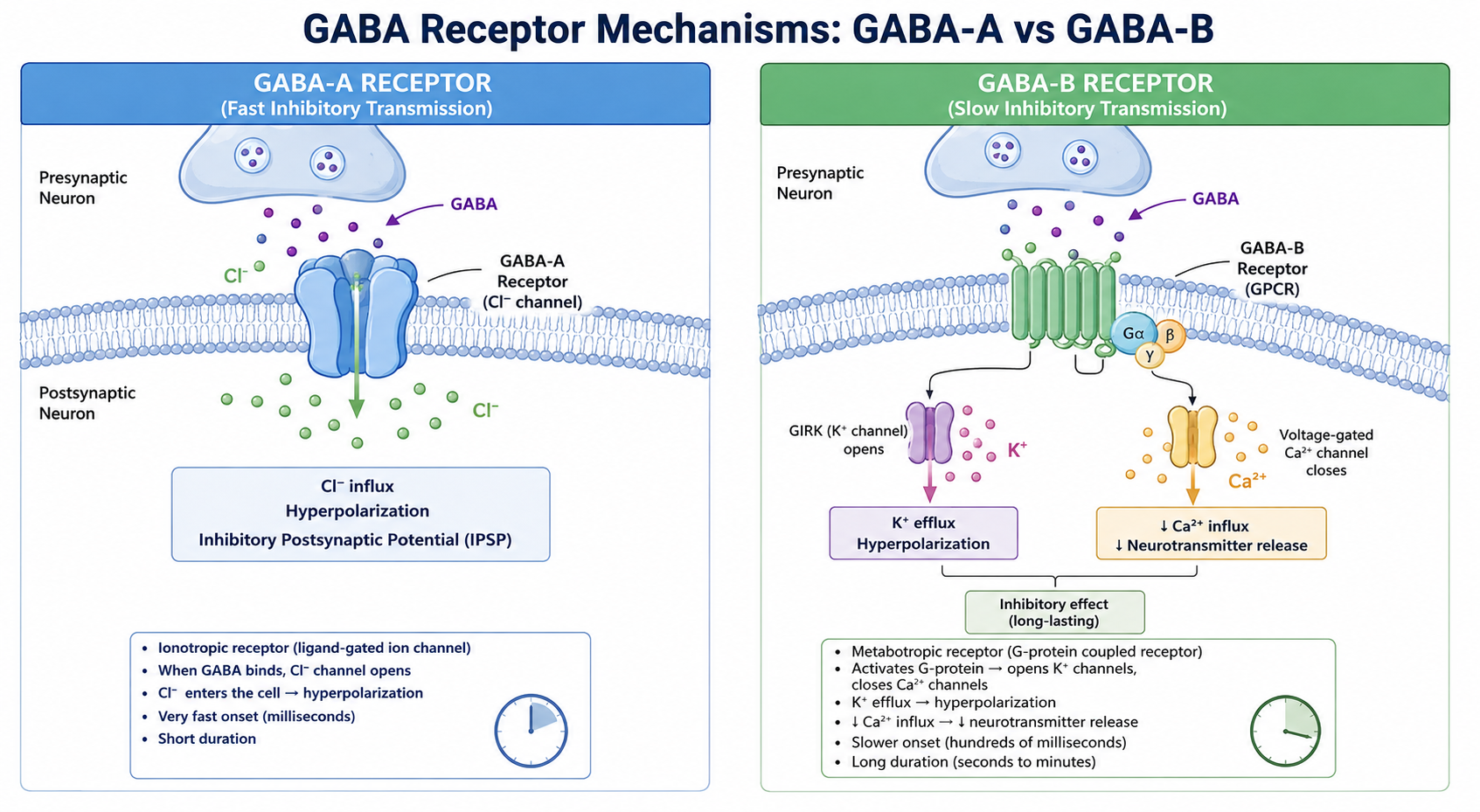
GABA works by binding to specialized GABA receptors on nerve cells, which changes how easily those cells fire. This single mechanism is behind GABA's calming, inhibitory effect throughout the central nervous system.
There are two main types of GABA receptors: GABA-A and GABA-B.
- GABA-A receptors act quickly, opening channels that let chloride ions flow into the nerve cell.
- GABA-B receptors work more slowly, using a different signaling pathway involving potassium and calcium channels instead.
Together, these two receptor types give GABA both a fast-acting and a longer, sustained calming effect.
When chloride ions flow into a nerve cell through GABA-A receptors, that cell becomes less likely to fire. This is the core reason GABA reduces overall brain activity and nerve cell excitability.
When GABA activity is working well, this excitatory-inhibitory balance tips toward calm rather than overstimulation. That's the biological basis for why healthy GABA function is linked to feeling relaxed rather than wired.
What Is a GABA Supplement?
So what is a GABA supplement, and how does it differ from the GABA your body makes naturally? It's a dietary product containing synthesized or fermentation-derived gamma-aminobutyric acid, sold with the goal of supporting relaxation or sleep, but it isn't identical to naturally produced GABA, especially in terms of how reliably it reaches brain tissue.
GABA supplements commonly come in a few forms:
- Capsules or tablets
- Powders that dissolve in water
- Sublingual or fast-dissolving tablets
- Combination formulas paired with L-theanine, 5-HTP, or magnesium
People typically reach for a GABA supplement hoping to ease everyday stress, wind down before bed, or support general relaxation, especially when lifestyle changes alone haven't been enough.
GABA supplements differ from GABA-rich foods like fermented vegetables or certain teas, which contain naturally occurring GABA in smaller, more variable amounts. Supplements typically deliver a concentrated, standardized dose instead.
You'll often see GABA supplements marketed heavily around sleep and relaxation, sometimes with bold claims about calming the mind fast. It's worth reading those claims with some healthy skepticism.
Here's the important nuance: current research suggests orally ingested GABA may not cross the blood-brain barrier in significant amounts. Some researchers propose that any effects observed may work indirectly, through the gut and enteric nervous system, rather than by GABA directly reaching brain tissue, according to a review published on NCBI.
Because of this uncertainty, individual responses to GABA supplements can vary widely. Some people report noticeable calming effects, while others notice little to no difference, which lines up with the mixed findings in current research.
Potential Benefits of GABA Supplements
Human research on GABA supplements is still limited, but some small studies point to potential benefits for relaxation, stress, and sleep. Other claims, like dramatic growth hormone or muscle-building effects, deserve far more caution.
A few small human trials have measured real physiological changes after GABA supplementation, including EEG shifts and reduced stress hormone markers, suggesting a calming effect for some people, per research summarized on NCBI.
Some studies suggest GABA, often paired with ingredients like L-theanine, may help shorten the time it takes to fall asleep and support sleep and relaxation overall.
On the exercise side, a study published in Medicine & Science in Sports & Exercise found that participants who took 3 grams of GABA before resistance training showed a meaningfully greater rise in growth hormone markers compared to placebo.
Overall, the research base for GABA supplements remains small, with limited large-scale, long-term human trials. Much of what's known comes from short studies, animal research, or small pilot trials rather than robust clinical evidence, and individual responses can differ significantly as a result.
For a wider look at supplement categories people use for focus and calm, our roundup of the best brain health supplements covers several other commonly discussed options.
Natural Ways to Support GABA Activity
You don't need a supplement to support healthy GABA function. Sleep, movement, stress management, and diet all influence how well your central nervous system maintains its natural inhibitory balance.
- Prioritize quality sleep. Poor sleep disrupts neurotransmitter balance, including GABA signaling, so consistent rest supports the very system meant to calm you down.
- Move your body regularly. Regular physical activity has been associated with healthier GABA activity and improved stress resilience, per research reviewed by Harvard Health.
- Build in stress-management habits. Simple daily practices, like deep breathing, journaling, or time outdoors, can help support your nervous system's natural calming pathways.
- Try meditation or relaxation techniques. Mindfulness practices have been studied for their potential to influence GABA levels and support anxiety and stress relief.
- Eat a balanced diet. Whole, minimally processed foods support overall brain chemistry, including neurotransmitter production.
- Include GABA-associated foods. Fermented foods like kimchi, miso, tempeh, and yogurt, along with brown rice, spinach, and sweet potatoes, are commonly cited sources of naturally occurring GABA or its precursors.
If you want a deeper dive into calming an overactive mind, our piece on how to calm an overactive mind walks through several of these techniques in more detail, and our comparison of adaptogens vs. nootropics breaks down how related supplement categories differ from GABA specifically.
None of these habits replace medical treatment. If anxiety, stress, or sleep problems are significantly affecting your life, lifestyle changes work best alongside, not instead of, professional care.
GABA vs Glutamate: What's the Difference?
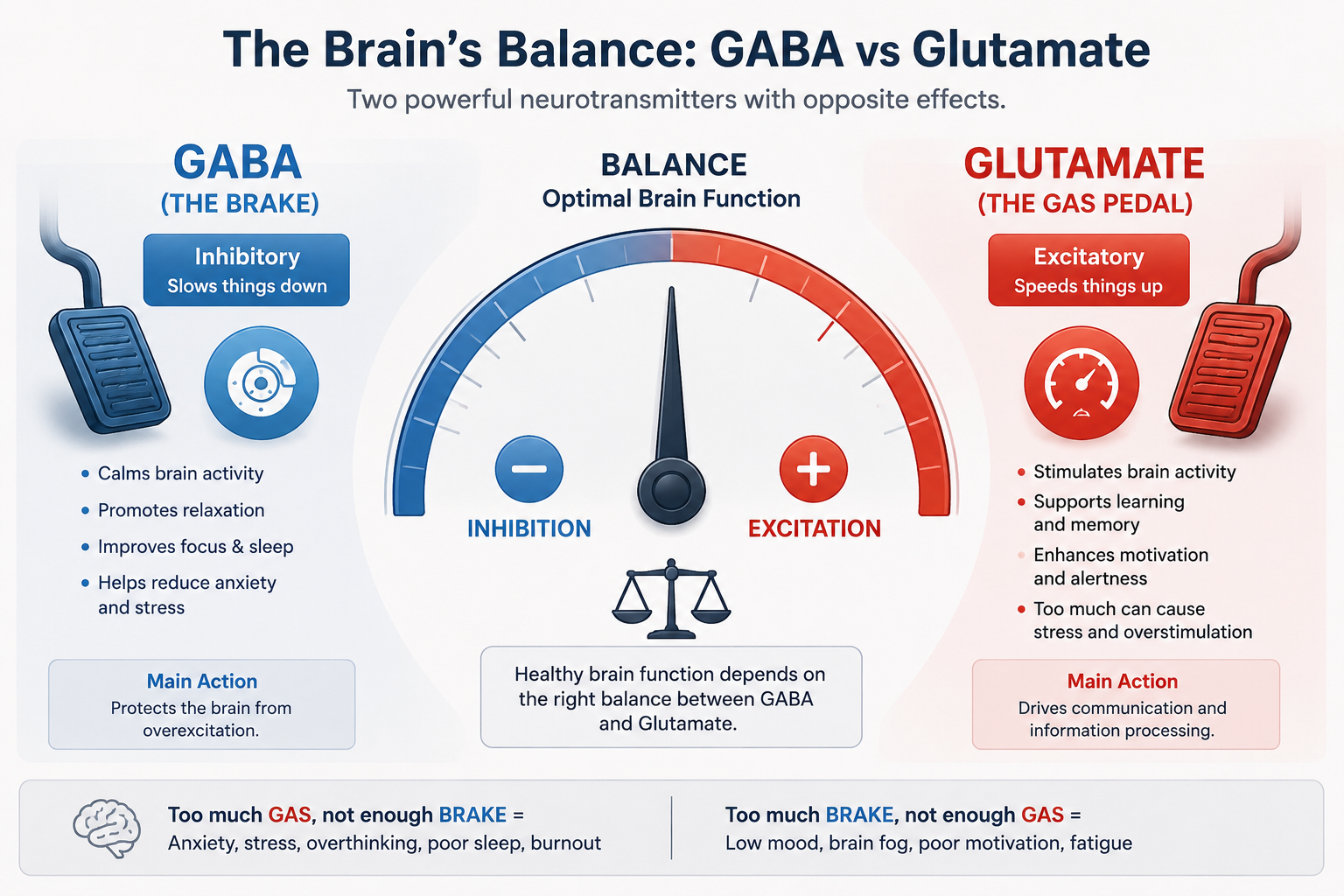
GABA and glutamate are the brain's two most important neurotransmitters, and they work in opposite directions. GABA calms nerve cells, while glutamate excites them, and your brain needs both, in balance, to function well.
GABA and glutamate constantly interact, with GABA helping keep glutamate's excitatory signals from overwhelming the nervous system. This ongoing push-and-pull is what researchers call excitatory-inhibitory balance.
Maintaining that balance matters. Research has linked disruptions in the GABA-glutamate relationship to conditions such as anxiety disorders and depression.
When the balance tips too far in either direction, whether too much glutamate or too little GABA, the nervous system can become overstimulated, contributing to symptoms like racing thoughts, restlessness, or difficulty relaxing.
Are GABA Supplements Safe?
For most healthy adults, short-term use of a GABA supplement is generally considered well tolerated, though research on long-term safety is still limited. As with any supplement, it isn't risk-free for everyone.
Commonly reported side effects include:
- Mild drowsiness
- Headache
- Upset stomach
- Muscle weakness in some cases
GABA supplements may also interact with certain medications, particularly sedatives, anti-anxiety medications, blood pressure medications, or other calming supplements. Combining them without medical guidance could increase drowsiness or lower blood pressure more than intended.
Talk to a healthcare professional before starting a GABA supplement if you're pregnant, breastfeeding, managing a chronic health condition, or taking prescription medication, especially anything affecting the nervous system.
It's also worth knowing that the FDA does not evaluate dietary supplements, including GABA, for safety or effectiveness before they reach the market the way it does prescription medications. That makes product quality and label guidance especially important to check.
Always follow the dosage instructions on the product label rather than assuming more is better. GABA supplements aren't appropriate for everyone, and if you notice new or worsening symptoms, unusual drowsiness, or mood changes after starting one, stop use and check in with a healthcare provider.
If anxiety, stress, or sleep issues are persistent or significantly affecting your daily life, it's worth discussing options with a clinician rather than relying on supplements alone. Physician-guided approaches, including Klearmind's Precision Peptide Programs for cognitive and brain support, are one avenue some people explore under professional supervision, alongside, not instead of, standard care.
Medical disclaimer: This article is for informational purposes only and is not medical advice. Talk to a qualified healthcare provider before starting, stopping, or changing any treatment or supplement.
Final Verdict: What Is GABA and Should You Take a GABA Supplement?
GABA is an important inhibitory neurotransmitter that helps regulate activity in the brain and nervous system. While GABA plays a key role in relaxation, sleep, and neural balance, the benefits of GABA supplements are still being studied.
A GABA supplement may be worth exploring if lifestyle changes alone haven't been enough to support your relaxation or sleep, but it isn't a guaranteed fix, and the science on oral absorption is still evolving. Reported benefits like reduced stress or improved sleep are encouraging in small studies, but claims around dramatic hormone or performance effects deserve extra scrutiny.
If stress, anxiety, or sleep problems are affecting your quality of life, that's worth discussing with a healthcare professional rather than self-supplementing prescriptions. A clinician can help you weigh evidence-based options, from lifestyle changes to physician-supervised programs, based on what will actually work for you.
FAQs
What is GABA in simple terms?
GABA, or gamma-aminobutyric acid, is a natural chemical messenger in your brain that helps slow things down. It's classified as an inhibitory neurotransmitter, meaning its main job is to calm nerve cell activity rather than excite it. In simple terms, think of GABA as your nervous system's built-in brake pedal, keeping brain activity from running too hot.
What does GABA do to the brain?
GABA reduces the rate at which nerve cells fire by binding to GABA receptors, which lowers overall brain activity. This calming effect supports relaxation, helps regulate mood, and plays a role in transitioning into restful sleep. It also works in constant balance with glutamate, the brain's main excitatory neurotransmitter, according to Cleveland Clinic.
What is GABA good for?
GABA is primarily associated with supporting relaxation, healthy sleep and relaxation patterns, and helping the body manage everyday anxiety and stress. Some early research also points to a possible role in mood balance and cognitive function, though more studies are needed. It's important to separate GABA's known biological role from unproven marketing claims about supplements.
What is a GABA supplement?
A GABA supplement is a dietary product containing manufactured or fermentation-derived gamma-aminobutyric acid, typically sold in capsule, powder, or dissolvable form. People use it hoping to support relaxation or sleep, though it differs from the GABA your brain produces naturally. Current research suggests oral GABA may not reliably cross the blood-brain barrier, so its exact mechanism when taken as a supplement is still being studied.
Does GABA help with sleep?
Some small studies suggest GABA supplements, particularly combined with ingredients like L-theanine, may help reduce the time it takes to fall asleep and support sleep and relaxation overall. Research remains limited, though, and effects can vary from person to person. If sleep problems persist, it's worth discussing evidence-based options with a healthcare professional rather than relying on supplements alone.
Does GABA reduce stress and anxiety?
Healthy GABA activity in the brain is closely linked to managing anxiety and stress, since GABA's calming effect helps prevent nerve cells from becoming overstimulated. Whether oral GABA supplements produce the same effect is less clear, with mixed results across small human trials. For persistent anxiety, a qualified clinician can help identify the right combination of lifestyle changes, therapy, or other supervised treatment options.
What foods contain GABA?
Fermented foods like kimchi, miso, tempeh, and some yogurts are commonly cited as natural sources of GABA. Whole foods such as brown rice, spinach, sweet potatoes, and certain beans are also associated with supporting GABA-related pathways. Eating a balanced diet that includes these foods is one lifestyle factor that may support overall neurotransmitter balance, alongside good sleep and stress management.
What is the difference between GABA and glutamate?
GABA and glutamate are opposite forces in brain chemistry: GABA is inhibitory and calms nerve activity, while glutamate is excitatory and stimulates it. Many people describe GABA as the brain's brake pedal and glutamate as its gas pedal. Both are essential, and a healthy nervous system depends on keeping the two in balance.
Are GABA supplements safe?
For most healthy adults, short-term use of a GABA supplement is generally considered well tolerated, though research on long-term safety is still limited. Reported side effects can include mild drowsiness, headache, or upset stomach, and GABA may interact with sedatives or certain medications. Anyone who is pregnant, breastfeeding, managing a chronic condition, or taking prescription medication should talk to a healthcare provider before trying one.
When should you take a GABA supplement?
There's no universal answer, since research on GABA supplement timing is limited, but many products are marketed for evening use to support relaxation before bed. It's best to follow the specific product's label instructions rather than a general rule. If you're considering a GABA supplement for ongoing stress, anxiety, or sleep issues, check in with a healthcare professional first to make sure it's appropriate for your situation.
We're here to listen,
not just to treat
.avif)

We're here to listen,
not just to treat
.avif)
