
Peptides for Anxiety: Benefits, Research, Safety & Best Options
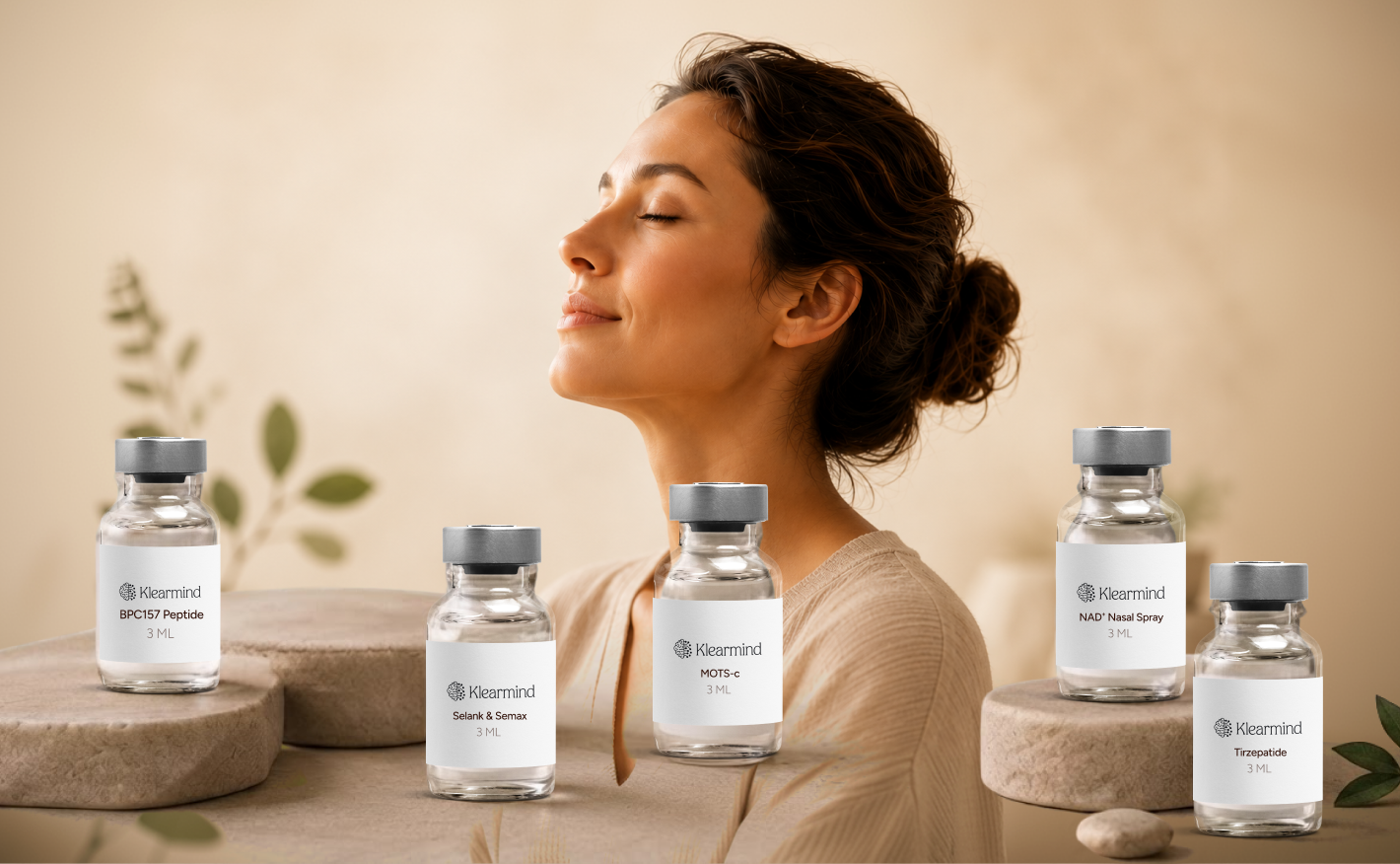

Does your mind race the moment things go quiet? Do you lie awake replaying conversations, bracing for something to go wrong? If so, you have probably already tried the usual advice, but it hasn’t worked.
You are not alone. These reasons and more have led people to look up the benefits of peptide therapy beyond standard medication. This guide walks you through:
- what research says
- which peptides are being studied, and
- what you need to keep in mind before considering peptide therapy
What Are Peptides for Anxiety?
Peptides are short chains of amino acids that act as signaling molecules in the body. Some appear to influence the brain circuits involved in stress and mood. Peptides like Selank and Semax are being studied specifically for anxiety symptoms.
Early studies are encouraging, but none are FDA-approved anxiety treatments. Each treatment should be considered under medical supervision.
To understand how peptides work, it helps to separate therapeutic peptides from the "peptide supplements" sold online.
Therapeutic peptides used in research settings are typically administered by injection or nasal spray under clinical oversight, while many over-the-counter products marketed as peptide supplements are unregulated and lack quality controls, according to the FDA.
How do peptides work?
In the body, peptides can act like miniature messengers, binding to receptors and influencing neuropeptides and neurotransmitter systems that regulate stress, alertness, and mood. Researchers are interested in them because some appear to modulate the same GABA, serotonin, and stress-hormone pathways that current anxiety medications target, according to research summarized by the National Institutes of Health.
It is worth being direct about where things stand. Most peptide research for anxiety is early-stage: small human trials, animal studies, and mechanistic research rather than large controlled trials. No peptide discussed in this guide is currently FDA-approved specifically to treat an anxiety disorder.
How Anxiety Affects the Brain and Why Peptides Are Being Studied
Anxiety disorders involve real, measurable changes in brain chemistry and stress signaling, not just "worrying too much." Understanding those changes explains why researchers think peptides might help.
Anxiety disorders are a group of conditions, including generalized anxiety disorder, panic disorder, and social anxiety, marked by persistent, excessive fear or worry that interferes with daily life, per the National Institute of Mental Health. They are among the most common mental health conditions worldwide, according to the World Health Organization.
When you are anxious, your body's stress response kicks in:
- The hypothalamic-pituitary-adrenal axis releases cortisol
- Your amygdala becomes more reactive, and
- Communication with your prefrontal cortex, the part of your brain responsible for calm reasoning, weakens.
- Over time, chronically elevated cortisol has been linked to changes in brain structure and function, according to Harvard Health.
Several neurotransmitters play a role here:
- GABA receptors help calm neural activity; reduced GABA signaling is linked to heightened anxiety
- Serotonin and dopamine influence mood regulation and motivation
- Glutamate drives excitatory signaling that, in excess, can fuel overactive stress circuits
Chronic stress can also trigger low-grade neuroinflammation, a process increasingly tied to both anxiety and depression in clinical studies. This is part of why researchers are curious whether peptides, some of which appear to have anti-inflammatory and neuroprotective properties, might influence these same pathways.
How Peptides May Help Anxiety and Depression
Researchers believe certain peptides may support the nervous system's ability to regulate stress, though most of this evidence comes from small studies and animal models rather than large clinical trials. The proposed mechanisms are promising, but still developing.
Peptide signaling in the nervous system works differently than a typical pill. Peptides can act on specific receptor sites, potentially fine-tuning how the brain responds to stress rather than broadly sedating it, an idea explored in research published through the National Center for Biotechnology Information.
Proposed effects being studied include:
- Stress resilience: helping the body recover more efficiently from acute stress
- Neuroprotective properties: potentially shielding neurons from stress-related damage
- Anti-inflammatory mechanisms: possibly reducing neuroinflammation linked to mood disorders
- Mood regulation: influencing serotonin and dopamine activity
- Cognitive performance: supporting focus and mental clarity, which often decline alongside anxiety
Anxiety and depression frequently occur together, and researchers studying peptides for depression and anxiety are often looking at overlapping mechanisms, since the two conditions share neurochemical disruptions.
Best Peptides for Anxiety Being Researched
There is not one single best peptide for anxiety, but a few compounds have the most research behind them. Selank and Semax currently have the strongest human evidence, while BPC-157 and oxytocin remain early-stage.
Selank is a synthetic peptide developed in Russia, studied for anxiolytic (anxiety-reducing) effects. Small clinical studies, including research by Russian investigators, have compared Selank's calming effects to those of certain benzodiazepines in preliminary trials, though these studies were small and conducted outside the U.S. regulatory framework.
Semax has been studied for cognitive performance and neuroprotection, with some research, using brain imaging, suggesting effects on brain networks tied to attention and stress regulation. Anxiety-related benefits are considered a secondary finding rather than its primary studied use.
BPC-157 originates from a protein found in gastric juice and is primarily studied for tissue repair. Emerging, largely preclinical research into the gut-brain axis suggests it may influence serotonin activity and neuroinflammation, since a large share of the body's serotonin is produced in the gut. Human mental health data for BPC-157 is very limited.
Oxytocin, sometimes called the "bonding hormone," has been studied for its role in social anxiety and stress buffering, with research linking altered oxytocin activity to anxiety and depression.
Peptides for Depression and Anxiety: What Does Research Say?
Because anxiety and depression frequently overlap, much of the research on peptides for anxiety and depression studies both conditions together rather than in isolation. The current evidence base is encouraging but still preliminary.
Anxiety and depression share overlapping biology, including dysregulated stress hormones and altered neurotransmitter activity, which is why many clinical studies examine peptides for both conditions simultaneously rather than separately.
Human trials on peptides like Selank remain small, short in duration, and largely conducted outside the U.S., which limits how confidently the results generalize. Animal studies offer more mechanistic detail, showing effects on serotonin synthesis and inflammatory markers, but animal findings do not always translate directly to human outcomes.
The current scientific consensus is cautious optimism: several peptides show biologically plausible reasons to help, but researchers agree that larger, well-controlled, peer-reviewed human trials are needed before any peptide can be considered an established treatment for anxiety or depression.
Benefits and Potential Advantages of Peptide Therapy
Early research suggests peptide therapy may offer several potential advantages for people dealing with chronic stress, though these benefits remain under investigation rather than confirmed outcomes.
Potential areas of benefit being studied include:
- Possible reduction in stress reactivity and physical tension
- Mood support alongside existing treatment
- Improved cognitive function, including focus and mental clarity
- Greater emotional resilience during high-stress periods
- Neuroprotection against stress-related changes in the brain
- Support for recovery after prolonged or chronic stress exposure
It is worth repeating: these are potential, research-stage benefits, not guarantees. Much more work is needed to confirm effect sizes, ideal candidates, and long-term outcomes.
Risks, Side Effects, and Safety Considerations
Peptide therapy carries real, still-incompletely-understood risks, and safety should be the first question anyone asks before considering it. This is not a category to approach casually.
Commonly reported side effects in existing studies include:
- injection-site irritation
- headache
- fatigue, and
- occasional gastrointestinal discomfort
Long-term safety data simply does not exist yet for most of these compounds, since studies have generally run for weeks, not years.
Quality control is a serious concern. Many peptide products sold online are unregulated, and the FDA has warned about contamination, mislabeling, and incorrect dosing in compounded and research-grade peptides, including specific compounding restrictions placed on BPC-157.
Other safety considerations include:
- Potential interactions with SSRIs, benzodiazepines, or other psychiatric medications are not well studied
- Pregnant or breastfeeding individuals, and those with autoimmune or hormone-sensitive conditions, should avoid unsupervised use
- Medical supervision is essential, both to source a legitimate product and to monitor for adverse effects
- No peptide covered here is FDA-approved to treat anxiety or depression; use outside of research settings is off-label at best
Medical disclaimer: This article is for informational purposes only and is not medical advice. Talk to a qualified healthcare provider before starting, stopping, or changing any treatment or supplement.
Are Peptides Better Than Traditional Anxiety Treatments?
Peptides are not a proven substitute for established anxiety treatments; they are best understood as an emerging area of research alongside current care. SSRIs, therapy, and lifestyle changes still have far more evidence behind them.
Cognitive behavioral therapy remains one of the most well-evidenced approaches for anxiety disorders, according to the American Psychological Association, and it is often paired with medication for moderate to severe cases. Exercise and consistent sleep also have strong research support for reducing anxiety symptoms.
For many people, the most realistic path is a combination approach: therapy, lifestyle changes, and, where appropriate, medication, with peptide research regarded as a developing field rather than a first-line option.
Who May Benefit from Peptide Research in the Future?
Future peptide research may eventually benefit people with treatment-resistant anxiety or chronic stress that has not responded well to conventional options, though this remains a forward-looking possibility, not a current clinical pathway.
Groups that researchers are particularly interested in studying further, include:
- People with treatment-resistant anxiety who have tried multiple standard therapies
- Individuals dealing with chronic, unrelenting stress
- People experiencing anxiety alongside depression
- Those with cognitive symptoms like brain fog alongside mood concerns
This connects to a broader shift toward personalized medicine and precision psychiatry, where treatment could eventually be matched to a person's specific biology rather than a one-size-fits-all approach.
Final Verdict: Are Peptides for Anxiety Worth Considering?
Peptides for anxiety represent an exciting area of neuroscience research, but the evidence remains limited.
If you are dealing with persistent anxiety, the most evidence-backed path today is still therapy, lifestyle changes, and, when appropriate, established medications, with a qualified provider guiding the plan. Our detailed guides on peptide therapy and comparisons between Selank and Semax go deeper into the mechanisms. You can read them here.
FAQs
What are peptides for anxiety?
Peptides for anxiety are short chains of amino acids, such as Selank and Semax, that researchers are studying for possible effects on stress response and mood regulation. They are not standard or FDA-approved anxiety treatments; most evidence currently comes from small human trials and animal studies.
What is the best peptide for anxiety?
There is no single confirmed best peptide for anxiety, but Selank currently has the most direct human research for anxiolytic effects. Semax, BPC-157, and oxytocin are also being studied, though with less anxiety-specific human data.
Can peptides help with depression and anxiety?
Some research suggests certain peptides may influence shared pathways behind peptides for depression and anxiety, including serotonin activity and stress hormone regulation. However, current evidence is preliminary, and peptides are not established treatments for either condition.
Is Selank effective for anxiety?
Small clinical studies conducted mostly in Russia suggest Selank may have calming, anxiolytic effects comparable to certain mild anti-anxiety medications in preliminary trials. These studies are limited in size and duration, so more research is needed before drawing firm conclusions.
What is the difference between Selank and Semax?
Selank is studied primarily for anxiety and stress reduction, while Semax is studied more for focus, cognitive performance, and neuroprotection. Both are synthetic peptides developed in Russia and share some overlapping effects on brain signaling.
Is BPC-157 used for anxiety?
BPC-157 is primarily researched for tissue repair, with emerging, mostly preclinical interest in its effects on the gut-brain axis and mood. Human evidence specific to anxiety is very limited, and it is not FDA-approved for this or any mental health use.
Are peptides FDA-approved for treating anxiety?
No. None of the peptides discussed here, including Selank, Semax, BPC-157, or oxytocin, are FDA-approved specifically to treat anxiety disorders. Some, like BPC-157, have also faced specific FDA compounding restrictions.
Are peptide therapies safe?
Safety data is still limited, since most studies are small and short-term. Reported side effects are generally mild, but long-term safety, drug interactions, and product quality remain open questions, which is why medical supervision matters.
Can peptides replace antidepressants or anxiety medications?
No. Peptides should not be used to replace SSRIs, benzodiazepines, or other prescribed treatments without a physician's guidance. Current evidence does not support peptides as a standalone substitute for established anxiety or depression treatments.
What are the side effects of peptide therapy?
Commonly reported side effects include injection-site irritation, headache, fatigue, and mild gastrointestinal discomfort. Because long-term studies are limited, the full side-effect profile for most peptides is not yet well understood.
How are peptides administered for anxiety research?
In research settings, peptides like Selank and Semax are most commonly administered via intranasal spray or injection under clinical supervision. Dosing protocols vary by study, and there is no standardized, medically approved dosing for anxiety specifically.
Should you try peptides for anxiety without medical supervision?
No. Self-administering peptides without medical supervision carries real risks, including product quality issues, incorrect dosing, and unknown interactions with other medications. Anyone considering peptide research should first speak with a qualified healthcare provider.
Get Peptides Prescribed by a Doctor
.avif)
%2520(1).png)
Get Peptides Prescribed by a Doctor
.avif)
