
Best Nootropics: Top Supplements for Focus, Memory, ADHD & Energy

The search for the best nootropics has never been higher. In this guide, discover the best nootropics for focus, memory, ADHD, anxiety, motivation, studying, and energy and find out which ones are the right fit for your cognitive goals.
What Are Nootropics and What Do They Actually Do?
Nootropics are cognitive-enhancing supplements or compounds designed to support memory, focus, mental clarity, and overall brain performance. Also called brain boosters, they come in natural and synthetic forms.
What do nootropics actually do? They may support cognitive functions via several mechanisms, like:
- Increasing blood flow to the brain
- Supporting neurotransmitter production and signalling
- Providing neuroprotective and antioxidant effects
- Reducing cortisol or stress hormones
- Modulating brain-wave activity
- Supporting neurogenesis
Coming to their form, nootropics are either natural or synthetic.
Natural vs. Synthetic Nootropics
.webp)
Natural nootropics are derived from plants, herbs, fungi, and whole foods. Common examples include Lion's Mane mushrooms, caffeine, L-theanine, ashwagandha, and ginseng. They generally work gradually, with most benefits becoming noticeable after weeks of consistent use.
Synthetic nootropics are lab-engineered cognitive enhancers, many of which are prescription medications. Examples include Piracetam, Modafinil, and Methylphenidate (Ritalin). These tend to be more potent and fast-acting, often producing noticeable effects within hours. They are typically prescribed for diagnosed conditions such as ADHD or narcolepsy.
💡 The regulatory use of certain synthetic nootropics varies by country. For instance, Piracetam is not FDA-approved as a prescription drug. All synthetic nootropics can only be bought with a prescription.
Why Are Nootropics Trending in 2026?
Nootropics have moved well beyond niche circles. Today, they're mainstream supplements for cognitive performance. The global nootropics market reflects this shift.
The nootropics market was estimated to be worth between USD 4.32 billion and USD 16.07 billion in 2024–2025, depending on the scope of the report (e.g., specific supplements vs. broader smart drugs).
Who Typically Uses Nootropics?
Nootropics are used by a wide range of people: from students pulling long study hours and professionals navigating high-pressure workloads, to entrepreneurs, creatives, and adults managing ADHD symptoms. Increasingly, older adults are also turning to nootropics for memory support and cognitive longevity.
Best Nootropics for Focus and ADHD Support
Natural ADHD supplements and focus-enhancing nootropics. If you’ve been searching for the best nootropics to improve your focus, here’s a list backed by research.
But firstly, how do nootropics support focus?
Sustained focus depends on stable dopamine and acetylcholine activity in the brain. Dopamine drives motivation and attention, while acetylcholine supports the encoding of new information and task-switching.
The best-rated nootropics for focus either support the production of these neurotransmitters or regulate the stress hormones, primarily cortisol, that disrupt concentration.
Natural Nootropics for Focus and ADHD Support
These are the most well-researched natural options, particularly for non-prescription focus support:
1. Citicoline (CDP-Choline)
Citicoline boosts acetylcholine synthesis and supports the structural integrity of brain cell membranes. Several clinical studies have linked it to improved attention, mental speed, and working memory.
2. L-Theanine (+ Caffeine)
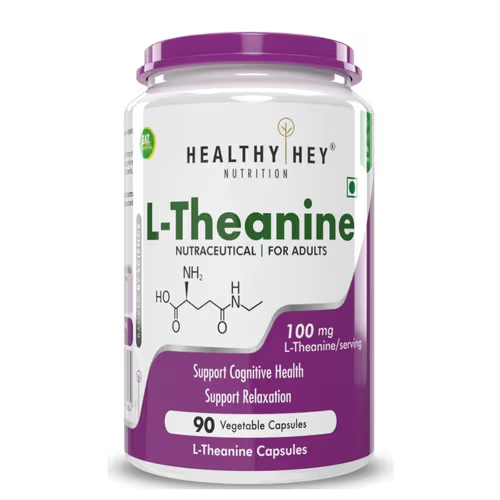
L-theanine, an amino acid found naturally in green tea, is most effective when combined with caffeine. This pairing is one of the most studied in nootropic research: caffeine sharpens alertness while L-theanine smooths out the jitteriness and anxiety that caffeine alone can cause.
Here’s a detailed study by the National Library of Medicine.
3. Bacopa Monnieri
Bacopa is an Ayurvedic herb with a solid body of clinical research supporting improvements in memory acquisition, verbal learning, and anxiety reduction. It works by enhancing communication between neurons and reducing oxidative stress in the brain. Most studies show meaningful benefits only after 8–12 weeks of consistent use.
4. Lion's Mane Mushroom
Lion's Mane is unique among nootropics for its potential to stimulate nerve growth factor (NGF), a protein that supports the growth and maintenance of neurons. Early research (including human trials) suggests benefits for memory, mild cognitive impairment, and overall brain health.
5. Ginkgo Biloba
Ginkgo Biloba is one of the oldest and most studied herbal nootropics. It works primarily by improving cerebral blood flow and acting as an antioxidant. Research suggests modest benefits for memory and processing speed, particularly in older adults.
Best Nootropics for Memory and Studying
Memory and academic performance is a growing area of interest for nootropic users. Whether the goal is retaining information faster, recalling it more reliably under exam pressure, or sustaining deep focus, here are the best natural nootropics for memory and studying that have shown results when used consistently.
But again, how do nootropics support memory?
Memory formation relies on two key neurological processes: acetylcholine signaling and neuroplasticity. Both are the brain's ability to form, strengthen, and reorganize neural connections.
Acetylcholine is the brain's primary learning neurotransmitter. Nootropics that boost acetylcholine availability are among the most directly useful for memory.
Neuroplasticity, meanwhile, is regulated in part by Brain-Derived Neurotrophic Factor (BDNF). Several nootropics work specifically by stimulating BDNF production, improving the brain's capacity to form lasting memories and adapt to new information.
Top Nootropics for Memory Retention and Long-Term Learning
1. Bacopa Monnieri
Bacopa is one of the most extensively studied natural nootropics for memory. Clinical trials consistently show improvements in memory retention, information processing speed, and verbal learning after sustained use. It works by enhancing communication between neurons and reducing oxidative damage to brain cells.
💡 Most research shows meaningful results only after 8–12 weeks of consistent daily use.
2. Citicoline (CDP-Choline)
Citicoline is a two-in-one compound: it raises acetylcholine levels to directly support learning and memory. Clinical studies support its use for attention, mental energy, and working memory.
3. Lion's Mane Mushroom
Lion's Mane promotes the production of nerve growth factor (NGF) and has shown early promise for supporting neuroplasticity. This makes it particularly relevant for long-term learning rather than acute memory boosts.
4. Magnesium L-Threonate
This is arguably the most brain-targeted form of magnesium available. Unlike standard magnesium supplements, Magnesium L-threonate is specifically formulated to cross the blood-brain barrier, where it enhances synaptic plasticity, helping both working memory and long-term memory consolidation.
Here’s an in-depth study that demonstrates the long-term benefits of Magnesium L-Threonate.
Some other nootropics for memory, focus and retention are L-Theanine + Caffeine (200 mg L-Theanine), Rhodiola Rosea, L-Tyrosine, and Ginkgo Biloba
Best Nootropics for Energy and Motivation
Mental fatigue, low motivation, and brain fog are among the most common complaints in overstimulating work cultures. While coffee is everyone’s go-to, the best nootropics for energy and motivation don't work by overstimulating the nervous system. Here are some of the best natural nootropics for energy and motivation.
How do nootropics improve energy and motivation?
Unlike caffeine, which subdues the sensation of fatigue, true cognitive enhancers, or nootropics, work differently. They support mitochondrial ATP production in brain cells, replenish dopamine and norepinephrine (the neurotransmitters most responsible for drive and motivation), and regulate the stress hormones that drain mental stamina.
Top Nootropics for Mental Energy and Motivation
1. Citicoline (CDP-Choline)
Citicoline is one of the few nootropics with direct evidence for increasing brain ATP (the brain’s powerhouse of energy). Studies show it can raise brain energy metabolism by up to 14%, supporting sustained mental output without the stimulant effect of caffeine.
Here’s a clinical study that supports this claim.
2. Rhodiola Rosea
Rhodiola is arguably the most well-rounded adaptogen for energy and motivation under pressure. Entrepreneurs and high-output professionals might benefit from this nootropic for its role in high-stress situations.
3. N-Acetyl L-Tyrosine (NALT)
NALT is a more bioavailable form of L-tyrosine, an amino acid the brain uses to synthesize dopamine and norepinephrine. When these are depleted by stress, multitasking, or poor sleep, cognitive performance drops noticeably. NALT supplementation helps replenish this supply, supporting motivation and mental resilience when it matters most.
4. Acetyl-L-Carnitine (ALCAR)
ALCAR supports brain energy production by facilitating the transport of fatty acids into mitochondria, where they're converted into ATP. This leads to improved mental clarity and reduced cognitive fatigue, particularly in people experiencing age-related energy decline or prolonged mental exertion.
Best Nootropics for Anxiety, Mood and Emotional Resilience
Elevated cortisol, disrupted serotonin signaling, and underactive GABA pathways lead to anxiety and low mood levels. This eventually leads to a reduced capacity in the brain to think clearly and sustain attention.
The best nootropics in this category work by addressing these underlying neurochemical imbalances and supporting the biological systems that regulate stress, mood, and emotional resilience.
How Do Nootropics Help Improve Mood?
Nootropics work in three main ways to elevate mood.
- Cortisol regulation: The stress hormone cortisol, when chronically elevated, impairs memory consolidation, disrupts sleep, and erodes emotional resilience. Adaptogens like Ashwagandha and Rhodiola directly modulate cortisol output.
- Serotonin pathways: Serotonin governs mood stability, emotional regulation, and sleep quality. Nootropics work by supporting serotonin synthesis or availability.
- GABA activity: GABA is the brain's primary inhibitory neurotransmitter, responsible for the calm, settled feeling that counteracts anxiety. L-Theanine is thought to support GABAergic activity indirectly alongside its direct effects on alpha brainwaves.
Top Natural Nootropics for Anxiety and Stress Support
1. Ashwagandha
Ashwagandha is the most well-researched adaptogen for stress and anxiety. You begin to see cumulated effects over 4–8 weeks rather than providing immediate relief. A dose of 300-600 mg/day of Ashwagandha is generally recommended.

2. L-Theanine
L-Theanine promotes a state of calm alertness without sedation. How does L-Theanine work? It increases alpha brainwave activity, and research suggests it modulates stress responses by influencing both GABA and glutamate pathways. It helps placate anxiety that interferes with work or study.
3. Rhodiola Rosea
Rhodiola's anxiety and mood benefits stem from its ability to regulate the hypothalamic-pituitary-adrenal system that governs the body's stress response. Research shows it reduces burnout, lowers perceived mental fatigue, and supports emotional stability under sustained pressure.
It is particularly well-suited for stress-driven mood dips rather than clinical anxiety or depression.
4. Magnesium Glycinate
Magnesium is one of the most underappreciated mood-relevant nutrients. It plays a direct role in GABA receptor function and helps regulate the HPA stress axis.
💡 Magnesium deficiency (surprisingly common) affects an estimated 45–50% of adults in Western populations.
5. Saffron Extract
A growing body of clinical research suggests that saffron extract produces meaningful improvements in depressive symptoms and emotional wellbeing. It potentially does so through its effects on serotonin uptake and antioxidant activity in the brain.
6. Omega-3 Fatty Acids
Omega-3s, particularly EPA (eicosapentaenoic acid), are among the most studied nutrients for brain health and mood regulation. EPA in particular has demonstrated antidepressant-like effects in clinical trials, with a 2019 meta-analysis in Translational Psychiatry finding significant mood benefits from EPA-dominant supplementation.
💡 Nootropics can offer meaningful support for everyday stress, low mood, and emotional resilience, but they are not treatments for clinical anxiety disorders or depression. Please speak with a qualified healthcare professional before relying on supplements alone.
Best Nootropics for Creative Work and Cognitive Flow
Creativity requires the brain to work a certain way. It needs it to be relaxed enough for divergent, free-associative thinking and focused enough to execute ideas with precision. The best nootropics for artists, writers, designers, and developers are those that cultivate the specific mental state where creativity thrives.
How do nootropics help with creative work?
The “flow state” understood and wanted by all creatives happens when there’s reduced activity in the prefrontal cortex (the brain's self-monitoring center) alongside sustained alpha brainwave activity. Here are the best nootropics that cultivate that state of flow.
Best Nootropics for Creative Work
1. L-Theanine (ideally paired with 100mg caffeine)
L-Theanine is arguably the most creativity-relevant nootropic available. It promotes alpha brainwave activity. Paired with a moderate dose of caffeine, it delivers alert, engaged attention. For creative professionals, this combination is the most accessible and immediately effective entry point.
2. Lion's Mane Mushroom
Lion's Mane promotes Nerve Growth Factor (NGF) and neuroplasticity, which in turn supports long-term neural connectivity. This is where lies imaginative thinking, pattern recognition, and the ability to draw unexpected connections between ideas.
3. Citicoline
Citicoline supports the mental energy and sustained attention that long creative sessions demand. It works really well for complex, iterative work like coding, writing, or design. By supporting brain ATP production and acetylcholine availability, it helps keep cognitive clarity so you can hold multiple ideas in working memory at the same time, without any crashes.
4. N-Acetyl L-Tyrosine (NALT)
Creative motivation: the desire to create is heavily dopamine-dependent. NALT supports dopamine and norepinephrine synthesis, helping maintain the motivational drive behind creative work.
Best Nootropic Supplements vs Individual Ingredients
When it comes to nootropics, you can either build your own stack from individual compounds or choose a pre-formulated supplement that combines several ingredients in one capsule. What works for you?
💡 If you plan on trying pre-formulated stacks, be sure to check label readings of the dosage of each individual ingredient.
How to Choose the Best Nootropic for Your Goals
Identifying the best nootropic depends on one single question: what is your primary cognitive goal?
Matching the supplement to the need is more effective than defaulting to the most popular product.
Once your goal is clear, you can decide between stimulant and non-stimulant approaches:
- Stimulant-based stacks deliver faster, more noticeable effects but require careful timing and periodic cycling (typically one to two weeks off every six to eight weeks) to prevent tolerance and maintain efficacy.
- Non-stimulant foundations work more gradually but are sustainable long-term without the same tolerance concerns.
💡 Beginners are best served starting with a single, well-researched compound before layering; advanced users can build targeted stacks once they understand how their brain responds.
Are Nootropics safe to use?
Most natural nootropics covered in this article are well-tolerated at studied doses, but common mild side effects include digestive discomfort, headaches, and sleep disruption from stimulants taken too late in the day.
💡 Those who are pregnant, breastfeeding, managing cardiovascular conditions, or taking prescription psychiatric medication should consult a healthcare professional before starting any nootropic regimen.
The nootropic landscape in 2026 is richer than ever. Although the fundamentals remain the same. The best nootropic is the one that matches your specific goal, built on honest clinical evidence.
Treat nootropics as one part of a broader commitment to brain health and consult a healthcare professional when in doubt.
FAQs
1. What are the best nootropics overall?
The most consistently research-backed nootropics are Citicoline, Bacopa Monnieri, Lion's Mane Mushroom, Rhodiola Rosea, and L-Theanine with caffeine. Having said that, the best nootropic depends on your primary goal: focus, memory, energy, or mood.
2. What is the best nootropic supplement for focus?
L-Theanine paired with caffeine is the most evidence-backed combination for immediate focus. For sustained, stimulant-free focus, Citicoline is the strongest single-ingredient option, supporting both brain energy and acetylcholine levels.
3. What are the best nootropics for ADHD?
For non-prescription support, Citicoline, L-Theanine, and Rhodiola Rosea are the most studied natural options for attention and dopamine regulation. Prescription medications like Methylphenidate and Adderall remain the clinically validated standard for diagnosed ADHD and should only be used under medical supervision.
4. What are the best nootropics for memory and studying?
Bacopa Monnieri and Magnesium L-Threonate are the strongest evidence-backed options for memory retention and synaptic plasticity. Bacopa requires 8–12 weeks of consistent use to show full effect.
5. Are nootropics safe for daily use?
Most natural nootropics at studied doses are well-tolerated for daily use. However, stimulant-containing stacks benefit from periodic cycling to prevent tolerance. Always choose third-party tested products and consult a healthcare professional if you take prescription medication.
6. What are the best nootropics for anxiety?
Ashwagandha, L-Theanine, and Magnesium Glycinate are the most research-supported natural options for stress and anxiety reduction. They work by modulating cortisol, supporting GABA activity, and promoting calm alertness. These support everyday stress resilience and are not treatments for clinical anxiety disorders.
7. Do nootropics really improve motivation?
Yes. Some do. Compounds that support dopamine and norepinephrine (particularly Rhodiola Rosea and L-Tyrosine) have demonstrated improvements in drive and cognitive performance under stress.
8. What is the difference between natural and synthetic nootropics?
Natural nootropics are plant, fungi, or food-derived compounds that work gradually through biological pathways. Synthetic nootropics are lab-engineered, often prescription-only, faster-acting, and more potent.
We're here to listen,
not just to treat
.avif)

We're here to listen,
not just to treat
.avif)
